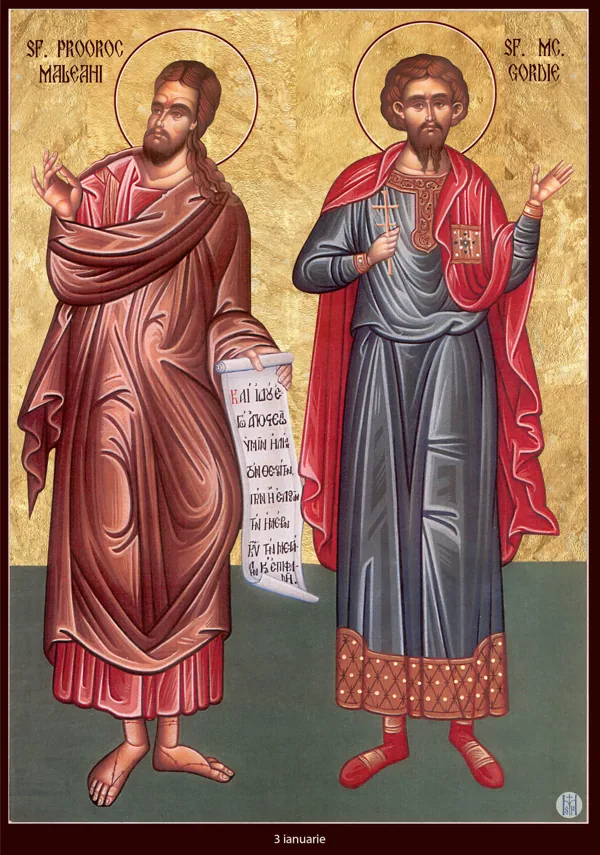
Malachi is remembered as a prophet from Sophes, of the tribe of Levi, after the return from Babylonian exile. The calendar places him among the final prophets of the Old Testament and recalls his announcement of the Lord’s forerunner. His memory connects the prophetic tradition with the expectation of Christ.
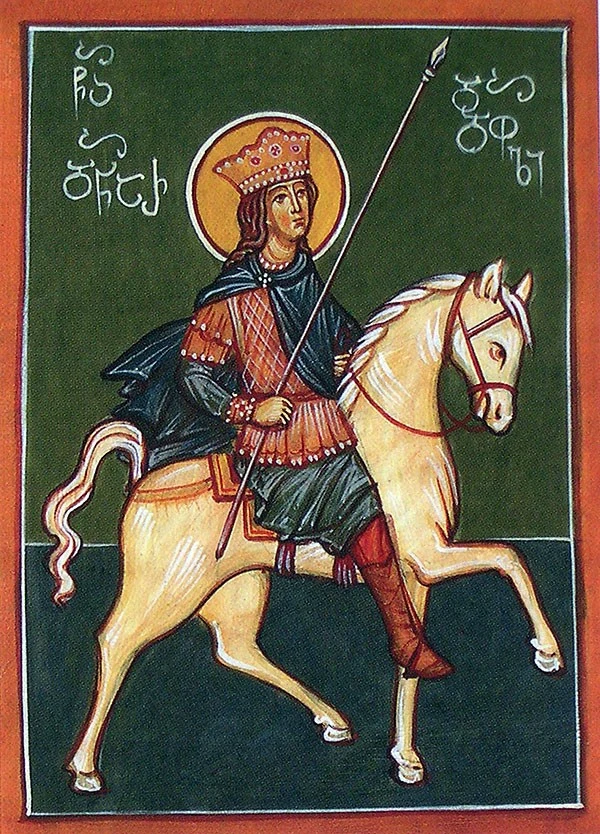
Dinar was queen of Hereti in southeastern Georgia. The received Georgian account associates her with her son Ishkhanik and the kingdom’s adoption of the Orthodox faith in the tenth century. The received account also compares her story with Russian chronicles about a Georgian queen. The Georgian Church honors Dinar for her role in the region’s Christian life.
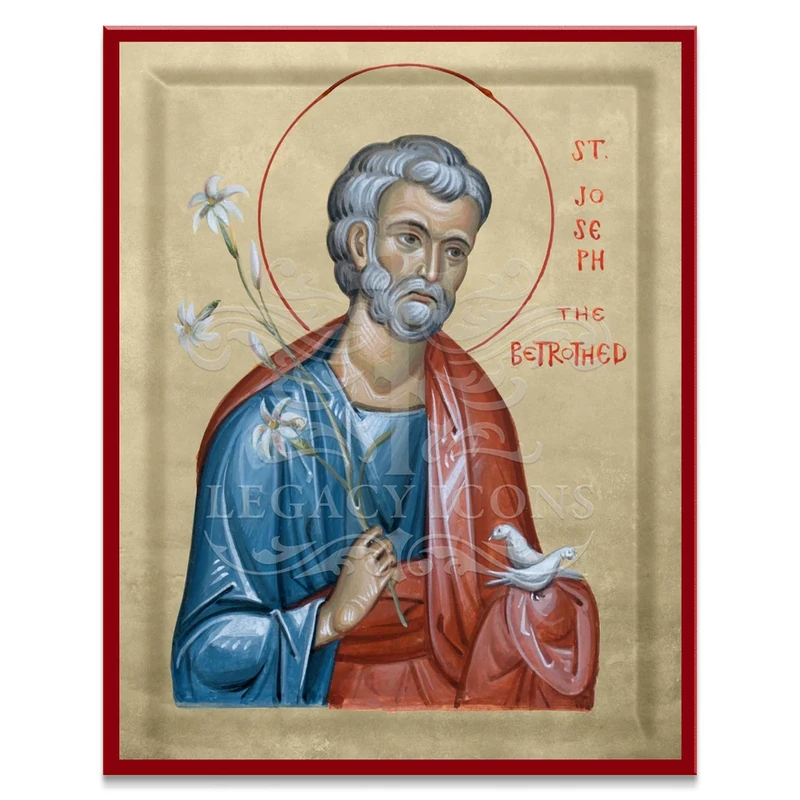
Joseph is honored as the betrothed of the Virgin Mary and guardian of the Holy Family. The Gospel narrative describes a righteous man who listens to the angel’s message and accepts a responsibility he did not fully understand at first. He protects Mary and the infant Jesus by leaving for Egypt when Herod threatens the child’s life. Orthodox tradition also remembers his work as a carpenter and his quiet life of service. Joseph’s example gives dignity to practical, protective care: faithfulness may appear in work, difficult decisions, and the readiness to place another person’s safety before personal convenience.
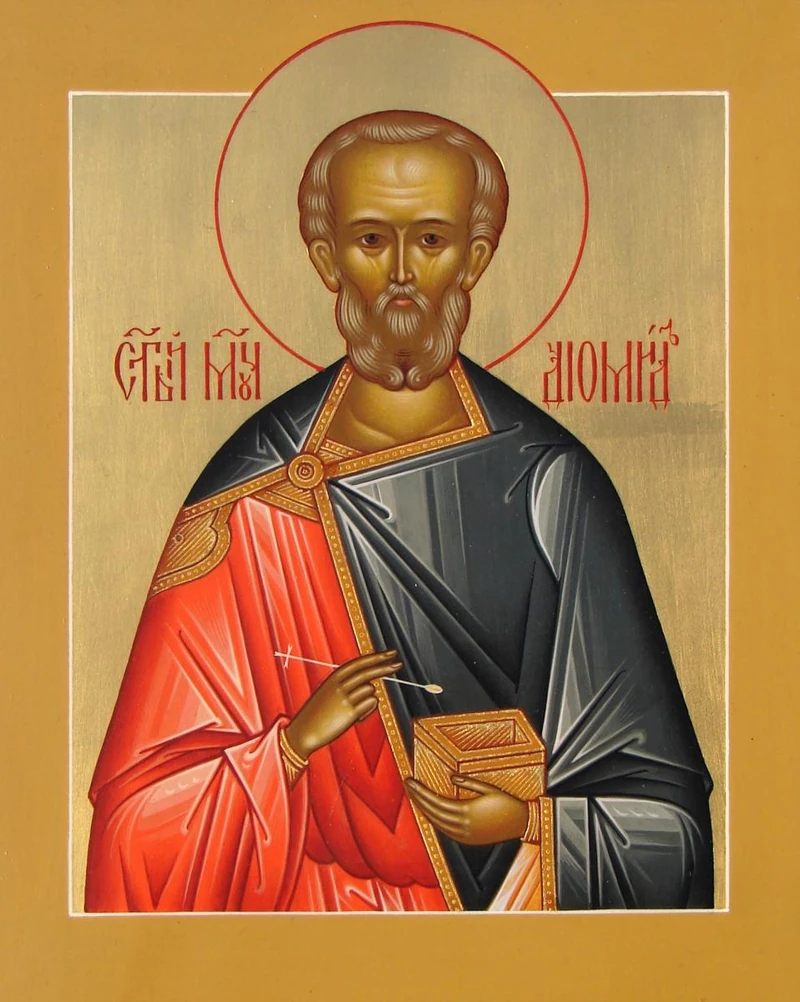
Diomedes was born in Tarsus and trained in medicine. His learning did not displace the Christian devotion he had received from his parents. He treated sick people without charge and shared the Gospel alongside his practical care. His work eventually brought him to Nicaea, where his Christian activity drew the attention of the authorities during Diocletian’s persecution. The traditional life says he died before soldiers could arrest him, though his body was then dishonored. The Church venerates him among the unmercenary physicians and remembers him in the service of Holy Unction.
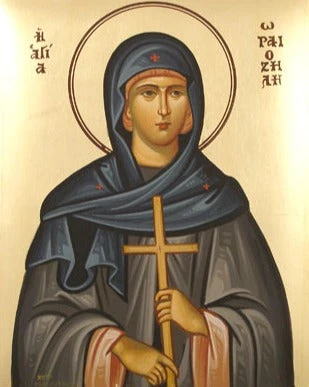
Oraiozele is remembered as a Christian woman who taught others about Christ and was joined by two women who wished to share her religious life. The Finnish Orthodox account preserves her preaching and martyrdom, while noting that the received narratives combine material from different periods. One tradition associates her with the Apostle Andrew; another places her in the persecution under Decius.
Theodosia was a young Christian from Tyre who visited condemned Christian prisoners at Caesarea in Palestine during the persecution. The OCA's received life places her visit at Pascha and remembers her asking the prisoners to remember her before God. Soldiers arrested her after seeing her honor them. She then refused the governor's demand to offer sacrifice and suffered punishment and death. Her commemoration connects concern for imprisoned Christians with resistance to coerced worship. The narrative also includes miraculous rescues and a posthumous appearance, which belong to its devotional tradition rather than independently established evidence for quiz characteristics.
The directory indexes the OCA full-year calendar, including leap-day commemorations, alongside additional researched profiles. Calendar entries include individual saints, groups, icons and feasts. An entry count is not a count of unique saints. Categories are provisional; follow the linked source.
Dates show commemorations in the referenced calendar year. Movable feasts change annually, and local calendars may differ. Additional jurisdictions, original biographies and icon research remain in progress. This collection does not yet claim complete Eastern Orthodox coverage.
Calendar metadata was retrieved through Orthocal’s source repository and the Orthodox Church in America. Source-only calendar records link to their original accounts; researched profiles include individually sourced artwork.
 Patron SaintTake the quiz