Eupraxia accompanied her widowed mother from Constantinople to Egypt and remained in a women's monastery. After her mother's death, an imperial letter reminded her of an earlier marriage arrangement. She answered by affirming her monastic vocation and requesting that her property benefit the Church and people in need. Within the community, she cooked, washed dishes, swept, and served the sisters. The OCA also remembers her responding gently when another nun accused her of seeking praise. Her commemoration joins generosity with ordinary shared work. Reports of extreme fasting, injuries, and refusal to rest belong to the received narrative rather than advice for visitors.
Febronia was raised in a women’s monastery under the care of her aunt, the abbess. She became known for reading Scripture to the community and for guiding a visitor named Hieria toward Christian faith. When soldiers arrived during persecution, Febronia was seriously ill and remained with two older women at the monastery. She refused offers of status and marriage that required abandoning Christ and died as a martyr. Her witness brings teaching, vulnerability, and steadfast faith together. The Church remembers a young woman whose influence grew through prayer and faithful attention to the Scriptures.
Glyceria grew up in a prominent family that moved to Trajanopolis in Thrace. Orphaned while young, she became a Christian and took part in the Church's worship. Her refusal to join official sacrifices brought imprisonment and torture. The account remembers other Christians supporting her, including the priest Philokrates and Bishop Dometius of Heraclea. It also describes Glyceria stopping a frightened jailer from taking his own life. That detail joins compassion to her courage under persecution. She was eventually killed at Heraclea and buried by the Christian community. Her witness is remembered through both steadfast confession and concern for another person's life.
Julia's received life describes a Christian from Carthage who was taken captive and sold into slavery. While living under another person's control, she maintained Christian fasting and prayer and resisted pressure to participate in pagan worship. During a journey with her owner, she remained aboard ship when others attended a festival in Corsica. The narrative places her death there after she openly acknowledged her faith. Her commemoration remembers religious fidelity under captivity and coercion. The OCA itself notes conflicting centuries for her death, so the account's travel and conquest setting requires further historical comparison rather than a single confidently asserted chronology.
Juliana came from a prominent family in Nicomedia and accepted Christian baptism despite her father's opposition. When an arranged marriage approached, she refused to proceed. Her father responded with violence and delivered her to the official who was also her intended husband. The OCA's received life remembers repeated punishment that did not change her confession, followed by execution. It also describes other people embracing Christianity after witnessing her suffering. Her commemoration preserves the memory of conviction under family and official coercion. Exact conversion totals and miraculous recoveries belong to the received martyr narrative rather than independently established evidence for a personal characteristic.
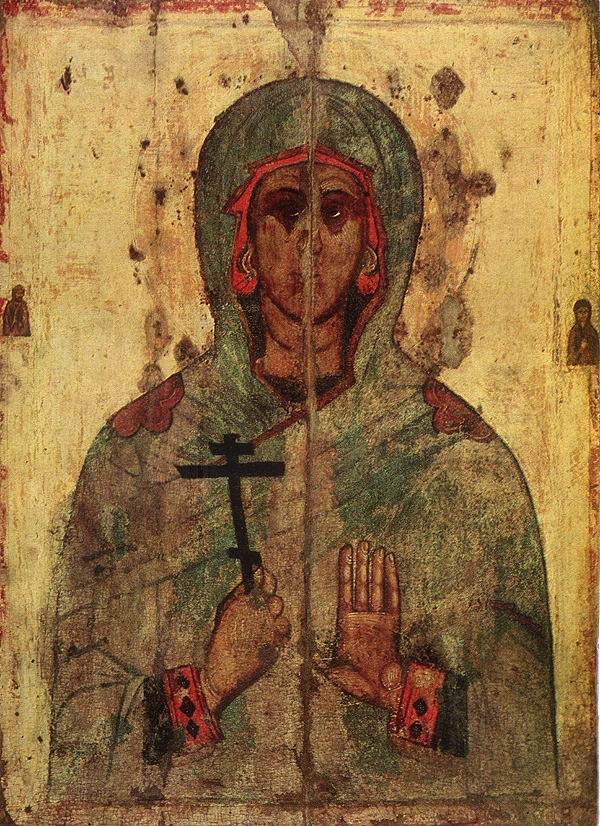
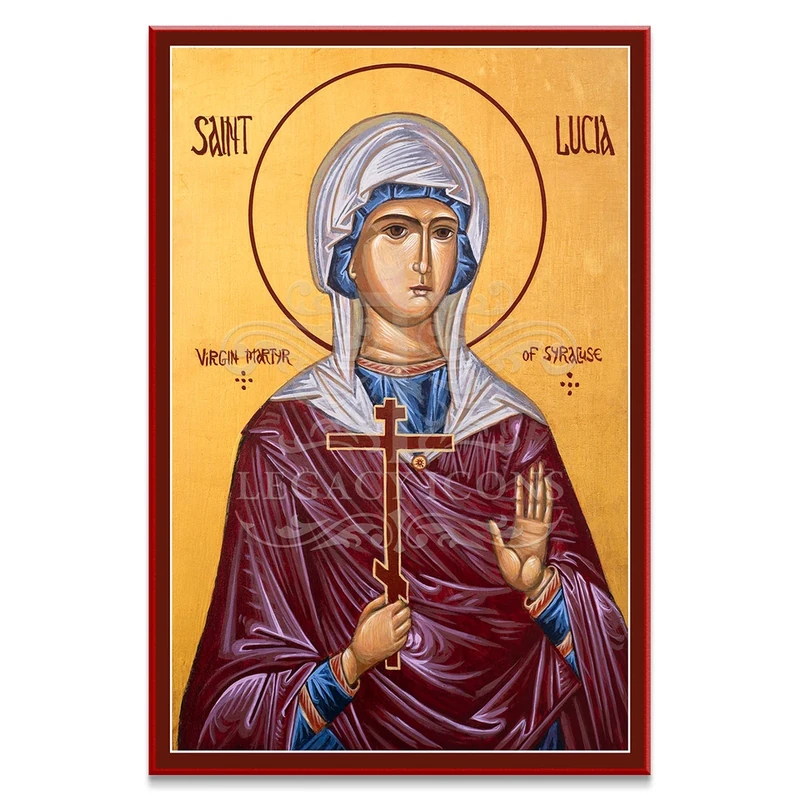
Lucy is remembered as a Christian woman in Syracuse who distributed her wealth to people in poverty and dedicated her life to God. A rejected suitor denounced her as a Christian, and she was arrested during persecution. Her traditional life describes attempts to coerce her before she was killed for her faith. The Church remembers both her generosity and her steadfast confession. Her name is connected with light, and she is often invoked by people with eye afflictions. Lucy’s witness joins the courage to refuse coercion with the practical freedom of sharing possessions with those in need.
The directory indexes the OCA full-year calendar, including leap-day commemorations, alongside additional researched profiles. Calendar entries include individual saints, groups, icons and feasts. An entry count is not a count of unique saints. Categories are provisional; follow the linked source.
Dates show commemorations in the referenced calendar year. Movable feasts change annually, and local calendars may differ. Additional jurisdictions, original biographies and icon research remain in progress. This collection does not yet claim complete Eastern Orthodox coverage.
Calendar metadata was retrieved through Orthocal’s source repository and the Orthodox Church in America. Source-only calendar records link to their original accounts; researched profiles include individually sourced artwork.
 Patron SaintTake the quiz