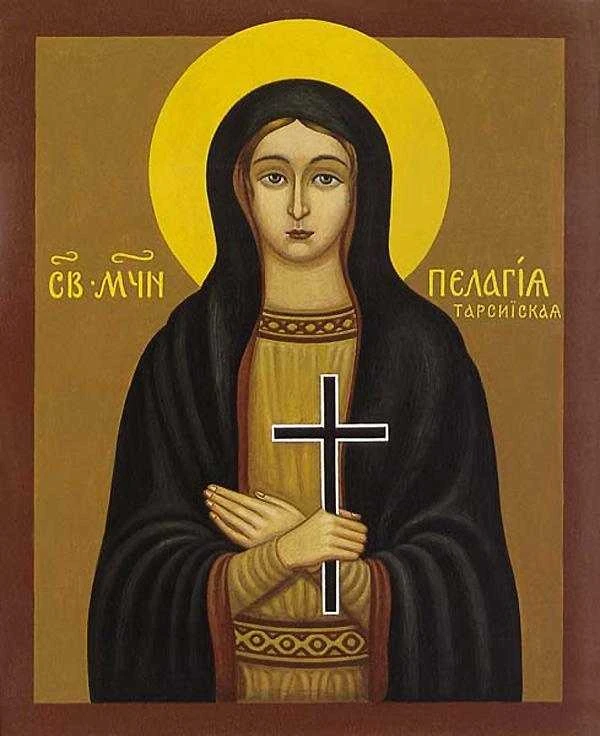
Pelagia of Tarsus is remembered in a martyr narrative as a young woman who learned about Christ from Christian friends. She sought baptism from Bishop Linus and then shared her possessions with poor people. Her decision to follow Christ brought conflict with expectations of marriage and with her mother's wishes. The received life describes her refusing demands to abandon that commitment and eventually suffering execution. Christians later honored her burial place with a church. Her commemoration preserves a witness to conversion and steadfast faith, while the detailed account of imperial courtship and extraordinary martyrdom belongs to hagiographic tradition rather than independently established political history.
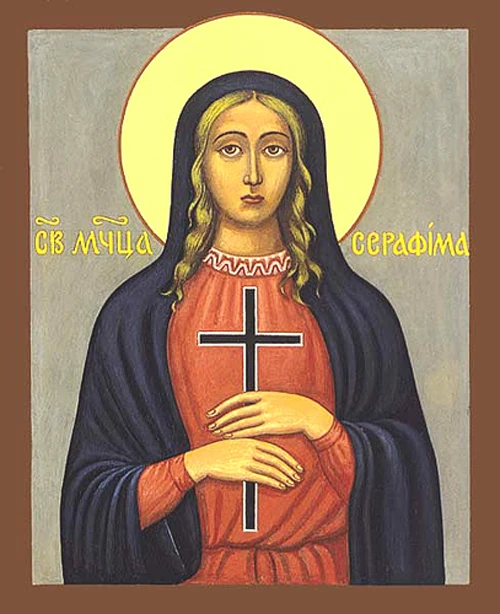
Seraphima, also called Serapia, came from Antioch and lived in Rome during the second century. Her friendship and teaching helped Sabina, a woman from a senatorial household, become Christian. When Seraphima was summoned before the governor, Sabina accompanied her. The source describes repeated pressure to offer pagan sacrifices and violence intended to break her resolve. Seraphima continued to confess Christ and prayed through the danger. She was ultimately beheaded, and Sabina arranged her burial with reverence. Her story places friendship beside martyrdom: the woman she had instructed remained near her during persecution and cared for her body after death.
Theodosia grew up in a women's monastery in Constantinople and became a nun after her parents' death. The OCA's received life remembers her giving inherited wealth to poor people and commissioning icons for worship. It later places her among women resisting the removal of an icon during the iconoclast controversy. The confrontation included violence, and the narrative describes her imprisonment, repeated punishment, and death at a soldier's hands. Her commemoration belongs to the Church's memory of the defense of holy images. Her early generosity provides a clear personal action, while the detailed chronology and violent confrontation call for cautious historical interpretation.
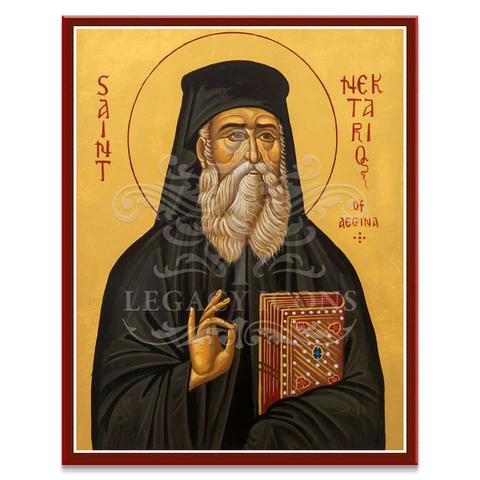
Nektarios served as a bishop and educator before helping establish a women’s monastery on Aegina. His life includes unjust accusations and difficult changes in his ministry. He is remembered for perseverance, humility, and continuing to serve through adversity.
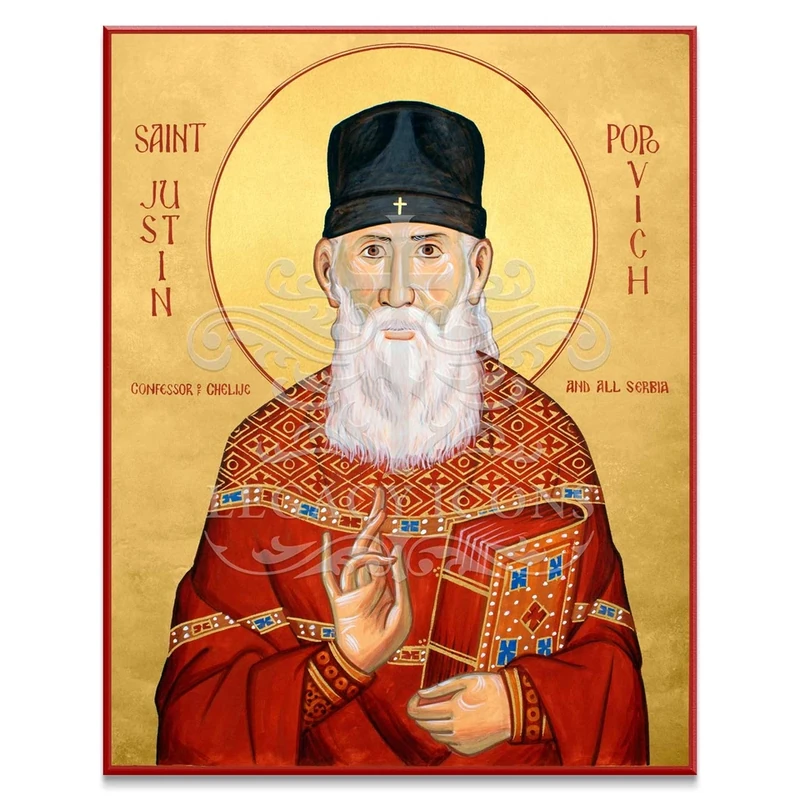
Justin Popović is remembered as a Serbian monk, theologian, and spiritual father whose teaching grew from a life of prayer. After his university teaching ended under the communist government, he lived in several monasteries before settling at Ćelije in 1948. There he guided the community and welcomed people seeking counsel. He translated and compiled twelve volumes of the lives of the saints, connecting theological study with the witness of actual Christian lives. Justin’s example encourages learning that serves the Church: reading and reflection become fruitful when joined to worship, personal repentance, and care for others.
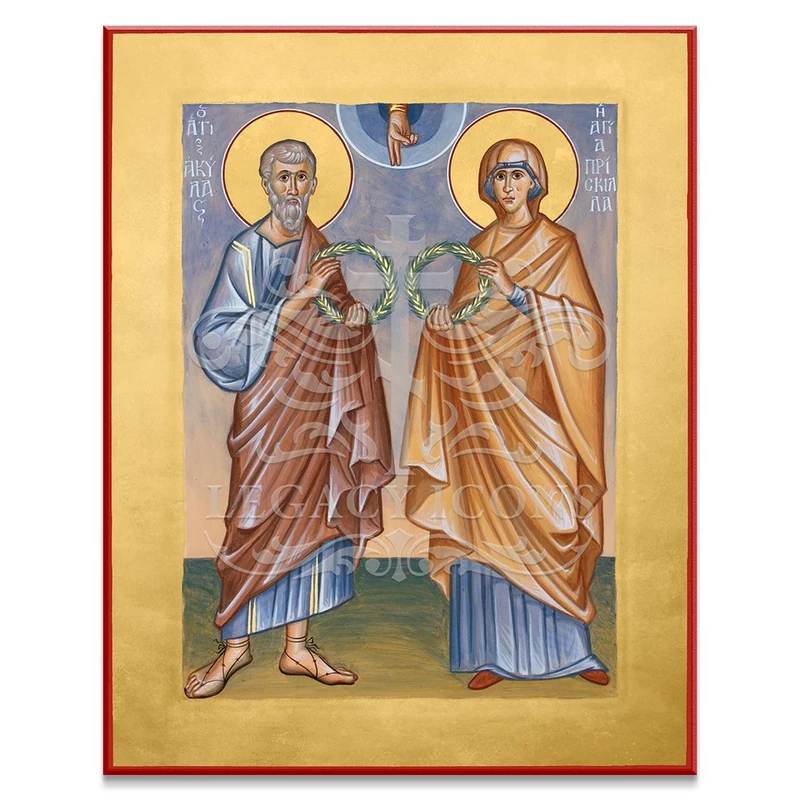
Priscilla and her husband Aquila became coworkers of the Apostle Paul. After being expelled from Rome during the reign of Claudius, they settled in Corinth and later accompanied Paul to Ephesus. There they heard Apollos preach and helped him understand the Christian way more fully. Paul’s letter to the Romans remembers their service, their courage on his behalf, and the church gathered in their household. The OCA life also describes Priscilla’s continuing help in apostolic ministry. Her commemoration honors teaching offered within partnership, hospitality, and the ordinary movement of a working household.
The directory indexes the OCA full-year calendar, including leap-day commemorations, alongside additional researched profiles. Calendar entries include individual saints, groups, icons and feasts. An entry count is not a count of unique saints. Categories are provisional; follow the linked source.
Dates show commemorations in the referenced calendar year. Movable feasts change annually, and local calendars may differ. Additional jurisdictions, original biographies and icon research remain in progress. This collection does not yet claim complete Eastern Orthodox coverage.
Calendar metadata was retrieved through Orthocal’s source repository and the Orthodox Church in America. Source-only calendar records link to their original accounts; researched profiles include individually sourced artwork.
 Patron SaintTake the quiz