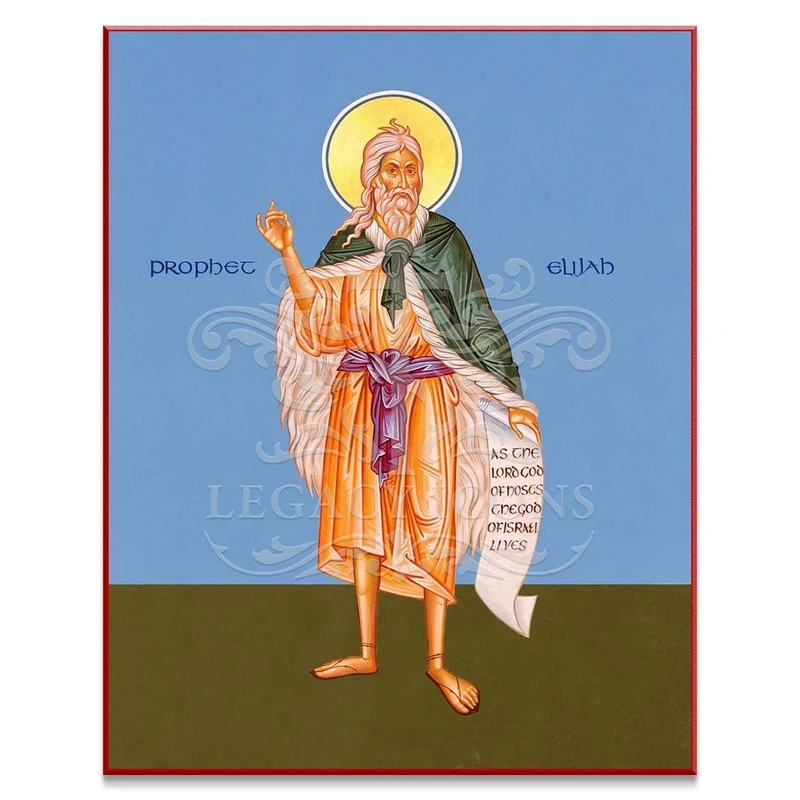
Elijah came from Tishbe in Gilead and confronted the worship of Baal during the reign of Ahab. The biblical account places him in wilderness solitude, receiving food through ravens and later sharing the hospitality of a widow at Zarephath. After the confrontation on Mount Carmel, fear and exhaustion drove him away from Jezebel’s threats. God sustained him and spoke to him on Horeb in a gentle manifestation. Elisha became his disciple and successor. Orthodox Christians also remember Elijah beside Moses at the Transfiguration, where prophetic ministry points toward Christ rather than toward the prophet’s own importance.
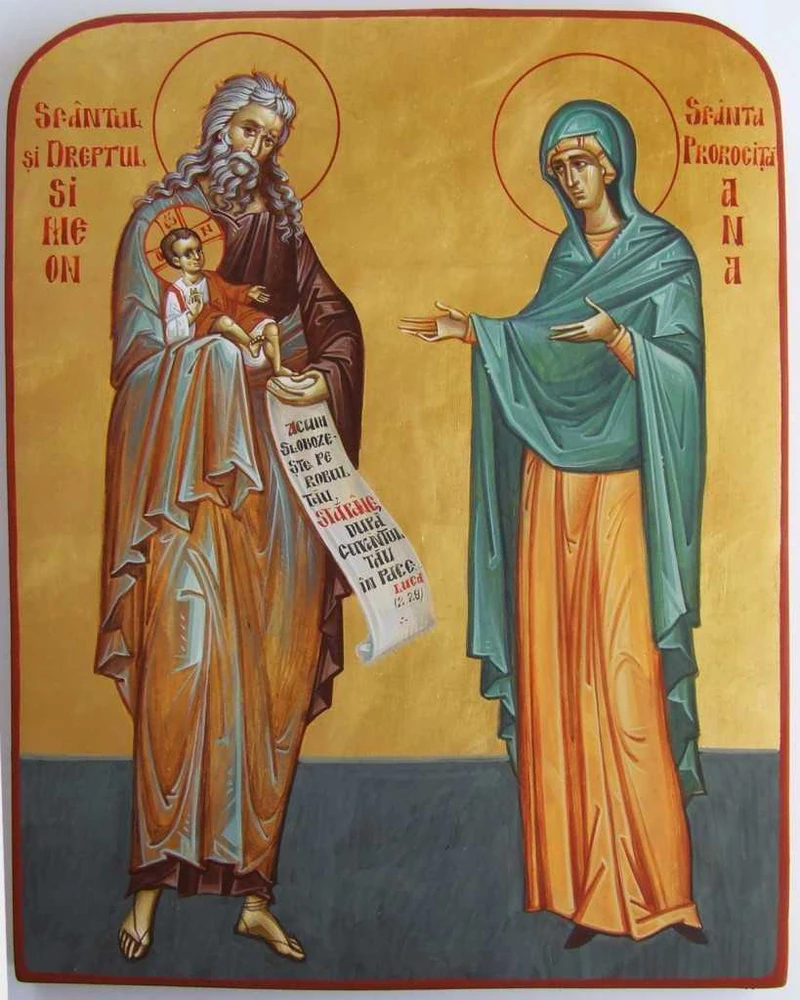
Anna appears in Luke's account of the infant Jesus being brought to the Temple in Jerusalem. She was the daughter of Phanuel, belonged to the tribe of Asher, and had lived many years as a widow after a brief marriage. Luke describes her steady worship through fasting and prayer. When Mary and Joseph brought Jesus, Anna gave thanks to God and spoke about him to people waiting for Jerusalem's redemption. Her witness follows Simeon's recognition of the child. The Church remembers her as an elderly woman whose years of prayer opened into thanksgiving and public testimony to Christ.
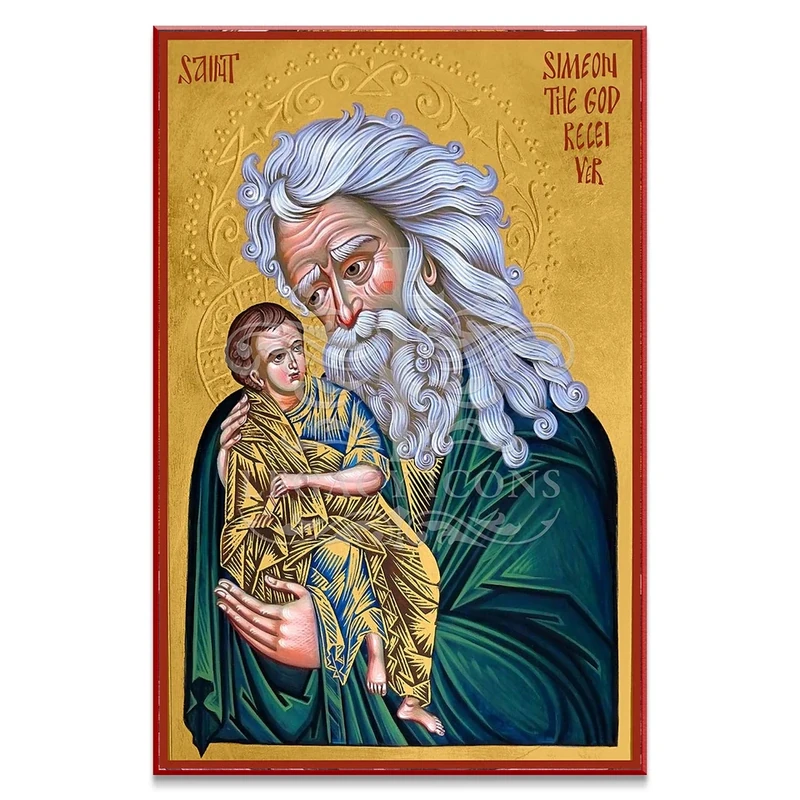
Simeon appears in Luke’s Gospel as a devout man awaiting the consolation of Israel. Guided by the Holy Spirit, he came to the Temple when Mary and Joseph brought the infant Jesus according to the law. He took the child into his arms and blessed God for the salvation he had been allowed to see. He also spoke to Mary about the contradiction and sorrow that would accompany her son’s mission. His canticle continues in Orthodox evening worship. The Church remembers him as a witness whose long expectation found its answer in the person of Christ.
Abo was a young perfumer from Baghdad who came to Georgia with Duke Nerse. He learned Georgian, attended Christian worship, and spoke with priests as his interest in the faith grew. He later received baptism in Khazaria. Returning to Tbilisi, he lived openly as a Christian despite the danger attached to his conversion. Arrest and imprisonment did not change his commitment. The traditional life remembers his care for local churches and his reception of Communion before execution. His commemoration joins careful learning and conversion with steadfast faith in the setting of ordinary urban work.
Abraham was a merchant from Volga Bulgaria who was known for welcoming travelers and poor people. He became a Christian after being raised in a Muslim household. The received life says that, while trading in Great Bolgar, he refused demands to renounce his faith and was imprisoned and killed in 1229. Christians buried him locally. His relics were later brought to Vladimir.
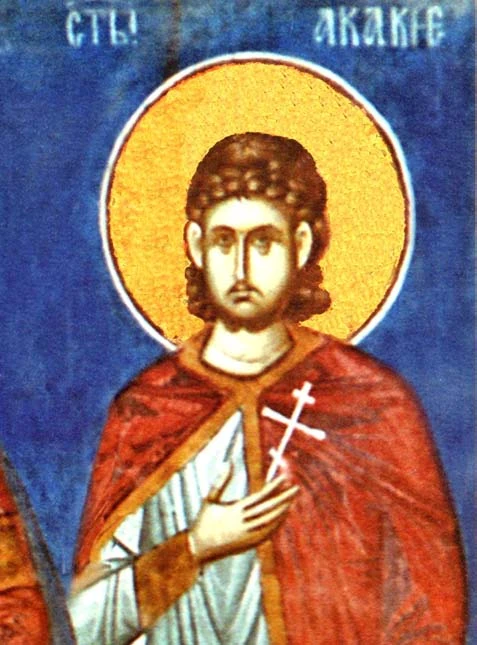
Acacius was a Cappadocian centurion in the Martesian cohort during the reign of Maximian. Brought before the tribune Firmus, he confessed his Christian faith and suffered torture. Another judge sent him in chains to Byzantium, where he was beaten and imprisoned. The received account remembers an angelic healing during his captivity. A later judge ordered his execution by beheading.
The directory indexes the OCA full-year calendar, including leap-day commemorations, alongside additional researched profiles. Calendar entries include individual saints, groups, icons and feasts. An entry count is not a count of unique saints. Categories are provisional; follow the linked source.
Dates show commemorations in the referenced calendar year. Movable feasts change annually, and local calendars may differ. Additional jurisdictions, original biographies and icon research remain in progress. This collection does not yet claim complete Eastern Orthodox coverage.
Calendar metadata was retrieved through Orthocal’s source repository and the Orthodox Church in America. Source-only calendar records link to their original accounts; researched profiles include individually sourced artwork.
 Patron SaintTake the quiz