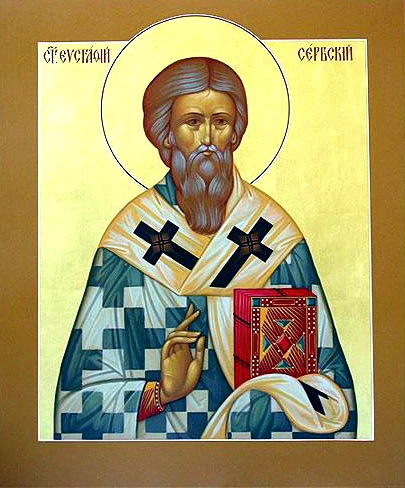
Eustathius came from the Budimlja region and entered monastic life at the Monastery of the Archangel Michael in Zeta. After a pilgrimage to Jerusalem, he settled at Hilandar on Mount Athos and later became its abbot. He then served as bishop of Zeta and archbishop of Serbia. The official Metropolitanate account remembers him distributing gifts to poor people, widows and orphans instead of keeping the gifts for himself. It also describes his provision of necessary resources to churches in poverty. His commemoration on January 4 recalls a teacher and church leader whose responsibilities included practical care.
Innocent Kulchitsky was a monk and theological teacher before being appointed to a mission intended for China. When entry was refused, he endured years of uncertainty near the border. He later became the first bishop of Irkutsk, serving a vast region with few roads and scarce resources. Despite severe financial hardship, he supported Russian and Mongolian schools, taking care to provide teachers, books, and clothing for students. Sermons and pastoral letters accompanied the work of organizing the diocese. His life remembers persistent educational and pastoral service under conditions that offered little outward security.
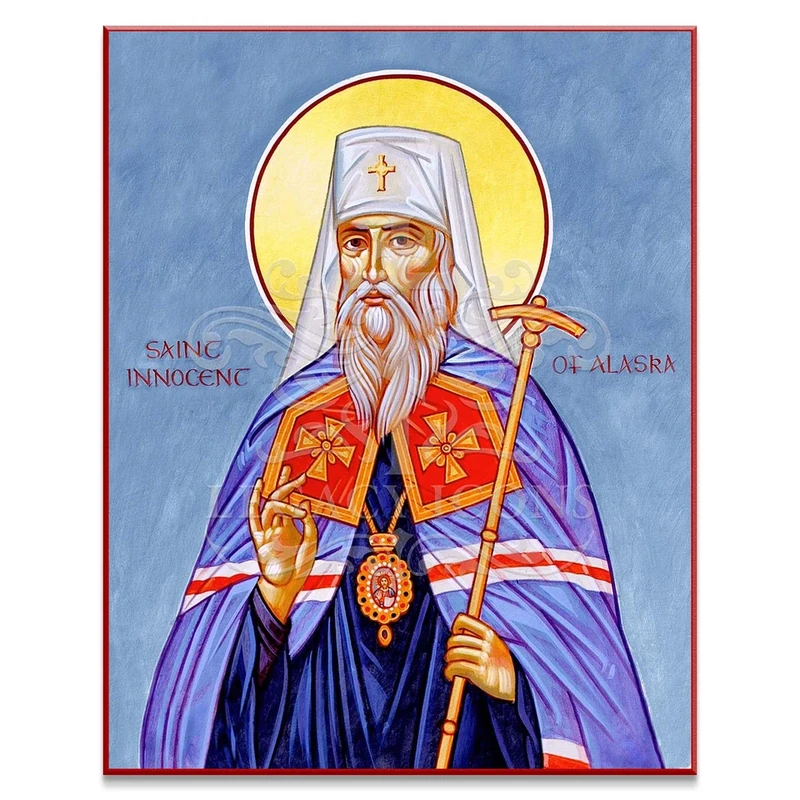
Innocent Veniaminov began missionary service as a parish priest and spent much of his life traveling among communities in Alaska and Siberia. He learned local languages and translated Christian teaching and the Gospel so that people could pray and study with understanding. His work included the Aleutian Islands, Sitka, and distant settlements across a vast diocese. He also shared his experience with Nicholas, the future missionary bishop in Japan. Later he became Metropolitan of Moscow. His life unites practical learning, patient travel, and the conviction that the Church should speak in the languages of the people it serves.
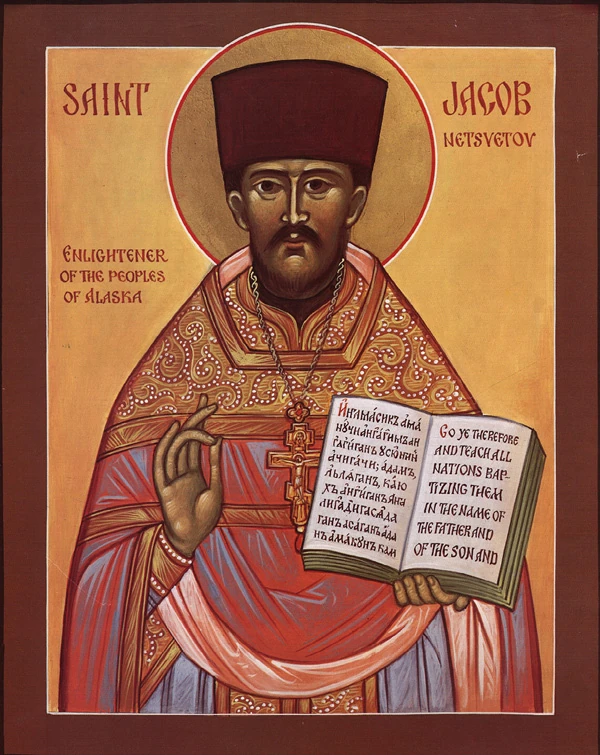
Jacob Netsvetov was born on Atka Island to an Aleut mother and a Russian father. After studying and receiving ordination in Irkutsk, he returned to Alaska with his wife and father. He served an immense parish, taught children, worked on language and translation, and carried a portable church tent on journeys. Family bereavements and the loss of his home brought deep sorrow, but pastoral counsel helped him continue. His later ministry reached communities along the Yukon and Kuskokwim rivers. The Church remembers a bilingual teacher and priest who joined worship with care for sick people and remote communities.
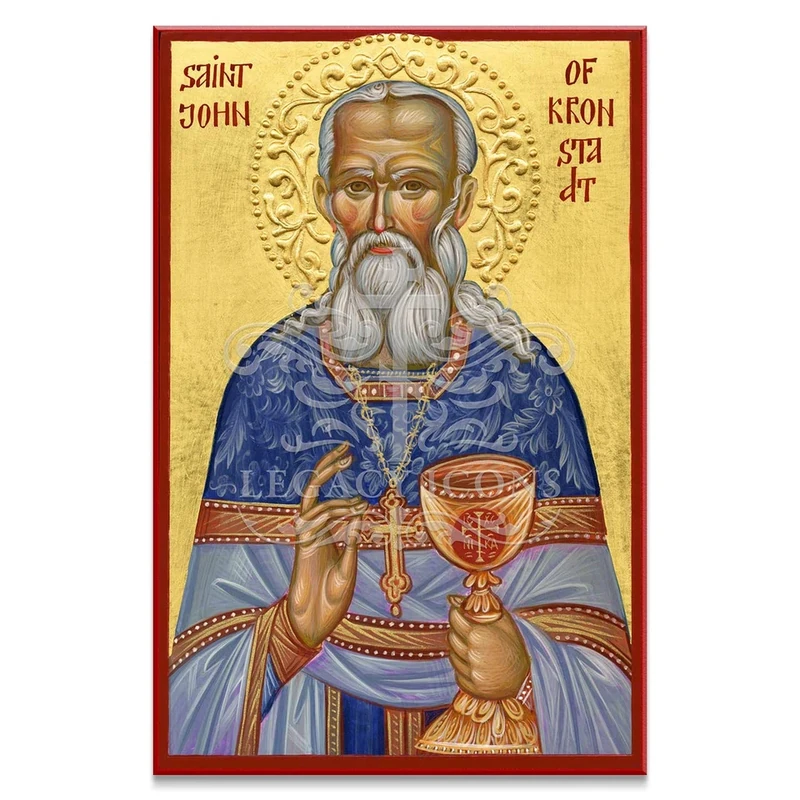
John served as a married priest at Saint Andrew’s Cathedral in Kronstadt. He visited poor households and exiles, giving time as well as food, clothing, and other practical assistance. His traditional life emphasizes that he regarded each visitor as a person of immeasurable worth. He encouraged participation in the Church’s worship and taught children with attention to their understanding rather than mere memorization. Organized charitable work extended what he could do alone. John’s ministry offers an example of prayer becoming sustained presence among neighbors whose poverty or reputation made them easy to disregard.
Jonah entered monastic life while young and later worked in the bakery of Moscow's Simonov Monastery. Church responsibilities took him to Ryazan as bishop and eventually to the metropolitan's office. His appointment came during a difficult period of disagreement over church leadership and the Council of Florence. The OCA remembers his continued ascetic discipline and teaching through both words and conduct. During an attack on Moscow, he led a procession along the city walls and prayed for the people. His subsequent church foundation expressed thanksgiving. He died in 1461, leaving a commemoration that connects ordinary monastic work with pastoral responsibility in a crisis.
The directory indexes the OCA full-year calendar, including leap-day commemorations, alongside additional researched profiles. Calendar entries include individual saints, groups, icons and feasts. An entry count is not a count of unique saints. Categories are provisional; follow the linked source.
Dates show commemorations in the referenced calendar year. Movable feasts change annually, and local calendars may differ. Additional jurisdictions, original biographies and icon research remain in progress. This collection does not yet claim complete Eastern Orthodox coverage.
Calendar metadata was retrieved through Orthocal’s source repository and the Orthodox Church in America. Source-only calendar records link to their original accounts; researched profiles include individually sourced artwork.
 Patron SaintTake the quiz