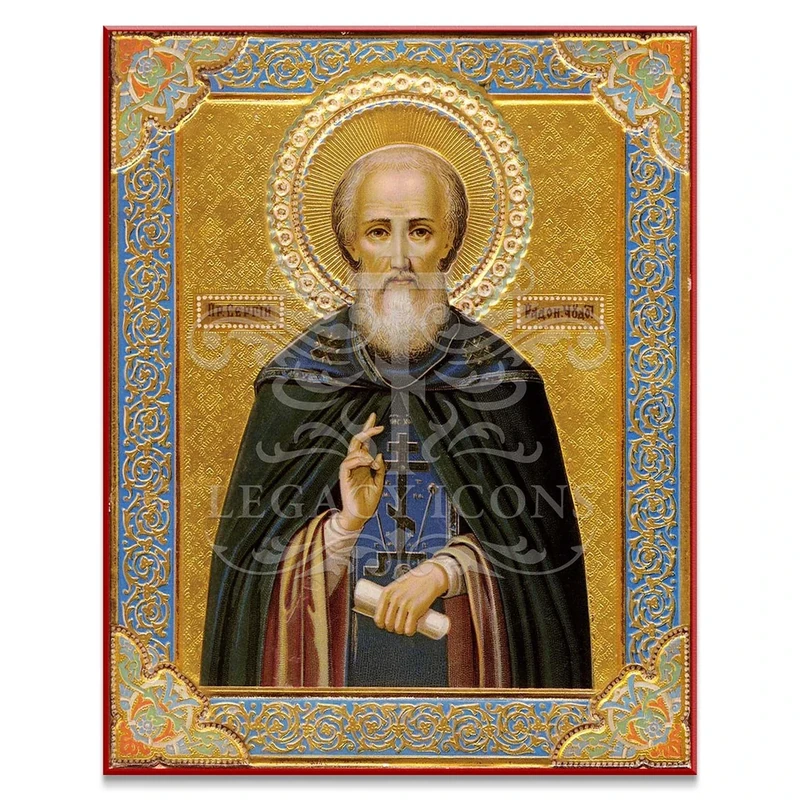
Nilus entered monastic life at the White Lake monastery and later studied communities in Palestine and on Mount Athos. Returning to the Russian north, he established a small settlement beside the Sora River. His rule combined prayer in separate cells with shared worship and readings from the Church Fathers. He emphasized manual work, limited possessions, and careful attention to thoughts and desires. The OCA remembers him digging a well and pond as well as writing guidance for disciples. He died in 1508. His example connects spiritual watchfulness with a simple material life sustained through work rather than the pursuit of wealth.
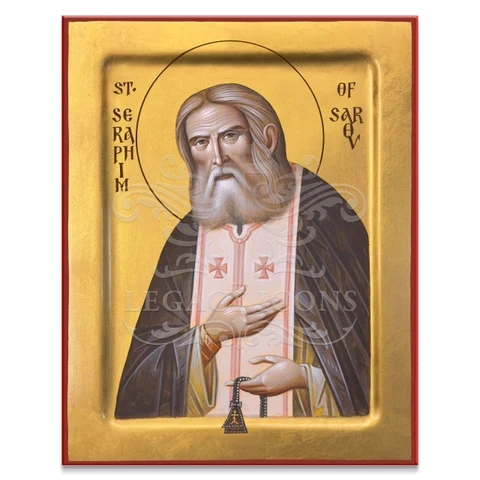
Seraphim spent years in monastic discipline and solitude near Sarov. Later he received people seeking spiritual counsel. The Church remembers both the depth of his prayer and the warmth with which he welcomed those who came to him.
Sergius began an ascetic life in the forests near Radonezh, where a small church dedicated to the Trinity became the center of a growing monastic community. As others gathered, he continued doing ordinary work: building cells, carrying water, baking bread, and preparing food. His traditional life remembers both prayer and a reluctance to seek rank. Later generations revered him as a major guide of Russian monastic life. Sergius offers an example of leadership expressed through shared labor. Responsibility for a community can be carried with humility when its leader remains willing to serve alongside everyone else.
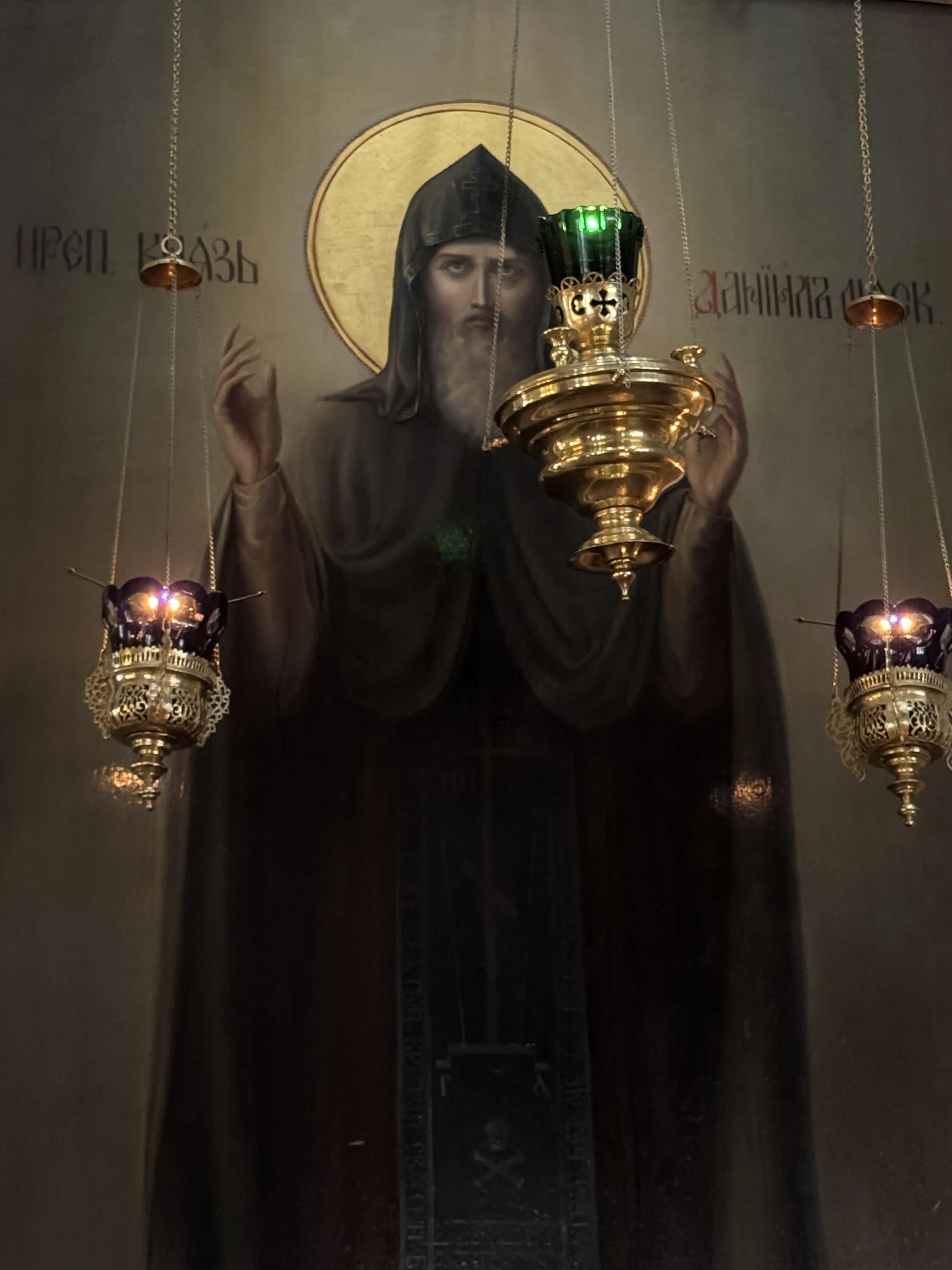
Daniel was a son of Alexander Nevsky and inherited the small principality of Moscow. The received life remembers his efforts to settle disputes among his relatives without bloodshed. He established a monastery beside the Moscow River in honor of Daniel the Stylite. Near the end of his life he became a monk there and asked to be buried in the monastery cemetery like the other monks. He died in 1303.
Lazar was a fourteenth-century Serbian prince. His OCA life remembers church building, support for monasteries and charitable establishments, and the foundation of Ravanica Monastery. It also records his petition to Constantinople concerning the dispute over the Serbian Church. During the Kosovo conflict in 1389 he was captured and killed. His commemoration on June 15 honors him as a martyr. He is distinct from Lazarus of Bethany and from monastic saints named Lazarus.
Pulcheria was the daughter of the Emperor Arcadius and the sister of Theodosius II. Her Orthodox life remembers her work as an adviser and co-regent to her brother, as well as her support for churches and monasteries. She later married Marcian. She gave her wealth to poor people and to the Church. Her commemoration on September 10 recalls an empress whose responsibilities included both public affairs and practical support for Christian communities.
The directory indexes the OCA full-year calendar, including leap-day commemorations, alongside additional researched profiles. Calendar entries include individual saints, groups, icons and feasts. An entry count is not a count of unique saints. Categories are provisional; follow the linked source.
Dates show commemorations in the referenced calendar year. Movable feasts change annually, and local calendars may differ. Additional jurisdictions, original biographies and icon research remain in progress. This collection does not yet claim complete Eastern Orthodox coverage.
Calendar metadata was retrieved through Orthocal’s source repository and the Orthodox Church in America. Source-only calendar records link to their original accounts; researched profiles include individually sourced artwork.
 Patron SaintTake the quiz