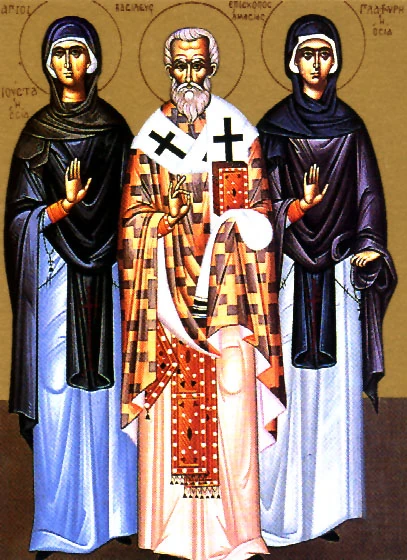
Basil, also called Basileus, was bishop of Amasea during the reign of Licinius. He sheltered Glaphyra after she fled the imperial court, and she contributed money toward the church he was building. Licinius ordered both of them brought to Nicomedia, but Glaphyra died before the summons reached her. Basil was taken to the emperor. The received account describes his refusal to abandon his faith and become a pagan priest. He prayed before his execution and was beheaded. His companions later brought his remains back to Amasea.
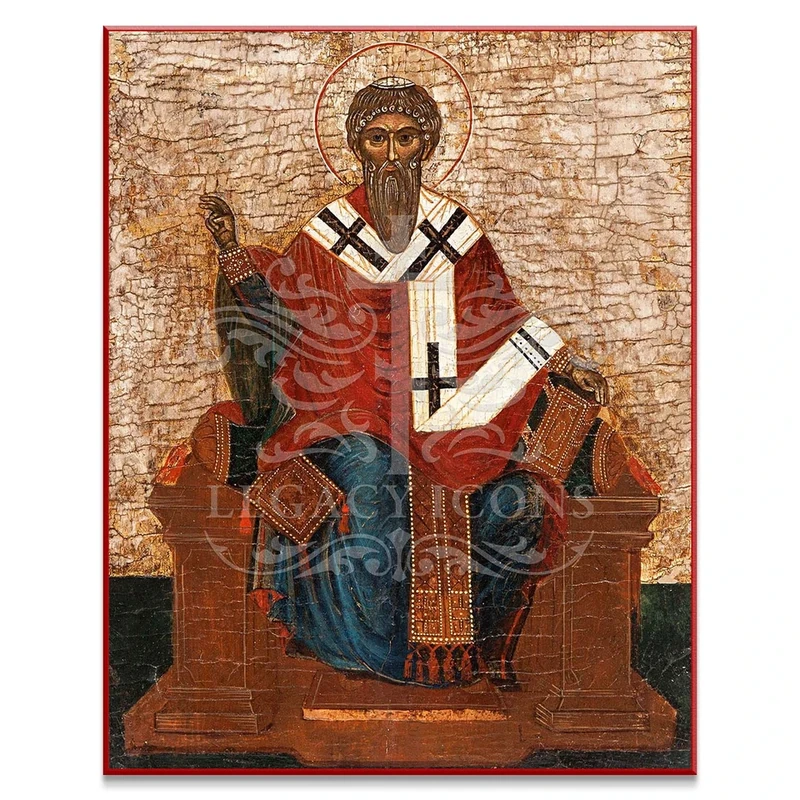
Clement belongs to the early bishops of Rome and is remembered among the Apostolic Fathers. The Orthodox life associates him with the preaching of the apostles and describes a ministry that drew people from different social stations into the Church. Its martyrdom tradition places him in exile near Cherson in Crimea, sharing the harsh conditions of Christians condemned to quarry work. He prayed with the prisoners and continued to preach before being put to death by drowning. His relics later became associated with the journeys of Cyril and Methodius. Orthodox commemoration joins his pastoral memory with the endurance of believers in exile.
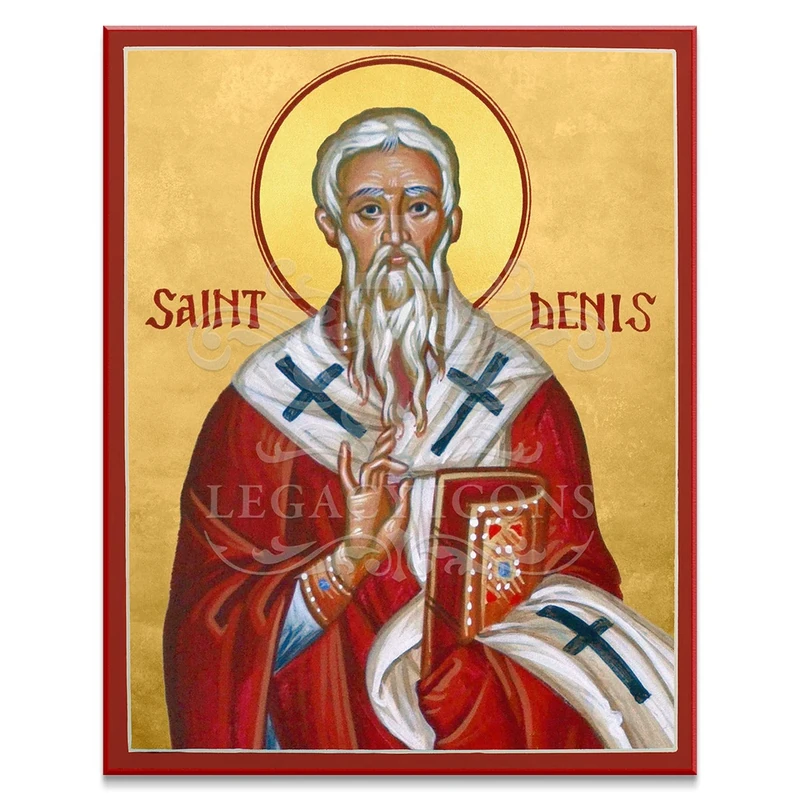
Dionysius, also called Denis, is remembered as an early Christian missionary bishop at Lutetia, the settlement that became Paris. The OCA life places his preaching in Gaul around the middle of the third century and records his martyrdom with the priest Rusticus and the deacon Eleutherius. Later devotion connected his burial place with Saint-Denis and made him a patron of France. A famous story of his carrying his severed head belongs to later legend. The source explicitly rejects his identification with the first-century Dionysius of Athens, preserving separate identities for two saints who share the same name.
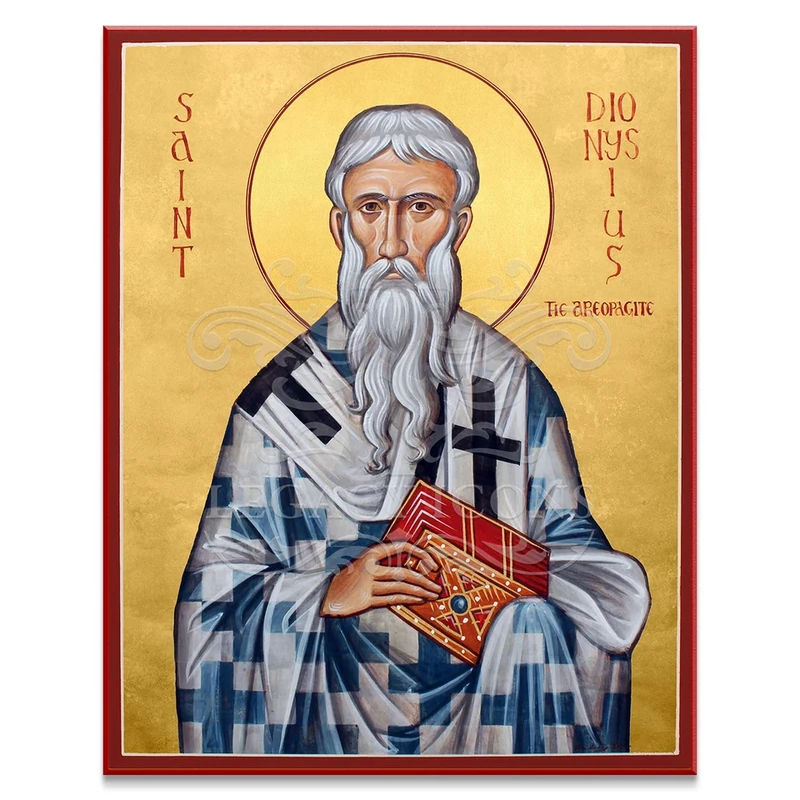
Dionysius is named in Acts among the Athenians who believed after hearing Paul speak at the Areopagus. Orthodox tradition remembers him as a bishop of Athens and a martyr. A body of influential theological writings later circulated under his name, treating divine names, worship, angels, and mystical theology. The OCA account acknowledges scholarly questions about the authorship of those works and explicitly distinguishes the Athenian saint from Dionysius of Paris. His commemoration can therefore honor the apostolic convert without collapsing several people or centuries into one biography. The biblical encounter remains the clearest point of identification in his story.
Dionysius became a Christian as an adult and studied under Origen before directing Alexandria’s catechetical school. Chosen bishop in 247, he guided the Church through persecution, exile, civil disorder, famine, and epidemic disease. The OCA life remembers his call to care for sick people without separating Christians from their neighbors of other beliefs. His letters and other writings addressed practical problems as well as theological questions, and portions survive through later authors. Illness prevented him from attending a council near the end of his life. His pastoral memory joins serious study with solidarity toward people exposed to suffering.
Dorotheus is remembered as Bishop of Tyre during periods of persecution and recovery in the early Church. The received account describes him withdrawing when officials pursued Christians, then returning to care for his congregation after circumstances changed. He continued teaching the faith over many years. In later persecution he again left Tyre, but was arrested near the western Black Sea. His refusal to offer pagan sacrifice led to torture and death. The Church honors him as a bishop and martyr whose ministry included both prudent retreat and renewed service. A work called the Synopsis is sometimes attributed to him, though that attribution is uncertain.
The directory indexes the OCA full-year calendar, including leap-day commemorations, alongside additional researched profiles. Calendar entries include individual saints, groups, icons and feasts. An entry count is not a count of unique saints. Categories are provisional; follow the linked Orthodox source.
Dates show commemorations in the referenced calendar year. Movable feasts change annually, and local calendars may differ. Additional jurisdictions, original biographies and icon research remain in progress. This collection does not yet claim complete Eastern Orthodox coverage.
Calendar metadata was retrieved through Orthocal’s source repository and the Orthodox Church in America. Source-only calendar records link to their original accounts; researched profiles include individually sourced artwork.
 Patron SaintTake the quiz