Agapitus was a disciple of Anthony at the Kiev Caves monastery. When a brother fell ill, he attended the patient personally and prepared simple food and herbs. People outside the monastery also sought his help. The traditional account remembers his refusal to turn healing into a source of wealth or reputation: when a grateful prince offered gifts, Agapitus avoided the honor. His prayers and care became a lasting part of the monastery’s memory. He is honored as an unmercenary healer, joining humble service of sick people with a life shaped by monastic devotion.
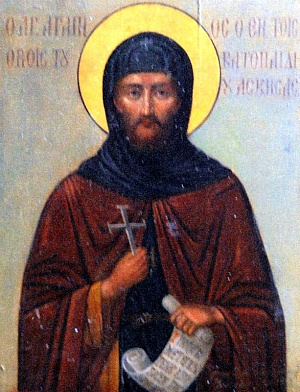
Agapius lived as a novice near Vatopedi on Mount Athos before being captured and taken to Magnesia. The received life describes years of forced labor and his continued prayer for freedom. It then tells of deliverance through a vision of the Mother of God and his return to his elder. A difficult part of the narrative has the elder send him back to his captor; the story ends with the captor and his sons becoming Christians and monks. Orthodox remembrance preserves the account of prayer in captivity, while its historical assumptions about obedience and slavery require careful explanation.
Agathon lived among the Egyptian desert monks and received guidance associated with Abba Lot. The sayings preserved in his Orthodox life emphasize meekness and discernment. When visitors tried to provoke him through accusations, he did not answer with wounded pride, yet he refused an accusation that would separate him from the faith. He taught that outward ascetic practices should support inward vigilance rather than replace its fruit. Near death he remained conscious of the difference between human approval and God’s judgment. His remembrance joins humility with a clear mind, resisting both vanity and the assumption that religious effort guarantees perfection.
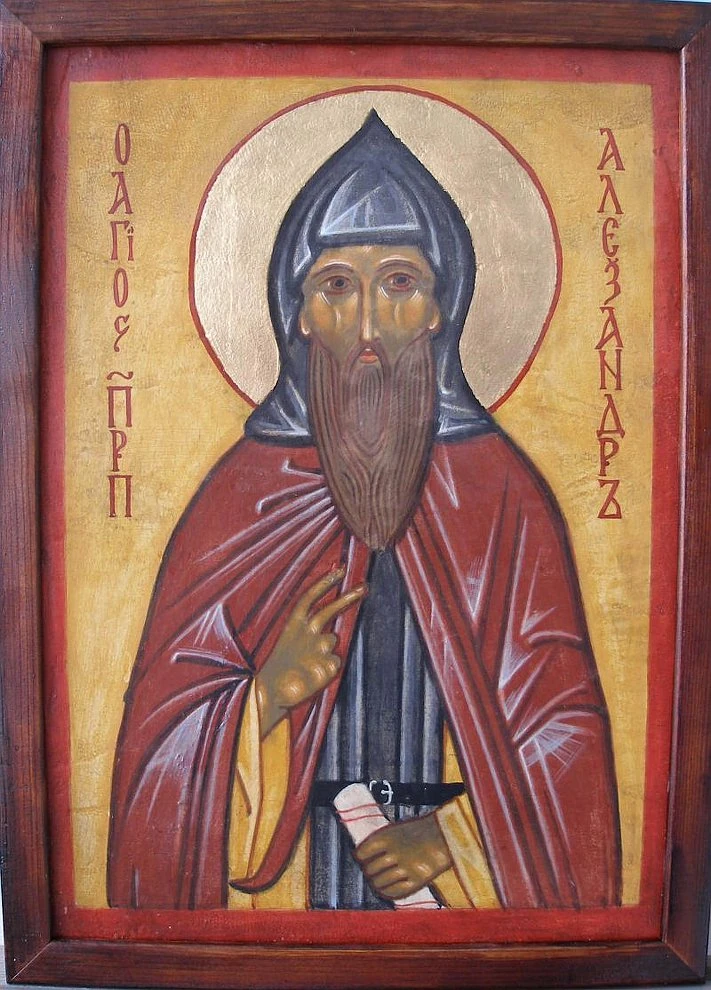
Alexander began monastic life at Valaam and later sought solitude in the forests near the Svir region. Other monks eventually gathered around him, and he became responsible for their common life. The received account remembers a vision of the Trinity associated with the monastery’s foundation. As abbot, he continued ordinary work: preparing food, grinding grain, carrying water, and gathering firewood. He guided the brothers through quiet correction and forgiveness rather than relying only on public authority. His disciples carried monastic life into other northern communities. Orthodox remembrance joins his profound prayer with the practical labor through which a community survives.
Alexander left military service for monastic life near Antioch and later guided communities in Syria and Constantinople. His distinctive foundation organized the monks into successive groups so that psalmody continued through the day and night. The name Unsleeping Ones referred to this shared rhythm, rather than requiring every monk to remain awake continuously. The OCA also remembers missionary teaching and a church and shelter built for sick and homeless people in Antioch. Alexander appointed other leaders when moving to new work. His commemoration joins sustained common prayer with organization, teaching, and practical provision for people beyond the monastery.
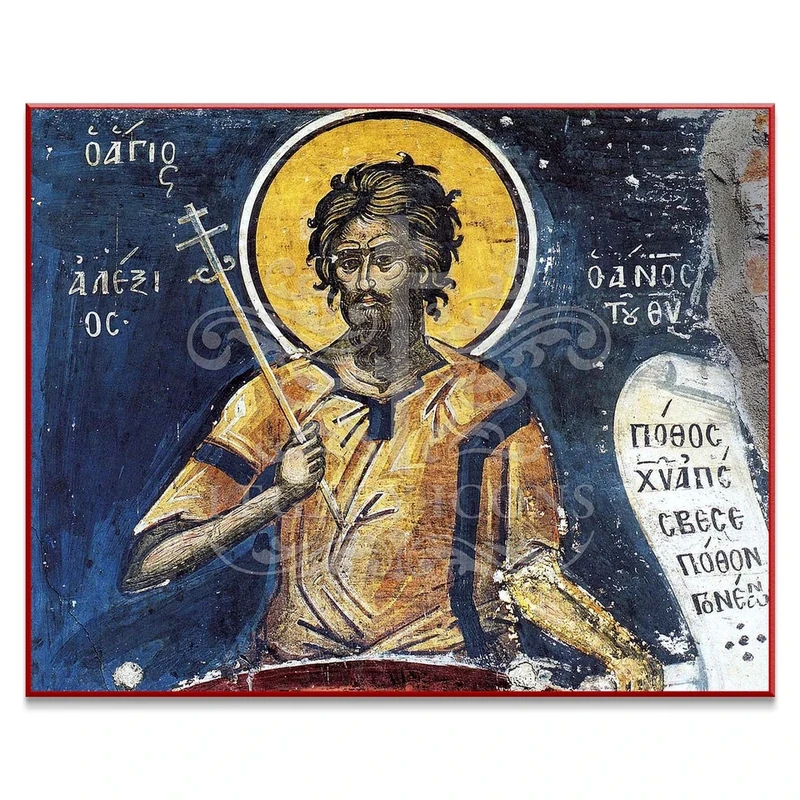
The received life of Alexis describes a young Roman who left an arranged marriage to pursue a life of poverty and prayer. In Edessa he lived near a church, keeping little of the alms he received and sharing the rest with older and infirm people. The narrative later brings him back to Rome, where his own household sheltered him without recognizing him. Before his death he wrote a letter revealing his identity and asking forgiveness for the grief he had caused his family. Orthodox devotion remembers his hidden prayer and generosity. The story also preserves the real sorrow experienced by those he left behind.
The directory indexes the OCA full-year calendar, including leap-day commemorations, alongside additional researched profiles. Calendar entries include individual saints, groups, icons and feasts. An entry count is not a count of unique saints. Categories are provisional; follow the linked source.
Dates show commemorations in the referenced calendar year. Movable feasts change annually, and local calendars may differ. Additional jurisdictions, original biographies and icon research remain in progress. This collection does not yet claim complete Eastern Orthodox coverage.
Calendar metadata was retrieved through Orthocal’s source repository and the Orthodox Church in America. Source-only calendar records link to their original accounts; researched profiles include individually sourced artwork.
 Patron SaintTake the quiz