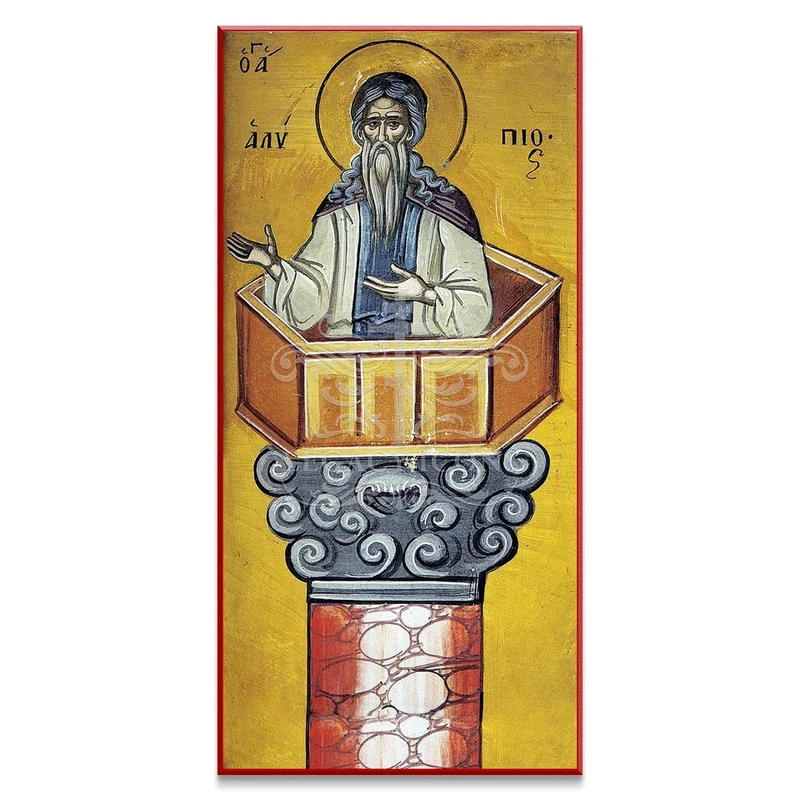
Alypius was raised under the care of a bishop after his mother was widowed. The received life associates his calling with a vision of Euphemia and the building of a church in her honor. Beside that church he adopted the unusual discipline of living on a pillar, combining prolonged prayer with instruction for visitors. Communities of men and women formed nearby, and he prepared guidance for both. Later physical weakness prevented him from standing, but his pastoral responsibility continued. Orthodox remembrance honors his endurance and prayer while preserving the distinctive setting of an ancient ascetic vocation.
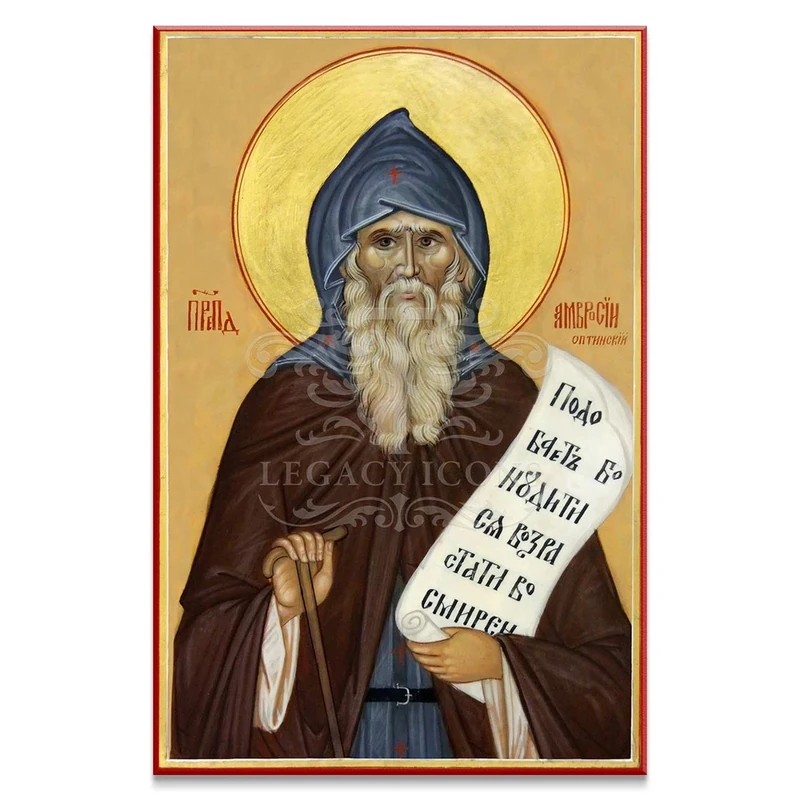
Ambrose, born Alexander Grenkov, worked as a teacher before entering Optina monastery. He learned from its elders and helped prepare spiritual writings for publication. Despite poor health, he became a trusted guide to people from many walks of life, explaining the Fathers in plain language rather than relying on personal opinions. He also founded Shamordino convent, which welcomed women who were poor or living with illness or disability. Ambrose’s witness joins wisdom with accessibility. Guidance becomes a service when the teacher makes room for people whose circumstances might otherwise keep them outside a community.
Ammon lived in Egypt during the early development of desert monasticism. The Orthodox account describes a marriage in which both spouses agreed to a life centered on prayer and ascetic discipline. After many years together, they continued their vocations separately: his wife established a women's community in their home, while Ammon withdrew to the Nitrian desert. He remained in contact with Anthony the Great and sought his blessing. The Church remembers Ammon's sustained prayer and his place in the early Egyptian monastic tradition. His wife's foundation belongs to her own story and should not be transferred to him.
Anastasius entered monastic life after a devout upbringing and later came to the community on Mount Sinai. He learned from experienced ascetics and became known for humility and discernment. Ordained a priest, he wrote accounts of holy fathers and other works of Christian instruction. He eventually served as abbot and traveled through neighboring regions to defend and explain the faith. His life remembers teaching formed within prayer and community rather than learning pursued only for reputation. The Church honors him among the fathers of Sinai, preserving the connection between wise guidance, monastic responsibility, and clear instruction.
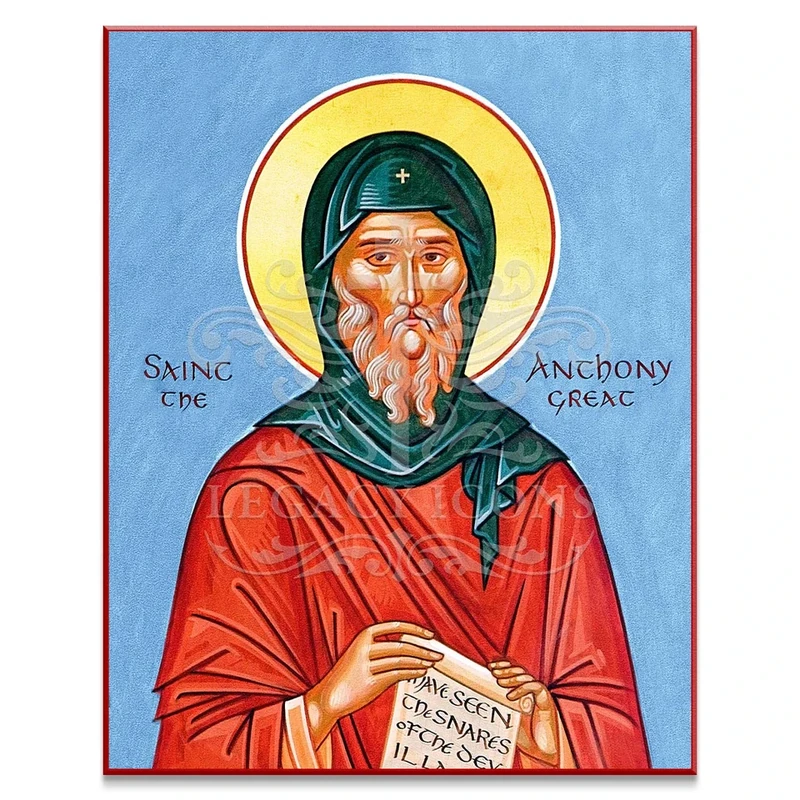
Anthony responded to the Gospel’s call to give freely and follow Christ by leaving a comfortable inheritance for a disciplined life of prayer. In the Egyptian desert he faced loneliness, temptation, and the demands of perseverance. Others came to seek his guidance, and his example became foundational for Christian monasticism. The life written by Athanasius helped make that example known far beyond Egypt. Anthony’s withdrawal was directed toward God rather than indifference to other people. His story invites attention to freedom from possessions, steady prayer, and the humility required to learn from an experienced guide.
Andrew Rublev was a monk and iconographer associated with the Trinity and Andronikov monasteries near Moscow. The earliest chronicle notice names him among the artists who worked on the Annunciation Cathedral in 1405. He later painted at Vladimir with his fellow monk Daniel. Nikon of Radonezh asked the two artists to decorate the rebuilt Trinity monastery, where Andrew produced the celebrated icon of the Holy Trinity, based on Abraham's hospitality. His life is known chiefly through monastic connections and artistic commissions rather than detailed personal anecdotes. The Church remembers work that placed visual beauty at the service of worship and theological contemplation.
The directory indexes the OCA full-year calendar, including leap-day commemorations, alongside additional researched profiles. Calendar entries include individual saints, groups, icons and feasts. An entry count is not a count of unique saints. Categories are provisional; follow the linked source.
Dates show commemorations in the referenced calendar year. Movable feasts change annually, and local calendars may differ. Additional jurisdictions, original biographies and icon research remain in progress. This collection does not yet claim complete Eastern Orthodox coverage.
Calendar metadata was retrieved through Orthocal’s source repository and the Orthodox Church in America. Source-only calendar records link to their original accounts; researched profiles include individually sourced artwork.
 Patron SaintTake the quiz