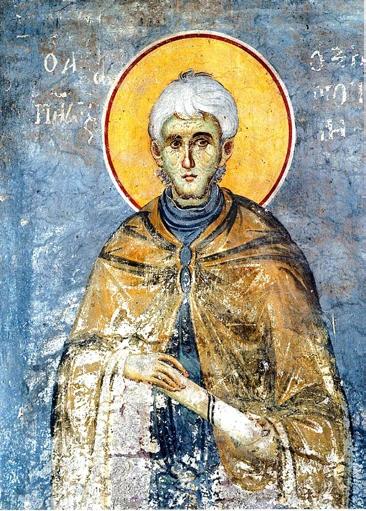
Paul lived as a monk on Mount Athos and is associated with the monastery of Xeropotamou. During a stay in Constantinople, he taught the emperor’s children while maintaining his monastic practice. When offered wealth, he instead asked for support to rebuild the monastery. He returned to monastic life and later gathered his disciples to give them spiritual instruction before his death.
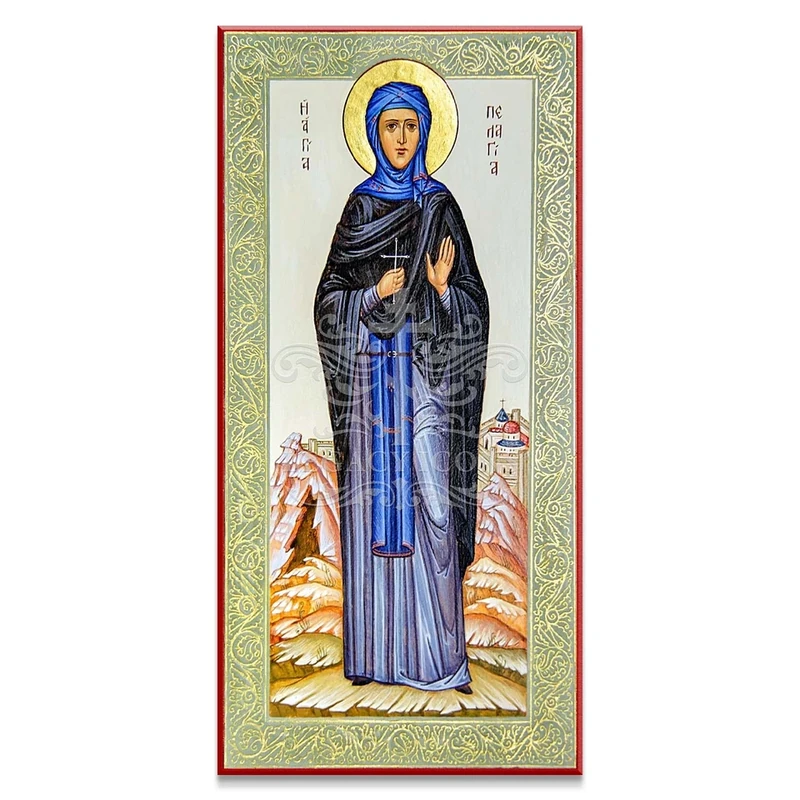
Pelagia’s traditional life begins in Antioch, where she encountered the preaching of Bishop Nonnus. The account describes his refusal to dismiss her because of her previous way of life. Moved by Christian teaching, Pelagia asked for baptism and committed herself to a new beginning. She brought her valuables to the bishop for distribution to poor people. Later she traveled to Jerusalem and lived in prayerful seclusion on the Mount of Olives under the name Pelagius. Her commemoration remembers repentance as a transformation expressed through generosity, perseverance, and the possibility of holiness beyond a person’s reputation.
Peter of Athos is remembered as a former soldier whose captivity led him to renew an earlier desire for monastic life. The received account follows his release, monastic tonsure in Rome, and eventual settlement on Mount Athos. Prayer and devotion to the Theotokos formed the center of his solitary vocation. When a hunter encountered him and asked to remain as a disciple, Peter did not immediately accept the request. He instead asked the visitor to return home and examine his intention over time. His commemoration preserves an early Athonite hermit tradition and emphasizes prayer together with discernment about a demanding vocation.
Pimen was born in Sofia and received the baptismal name Paul. He learned church singing, Scripture and icon painting from the monk Thomas. After distributing his inherited property to poor people, he entered Zograf Monastery and became a priest. Later, accompanied by his disciple Pamphilius, he traveled through Bulgarian towns, preaching and restoring churches and monasteries. The received life remembers his work decorating those buildings with paintings. He returned to Cherepish Monastery near the end of his life.
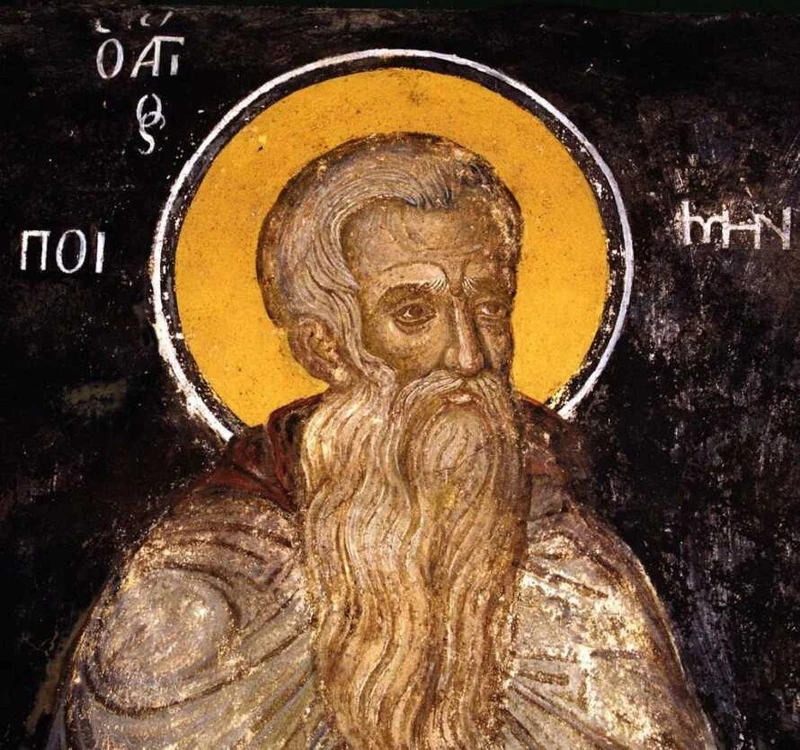
Pimen, also known as Poemen, entered Egyptian monastic life with his brothers and became a trusted guide for other monks. Many of his answers were preserved because they addressed ordinary struggles with anger, judgment, repentance, and prayer. He warned that rigorous fasting meant little when a person remained quick to anger. He also encouraged sincere repentance without treating long periods of punishment as the measure of God's forgiveness. When another elder felt overshadowed by his reputation, Pimen visited him with food and patiently sought reconciliation. His teaching joins practical wisdom to humility, directing attention toward one's own faults and the needs of a neighbor.
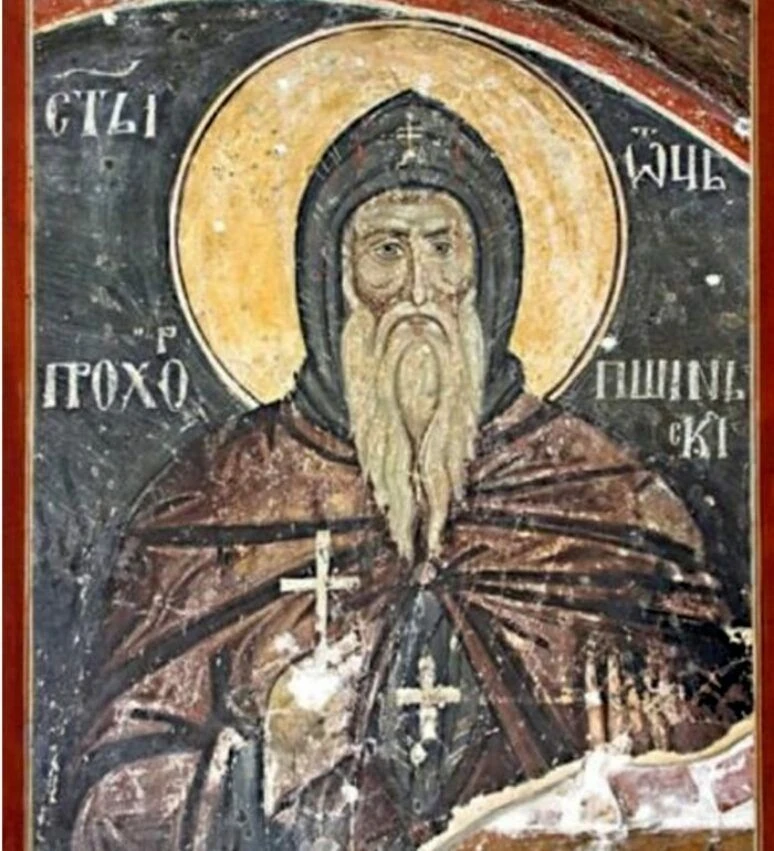
Prochorus came from the Ovče Polje region near Skopje. His received life describes his devotion to church prayer and his distribution of his property to people in need before he entered the wilderness. He lived as a hermit near Nagoričane and later in the Kozjak mountains. The account connects his memory with the Pčinja monastery and with the eleventh-century emperor Romanos Diogenes. Prochorus is remembered in the Serbian Church as a monastic father of that region.
The directory indexes the OCA full-year calendar, including leap-day commemorations, alongside additional researched profiles. Calendar entries include individual saints, groups, icons and feasts. An entry count is not a count of unique saints. Categories are provisional; follow the linked source.
Dates show commemorations in the referenced calendar year. Movable feasts change annually, and local calendars may differ. Additional jurisdictions, original biographies and icon research remain in progress. This collection does not yet claim complete Eastern Orthodox coverage.
Calendar metadata was retrieved through Orthocal’s source repository and the Orthodox Church in America. Source-only calendar records link to their original accounts; researched profiles include individually sourced artwork.
 Patron SaintTake the quiz