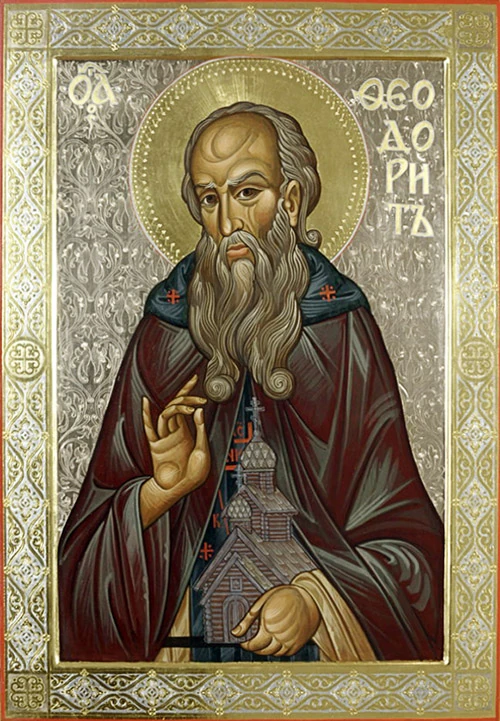
Theodoritus entered Solovki while young and spent years learning under an experienced elder. Later journeys to other monasteries deepened his formation, and he returned to care for his teacher during the elder’s last illness. His missionary work near the Kola River included learning the language of the Sámi and translating prayers. He founded a monastery and later served as abbot elsewhere, enduring a period of unjust confinement. After an embassy to Constantinople, he gave away the proceeds of an expensive gift rather than keeping it. His life joins patient learning, language work, and a continuing concern for the people he taught.
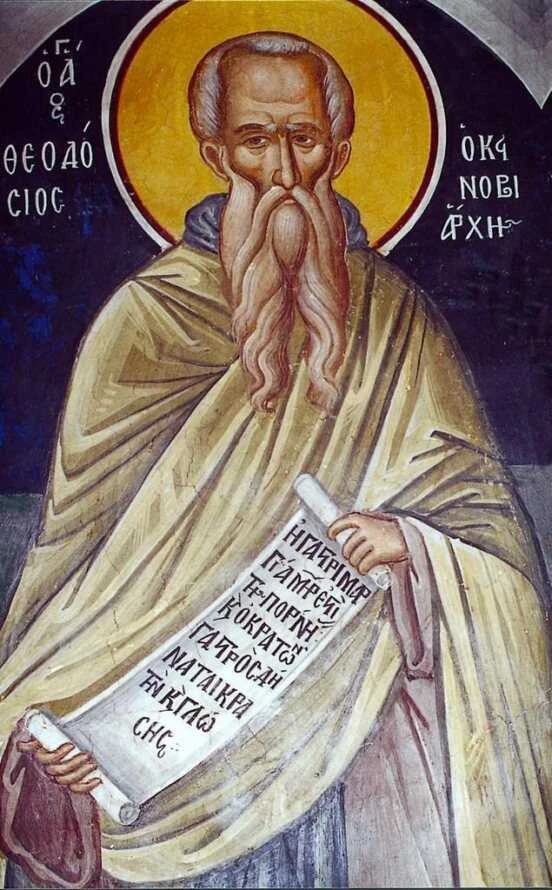
Theodosius began with a desire for solitude, but people seeking guidance gathered around him in Palestine. He established a communal monastery whose life included service to poor people and travelers. The OCA account remembers places for the sick and dying, and worship arranged for monks who spoke different languages. He also defended the Church’s confession of faith under imperial pressure. Theodosius’s witness gives communal prayer an outward expression in welcome. A monastery’s order was meant to make room for people in need, not simply to protect the comfort of those already living there.
Theodosius entered the Caves Monastery under Anthony and later became its abbot. He helped establish shared monastic life using the rule of the Studion monastery in Constantinople. Leadership did not separate him from ordinary labor: he carried water, chopped wood, and prepared grain with the brothers. The source remembers particular care for people outside the monastery, including a place where those in need could receive food and drink. He also defended people unjustly condemned and asked judges to reconsider their cases. He died in 1074. His witness connects attentive worship, shared work, hospitality, and advocacy for neighbors who lacked power.
Theoktiste grew up in a monastery on Lesbos after losing her parents. Her life changed when raiders captured her while she was visiting her sister. Taken to Paros with other captives, she escaped before being sold. The Church's account describes decades of solitude around an abandoned church, sustained by remembered prayers and psalmody. When a hunter finally encountered her, she asked him to bring Holy Communion on his next visit. He returned with the reserved Gifts and later found that she had died. Her story remembers a woman who survived captivity and carried her desire for communion through profound isolation.
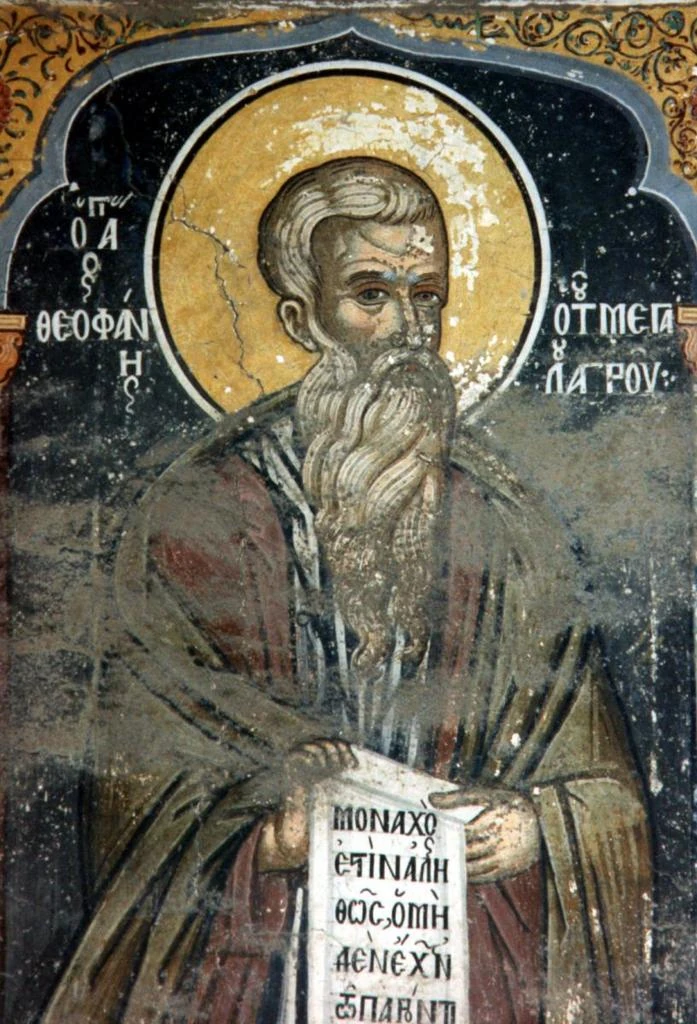
Theophanes grew up in an imperial court environment before entering monastic life. He became skilled at copying books and founded communities in the region of the Sea of Marmara. As abbot, he shared the monastery's work rather than standing apart from it. He attended the Council of Nicaea that restored the veneration of icons and later compiled a chronicle that remains important for Byzantine history. When iconoclasm returned under Leo V, Theophanes refused to accept the new policy despite illness and imprisonment. His commemoration joins historical learning, common labor, and steadfast confession, remembering a scholar whose convictions carried a personal cost.
Theophilus came from Macedonia and received an education before pursuing monastic life. The OCA's received account describes travel to Alexandria on a patriarchal assignment, followed by residence at several Athonite monasteries. He eventually settled near Karyes, where his reputation led to a proposal that he become Archbishop of Thessalonica. He declined the office and continued his monastic vocation. He died in 1548, and later devotion focused on his relics. His commemoration remembers a learned monk who did not seek ecclesiastical promotion; the source's extraordinary investigation story and unusual burial instructions require careful interpretation rather than repetition as ordinary spiritual advice.
The directory indexes the OCA full-year calendar, including leap-day commemorations, alongside additional researched profiles. Calendar entries include individual saints, groups, icons and feasts. An entry count is not a count of unique saints. Categories are provisional; follow the linked source.
Dates show commemorations in the referenced calendar year. Movable feasts change annually, and local calendars may differ. Additional jurisdictions, original biographies and icon research remain in progress. This collection does not yet claim complete Eastern Orthodox coverage.
Calendar metadata was retrieved through Orthocal’s source repository and the Orthodox Church in America. Source-only calendar records link to their original accounts; researched profiles include individually sourced artwork.
 Patron SaintTake the quiz