Theodora lived in tenth-century Constantinople and became a widow while still relatively young. The OCA remembers her care for people who were destitute and without support. She later entered monastic life under the guidance of Basil the New, living in a cell within her own home. Much of the surviving received account concerns a vision reported by Basil's disciple Gregory after her death. That narrative describes a journey of judgment and intercession rather than providing many further details of her earthly work. Her commemoration can therefore acknowledge both the charitable woman and the distinctive visionary tradition without treating every narrated scene as literal biography.
Theodora was born on Aegina to Christian parents, Anthony and Chrysanthē. She married and had a daughter. An invasion led the family to move to Thessalonica, where her daughter eventually entered a monastery. After her husband’s death, Theodora joined the same community. The OCA life emphasizes the honor she showed the other sisters and her willingness to obey and serve. Her prayer and monastic discipline continued until her death in 892. The Church remembers her humility, with later traditions about her relics extending the community’s recognition of her example beyond her lifetime.
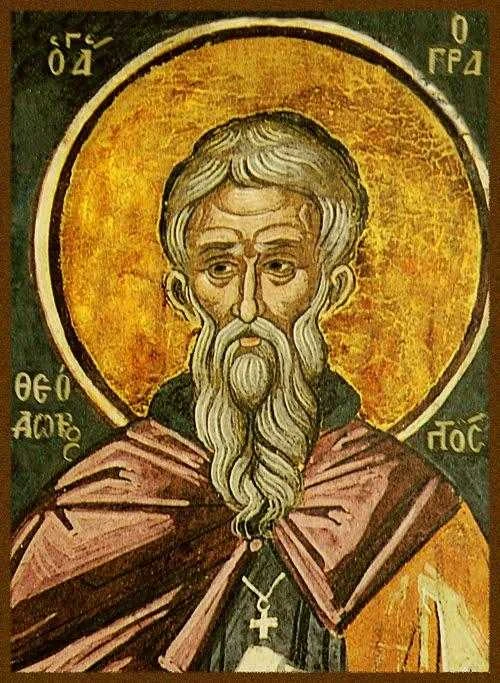
Theodore and his younger brother Theophanes received education at the monastery of Mar Saba and became monks. Sent from Jerusalem to Constantinople, they defended the veneration of icons before imperial authorities. Theodore answered arguments against icons and refused offers of freedom that required accepting iconoclast communion. Repeated exile and imprisonment followed. The brothers received the name Graptoi, or Branded, after verses mocking their confession were inscribed on their faces. Theodore died in captivity before the restoration of icon veneration. His commemoration remembers a learned monk whose conviction remained firm under direct pressure, while his brother's later episcopal work belongs to a separate life.
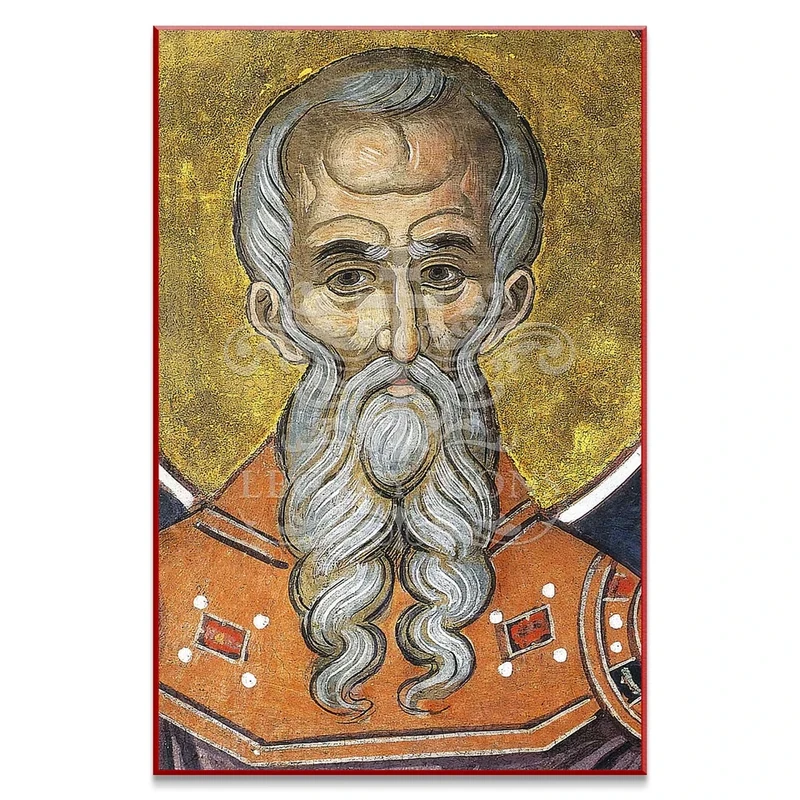
Theodore received a strong education in Constantinople before entering monastic life with guidance from his uncle Platon. He later became abbot of the Studion monastery, shaping its common life through a rule, personal example, and teaching. His defense of holy icons and his challenges to imperial interference brought repeated exile and imprisonment. Even in confinement he continued writing letters of encouragement and theological instruction. His legacy also includes hymns used in worship. Orthodox Christians remember a monastic teacher whose learning, ordinary labor, and persistence served a community through sustained pressure rather than only during peaceful years.
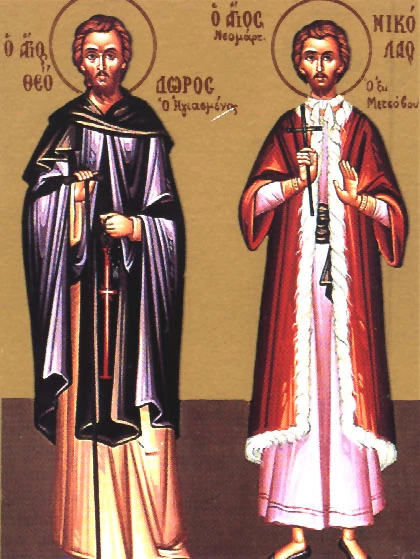
Theodore entered monastic life in Egypt and became a disciple of Pachomius the Great. His traditional life emphasizes readiness for ordinary tasks and compassion toward the other monks. Though young, he was asked to explain Scripture to the community. He later accepted responsibility for the monastery while continuing to care for his teacher, including during Pachomius’s final illness. Afterward he helped guide the wider group of communities. Theodore’s witness connects leadership with faithful learning and personal care. Responsibility for many people did not replace the duty to attend lovingly to the needs of one person.
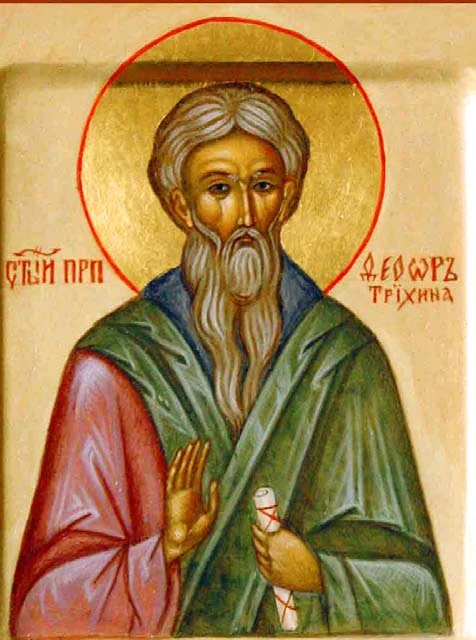
Theodore was born into a wealthy family in Constantinople. He left his family’s wealth and status to enter a monastery and become a monk. His rough garment of hair gave rise to the name Trichinas, associated with the monastery where he lived. The received life remembers his long nights of prayer and the healings associated with his ministry and relics.
The directory indexes the OCA full-year calendar, including leap-day commemorations, alongside additional researched profiles. Calendar entries include individual saints, groups, icons and feasts. An entry count is not a count of unique saints. Categories are provisional; follow the linked source.
Dates show commemorations in the referenced calendar year. Movable feasts change annually, and local calendars may differ. Additional jurisdictions, original biographies and icon research remain in progress. This collection does not yet claim complete Eastern Orthodox coverage.
Calendar metadata was retrieved through Orthocal’s source repository and the Orthodox Church in America. Source-only calendar records link to their original accounts; researched profiles include individually sourced artwork.
 Patron SaintTake the quiz