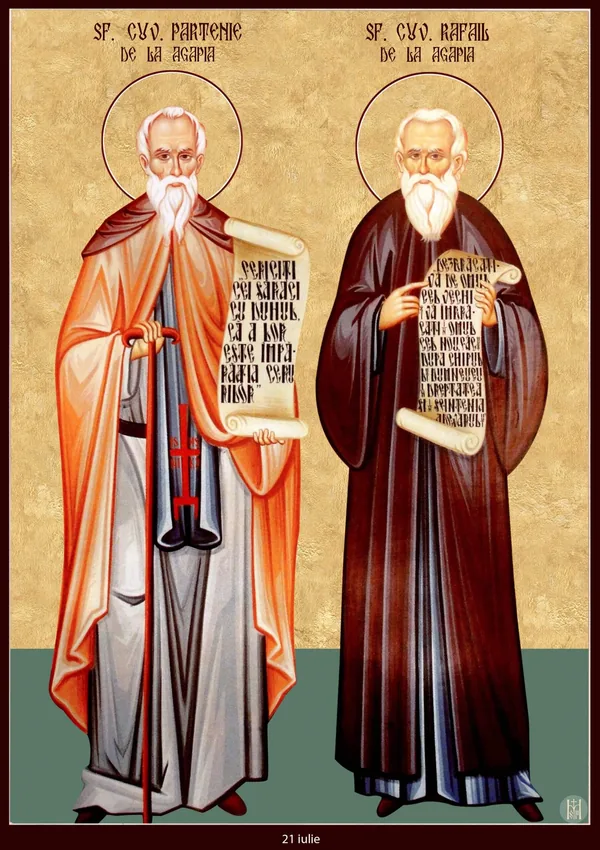
Partenie became a monk under the elder Eufrosin and lived in the Agapia region. The calendar remembers him among the abbots of Agapia and describes his gentle spiritual guidance. He worked to ensure that the community had Scripture and writings of the Fathers at a time when books were difficult and expensive to obtain. His life was known to Metropolitan Dosoftei, who included him among the saints he had encountered.
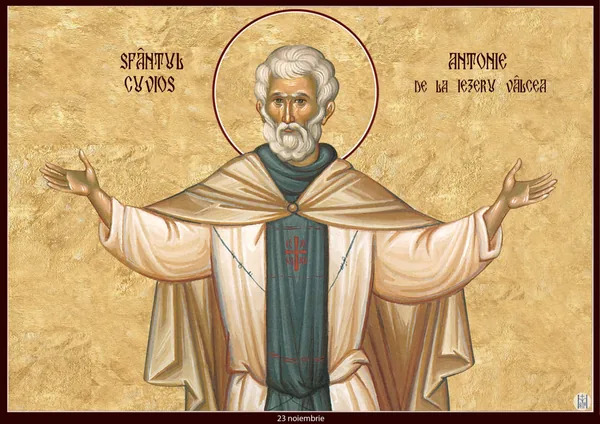
Antonie embraced monastic life at Iezerul Vâlcii. When he hoped to travel to Mount Athos, the local bishop encouraged him to remain and serve the community nearby. Seeing the monastery church deteriorating, Antonie helped restore it with the bishop’s support and his own resources. He later withdrew with permission to a small cave, where he carved a chapel and lived in prayer.
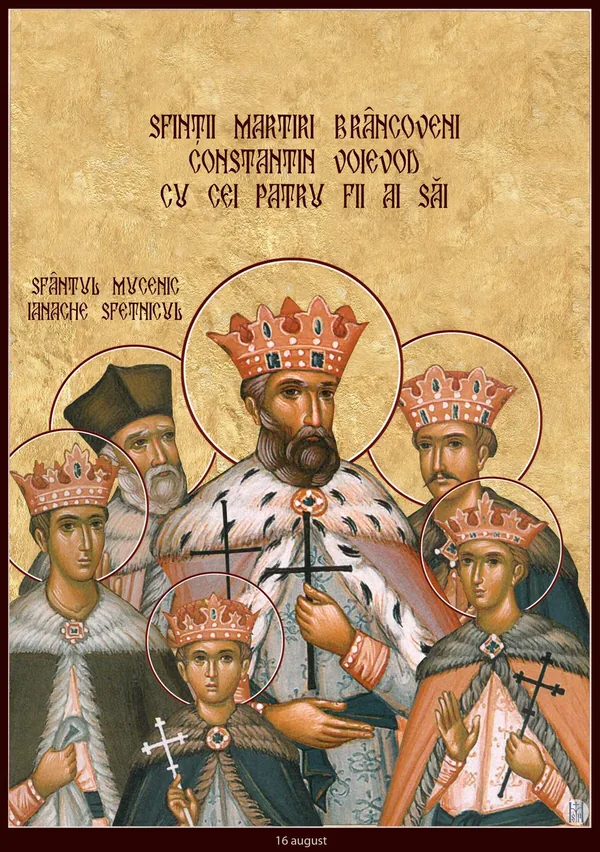
Constantin ruled Wallachia and supported churches and monasteries, including Hurezi. His assistance also reached Christian communities beyond his own country. Ottoman authorities removed him from power and imprisoned him with members of his family. The official calendar remembers his refusal to abandon Christian faith before his execution alongside his four sons and his adviser Ianache.
Constantin Brâncoveanu the Younger is named in the official calendar among the six Brâncoveanu martyrs executed in Constantinople in 1714. He was the eldest son of Constantin Brâncoveanu. The calendar commemorates the ruler, his four sons, and Ianache together on August 16. This source supplies a shared account rather than a separate biography for Constantin Brâncoveanu the Younger.
Ștefan Brâncoveanu is named in the official calendar among the six Brâncoveanu martyrs executed in Constantinople in 1714. He was the son of Constantin Brâncoveanu. The calendar commemorates the ruler, his four sons, and Ianache together on August 16. This source supplies a shared account rather than a separate biography for Ștefan Brâncoveanu.
Radu Brâncoveanu is named in the official calendar among the six Brâncoveanu martyrs executed in Constantinople in 1714. He was the son of Constantin Brâncoveanu. The calendar commemorates the ruler, his four sons, and Ianache together on August 16. This source supplies a shared account rather than a separate biography for Radu Brâncoveanu.
The directory indexes the OCA full-year calendar, including leap-day commemorations, alongside additional researched profiles. Calendar entries include individual saints, groups, icons and feasts. An entry count is not a count of unique saints. Categories are provisional; follow the linked source.
Dates show commemorations in the referenced calendar year. Movable feasts change annually, and local calendars may differ. Additional jurisdictions, original biographies and icon research remain in progress. This collection does not yet claim complete Eastern Orthodox coverage.
Calendar metadata was retrieved through Orthocal’s source repository and the Orthodox Church in America. Source-only calendar records link to their original accounts; researched profiles include individually sourced artwork.
 Patron SaintTake the quiz