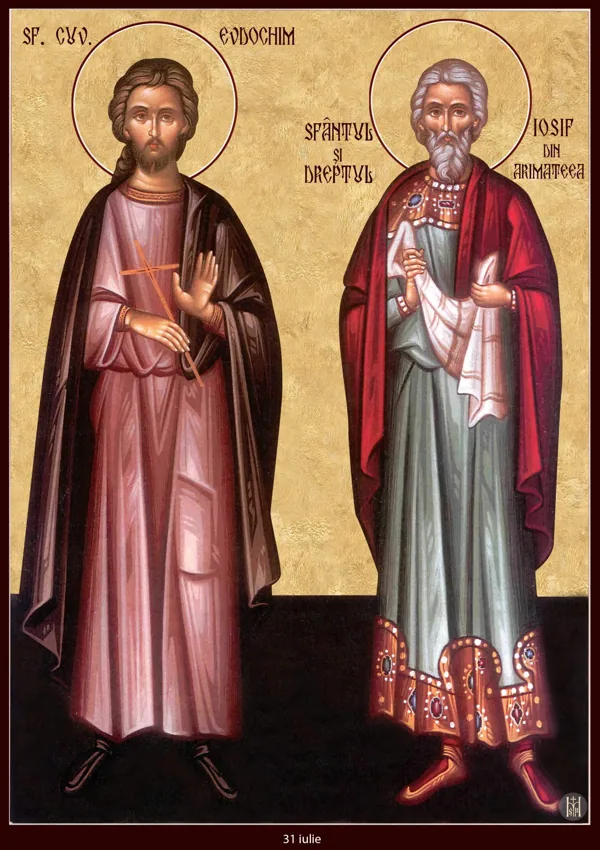
Eudocimus grew up in a Christian family and became a military commander in Cappadocia during the reign of Theophilus. The calendar remembers his responsible service and his private life of good works. Before his death, he directed that his burial should take place without ceremony. His remembrance connects public responsibility with a desire for a modest burial.
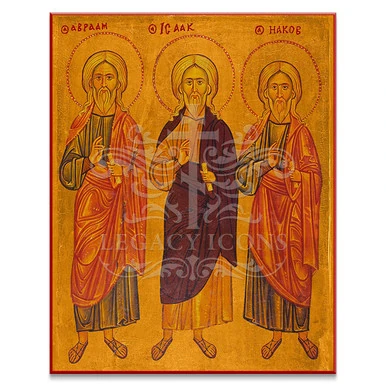
Isaac was the son of Abraham and the husband of Rebecca. He was the father of Jacob and Esau. The OCA entry recalls the account of Abraham’s testing and presents Isaac within the Church’s reading of the Old Testament.
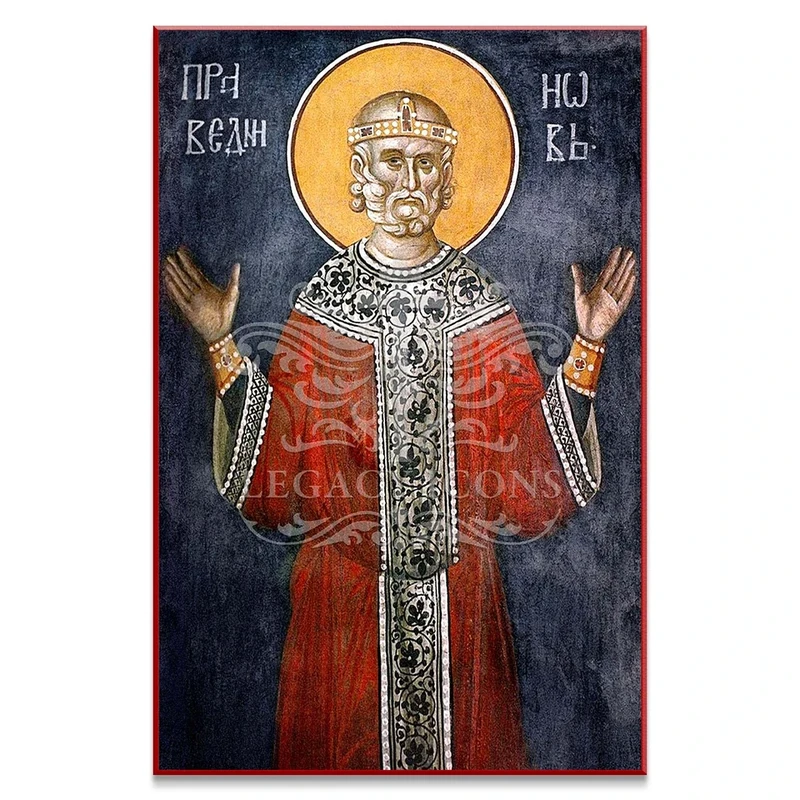
Job is remembered as a righteous man whose life was overturned by the loss of his children, possessions, and health. The biblical book bearing his name refuses to reduce suffering to a simple account of reward and punishment. The OCA life emphasizes his endurance amid devastation and the restoration with which the narrative ends. Orthodox worship reads Job during Holy Week, placing the suffering of a righteous person beside the mystery of Christ’s Passion. The Church also receives the Greek scriptural tradition’s reference to resurrection. His commemoration gives suffering people a place within prayer rather than a reason for exclusion.
Joseph was a wealthy man and a disciple of Christ. After the Crucifixion, he asked Pilate for Jesus’s body. With Nicodemus, he took the body down, wrapped it in a clean shroud, and placed it in the new rock-cut tomb Joseph had prepared for himself. The calendar remembers this concrete act of care at a moment when many followers had withdrawn.
Joseph, the son of Jacob and Rachel, was sold into slavery by his brothers and carried to Egypt. Further injustice brought imprisonment after a false accusation in Potiphar’s household. His interpretation of Pharaoh’s dreams eventually placed him in a position to prepare grain reserves before famine. When his brothers later came seeking food, he chose reconciliation rather than revenge, and the family was reunited. The biblical account remembers his sons, Manasseh and Ephraim, and his wish that his remains return with his people. Orthodox Holy Monday worship also recalls Joseph as a figure associated with Christ’s innocent suffering.
The directory indexes the OCA full-year calendar, including leap-day commemorations, alongside additional researched profiles. Calendar entries include individual saints, groups, icons and feasts. An entry count is not a count of unique saints. Categories are provisional; follow the linked source.
Dates show commemorations in the referenced calendar year. Movable feasts change annually, and local calendars may differ. Additional jurisdictions, original biographies and icon research remain in progress. This collection does not yet claim complete Eastern Orthodox coverage.
Calendar metadata was retrieved through Orthocal’s source repository and the Orthodox Church in America. Source-only calendar records link to their original accounts; researched profiles include individually sourced artwork.
 Patron SaintTake the quiz