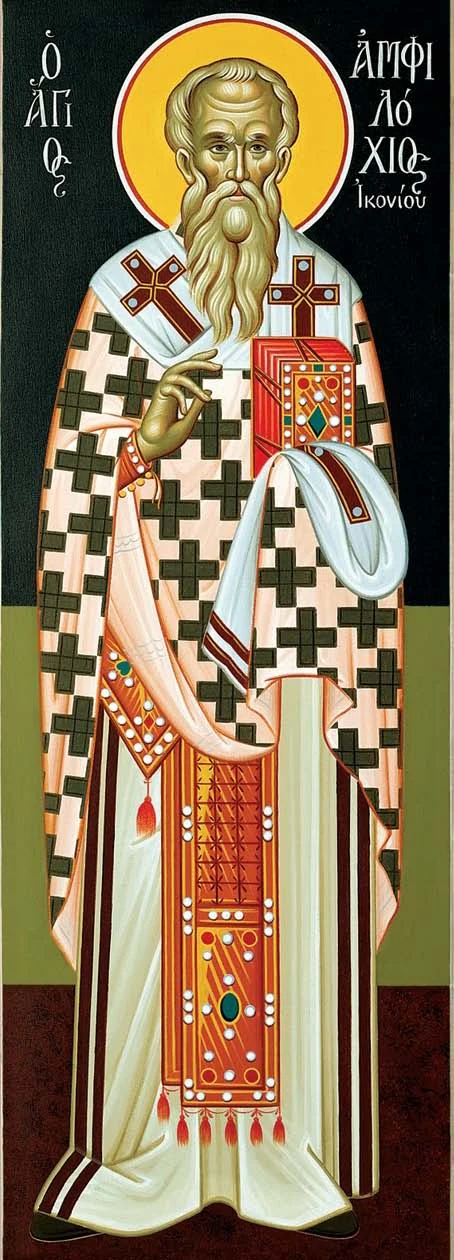
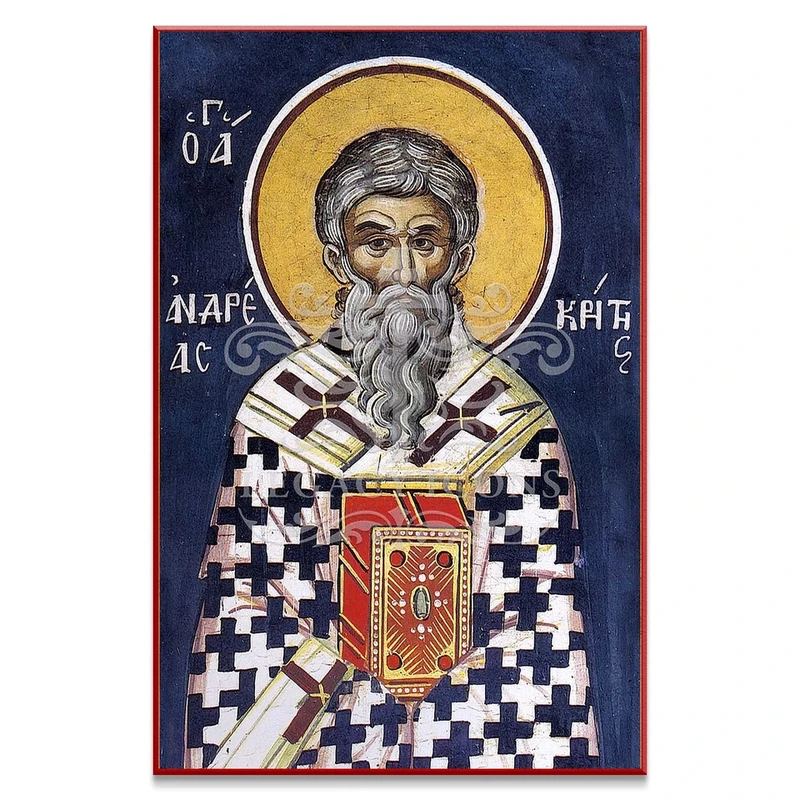
Amphilochius lived as a monk in solitude before becoming bishop of Iconium. His received life recounts his hesitation to accept the call to episcopal service. As bishop he taught the faithful, opposed Arian teaching and took part in the second council. Basil the Great and Gregory the Theologian were his friends. He composed works on the faith and died in old age.
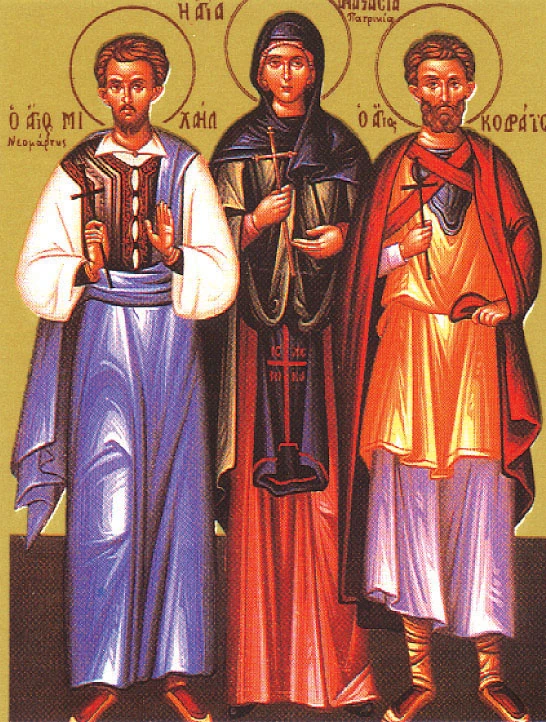
Anastasia belonged to an aristocratic family in Constantinople. Widowed young, she withdrew from the capital to Alexandria and founded a small monastery. Her traditional life describes a later attempt by Emperor Justinian to find and marry her. Seeking protection, she turned to the elder Daniel, who helped her enter a secluded life under the name Anastasius. She spent many years in prayer with discreet support from the monastery. Near death she summoned Daniel, received Communion, and died peacefully. Her commemoration remembers a persistent commitment to monastic vocation despite the demands of imperial society.
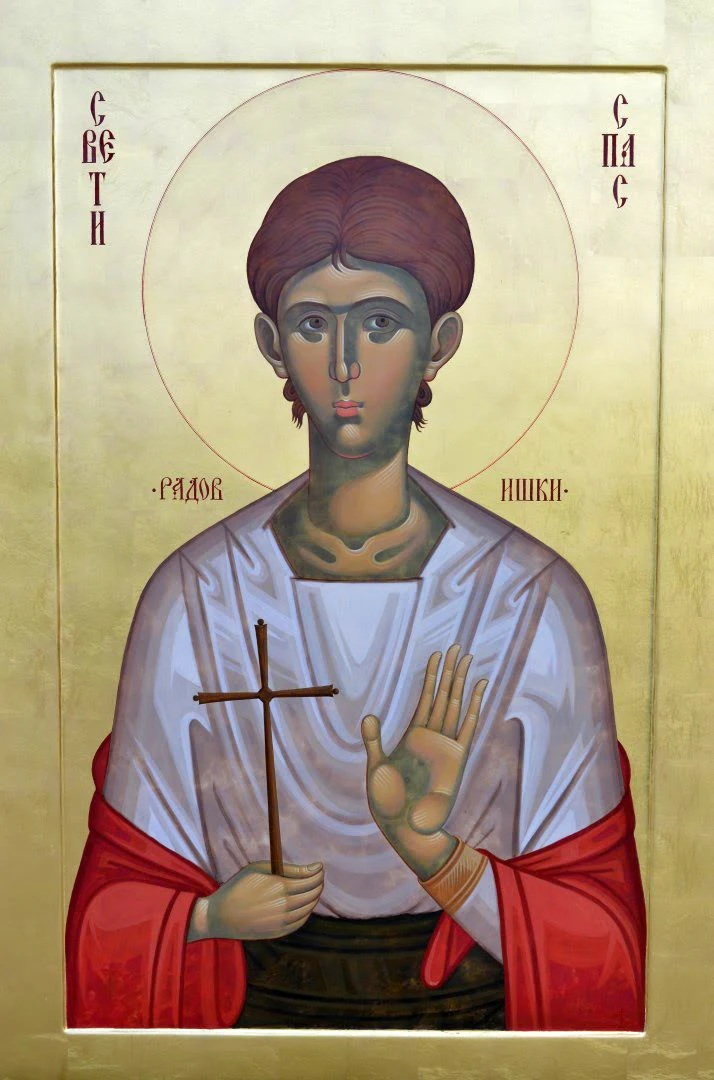
Anastasius, also called Spas, came from Radovish in the Strumica region. As a young apprentice in Thessaloniki, he was persuaded by his master to wear clothing that would allow goods to pass the city gate without customs payment. When questioned, he claimed to be a Muslim but refused the religious profession demanded of him. The received account remembers his subsequent insistence that he was Christian despite coercion. He died from his injuries while being taken to execution in 1794.
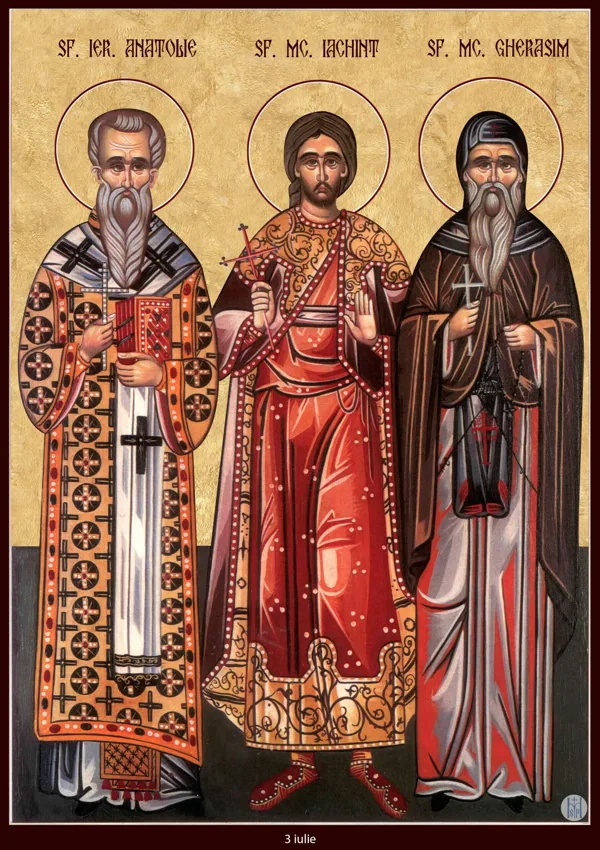
Anatolius served as a representative of the church of Alexandria before becoming archbishop of Constantinople. At the Council of Chalcedon, he supported the church’s theological judgment and restored Flavian’s name to the diptychs. He wrote to other bishops about the council’s teaching. The calendar remembers his years of leadership before the succession of Gennadius.
Andrew came from Damascus and entered monastic life in the Jerusalem region while young. His scriptural learning led to service in the patriarchate and later in Constantinople. He eventually became bishop of Gortyna on Crete, where he served as teacher and pastor. His best-known work is the Great Canon, a long poem of repentance that draws on biblical people and events to examine the soul’s choices. Orthodox Christians sing the canon during Great Lent. Andrew also composed hymns for major feasts, giving theological learning a form that worshippers could carry into prayer through words and melody.
Angelina married Stephen Branković while he was living away from Serbia after persecution. Their family faced repeated displacement, eventually finding refuge in Italy. After her husband died, she sought help to provide a place for herself and her sons. She later returned his remains to Serbia and continued through further bereavements, surviving both sons. In her later life she entered a women’s monastery and died in peace. The Church remembers her faith amid exile and family loss. Her commemoration honors a woman whose devotion continued through changing circumstances and responsibilities rather than a life of outward security.
The directory indexes the OCA full-year calendar, including leap-day commemorations, alongside additional researched profiles. Calendar entries include individual saints, groups, icons and feasts. An entry count is not a count of unique saints. Categories are provisional; follow the linked source.
Dates show commemorations in the referenced calendar year. Movable feasts change annually, and local calendars may differ. Additional jurisdictions, original biographies and icon research remain in progress. This collection does not yet claim complete Eastern Orthodox coverage.
Calendar metadata was retrieved through Orthocal’s source repository and the Orthodox Church in America. Source-only calendar records link to their original accounts; researched profiles include individually sourced artwork.
 Patron SaintTake the quiz