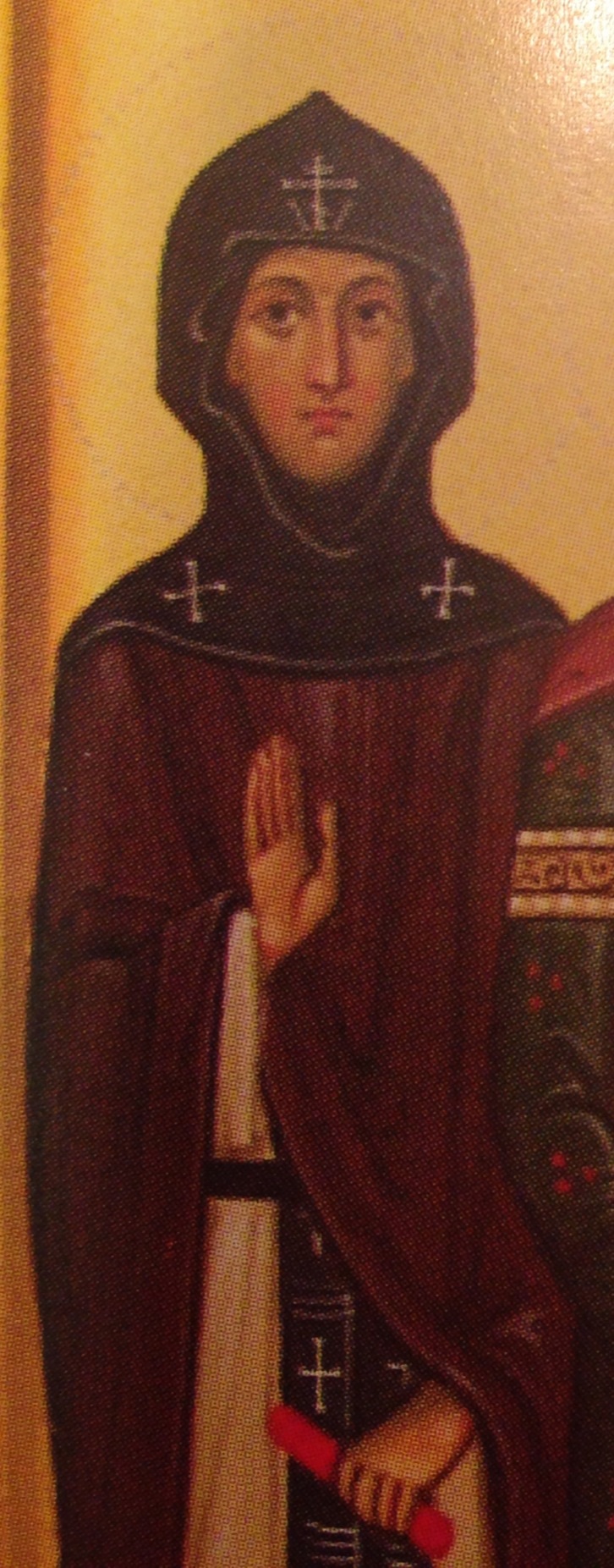
Angelina married Stephen Branković while he was living away from Serbia after persecution. Their family faced repeated displacement, eventually finding refuge in Italy. After her husband died, she sought help to provide a place for herself and her sons. She later returned his remains to Serbia and continued through further bereavements, surviving both sons. In her later life she entered a women’s monastery and died in peace. The Church remembers her faith amid exile and family loss. Her commemoration honors a woman whose devotion continued through changing circumstances and responsibilities rather than a life of outward security.
Anthony the Roman is remembered as the founder of a monastery near Novgorod dedicated to the Nativity of the Theotokos. His received life traces an earlier upbringing in Rome, study of the Greek Fathers, and a desire for monastic prayer. In Novgorod he used resources placed at his disposal to establish the community and build its church. Monastic labor was joined to practical charity: monastery funds were to help poor people, orphans, and widows. He later became the monastery's abbot and died in 1147. His commemoration preserves both the charitable work of the foundation and a distinctive tradition about his arrival from the West.
Anthusa was a daughter of Emperor Constantine V, but she chose a different path from the political power available to her. After her father's death, she used her resources to support churches, widows, orphans, and other people in need. The OCA remembers her declining an invitation to share imperial rule. She entered monastic life and established the Omonia community in Constantinople. There, she joined practical labor, carried water, cleaned the church, and served the other sisters. Her concern extended to visitors who needed help. Anthusa's life joins generosity with humility: wealth became a means of care, while leadership included ordinary work.
Arsenius received an excellent education and served as a teacher to the emperor’s sons before seeking monastic life in Egypt. He left the honor of the court to learn humility under John the Dwarf. The Church remembers him especially for prayer and silence, though he still offered brief counsel to monks who sought his help. His teaching warned that impressive outward practices can conceal pride, anger, or judgment of a neighbor. Arsenius’s example invites careful attention to speech and motives, making room for prayer rather than measuring life by status or the appearance of achievement.
Arsenius entered the Trinity-Sergius Monastery as a young man and spent time copying books before becoming its abbot. Despite leading a prosperous community, he wore simple, patched clothing and desired a quieter life. He later established monastic settlements in the forests near Vologda. Violence and displacement interrupted one foundation, and refugees subsequently gathered around another. Arsenius continued clearing land, building a community, and guiding both monks and neighboring households. Prayer, work, and observance of the Church's worship shaped his teaching. His life remembers a leader who accepted material simplicity and continued serving communities through repeated changes of place.
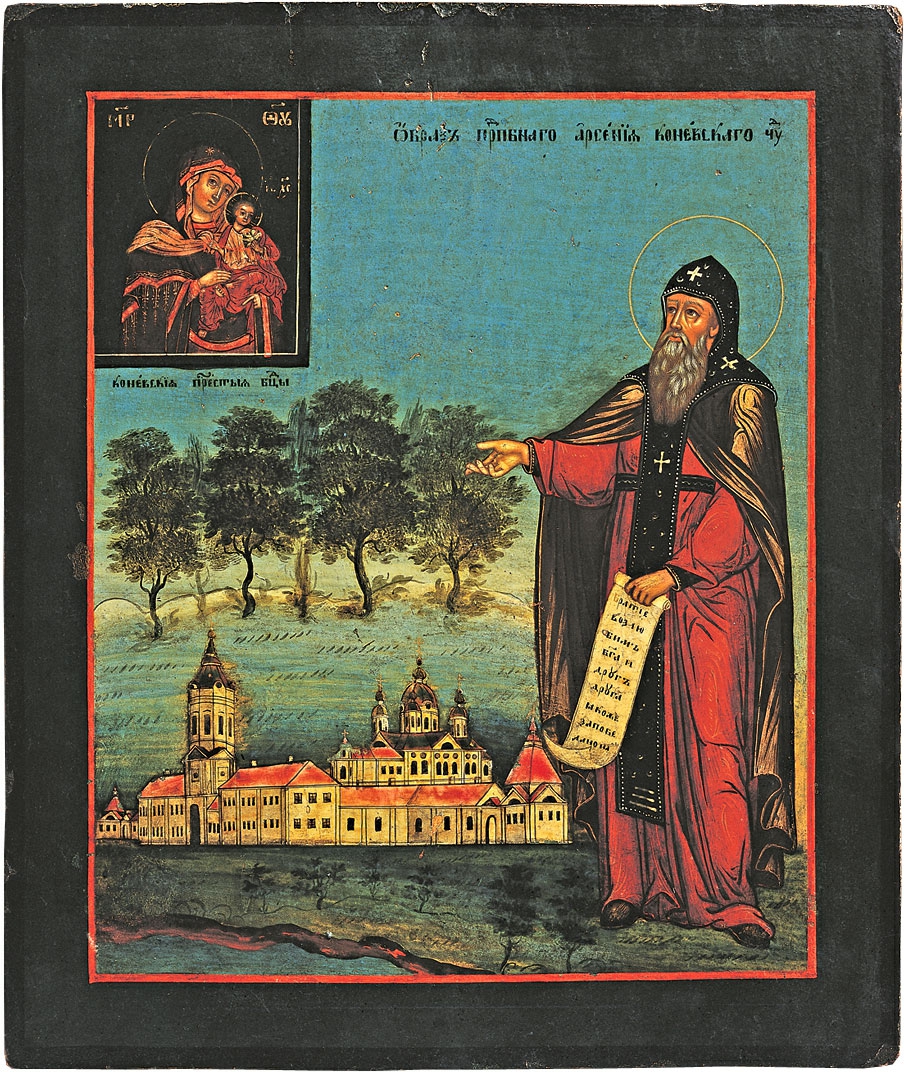
Arsenius was a coppersmith from Novgorod who entered monastic life and later traveled to Mount Athos. There he combined prayer with making vessels for the brothers. Returning north with an icon of the Theotokos, he settled on Konevets Island in Lake Ladoga. A monastery dedicated to the Nativity of the Theotokos eventually grew from this beginning. Arsenius sought the prayers and guidance of Athonite elders for the new community. When flooding destroyed its buildings, he moved the monastery to another part of the island. His life joins skilled manual work, spiritual dependence on others, and practical perseverance through a serious setback.
The directory indexes the OCA full-year calendar, including leap-day commemorations, alongside additional researched profiles. Calendar entries include individual saints, groups, icons and feasts. An entry count is not a count of unique saints. Categories are provisional; follow the linked source.
Dates show commemorations in the referenced calendar year. Movable feasts change annually, and local calendars may differ. Additional jurisdictions, original biographies and icon research remain in progress. This collection does not yet claim complete Eastern Orthodox coverage.
Calendar metadata was retrieved through Orthocal’s source repository and the Orthodox Church in America. Source-only calendar records link to their original accounts; researched profiles include individually sourced artwork.
 Patron SaintTake the quiz