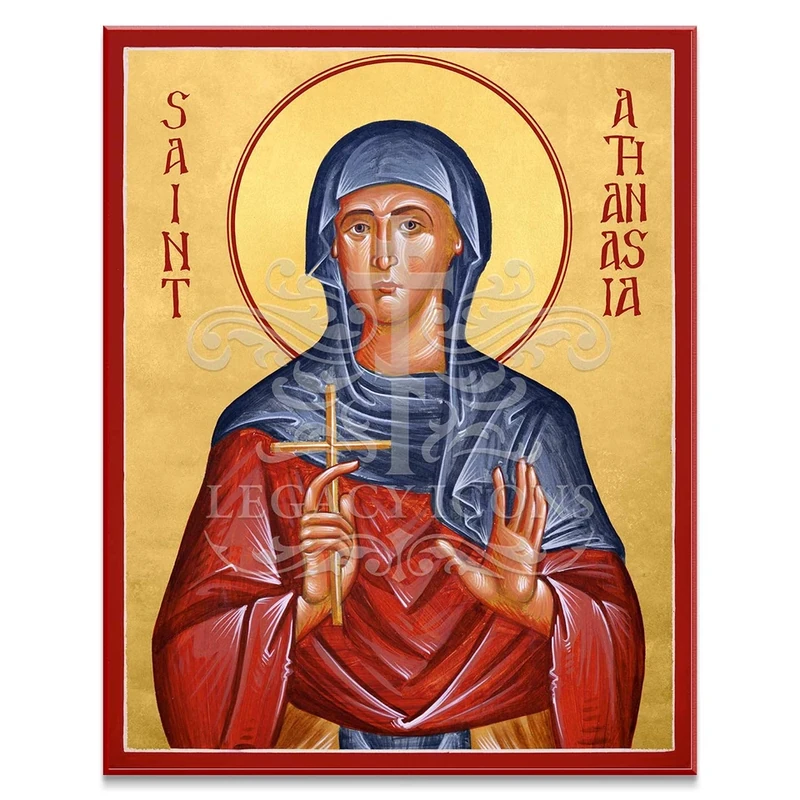
Athanasia lived on Aegina in the ninth century. The Psalms shaped her early desire for monastic life, but marriage and widowhood preceded her entry into a monastery. As a married woman she welcomed travelers, helped people who were sick, and read Scripture with visitors. Later she gave away her property and established a women's community. When the sisters chose her as abbess, she corrected faults gently and continued to share their work. Public attention eventually led her to spend years as an ordinary nun in Constantinople before returning to Aegina. Her final instructions included a meal for poor people, joining remembrance of the dead with generosity.
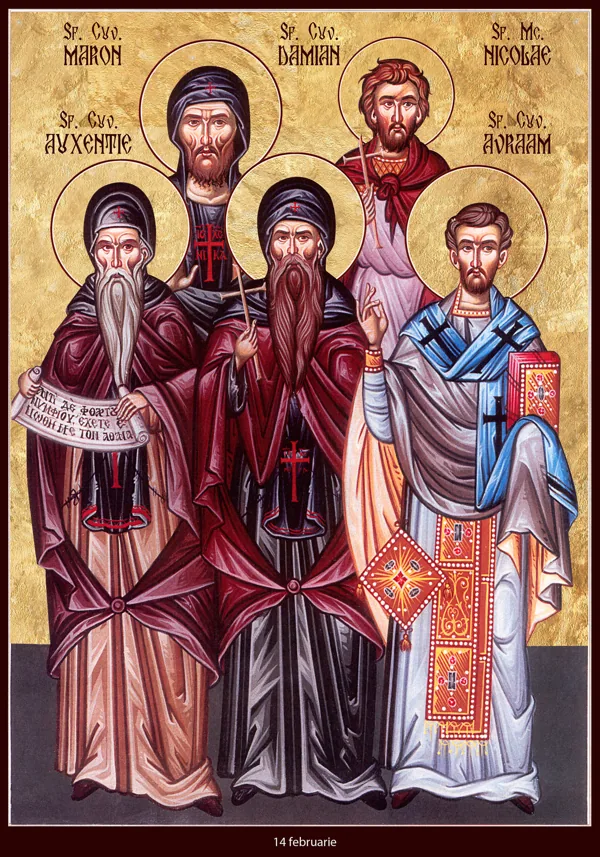
Auxentius served in the imperial guard before becoming a monk. He lived near Constantinople and later on a mountain near Chalcedon. People from nearby villages came to him for guidance, and the calendar remembers his encouragement to do good. It also associates him with the Council of Chalcedon and the defense of Orthodox teaching.
Basil was a monk who defended the veneration of icons during the reign of Leo III. His individual commemoration preserves his close association with Prokopios of Decapolis. The two were tortured and imprisoned because they would not accept the imperial campaign against holy images. After the emperor's death, Basil and other imprisoned defenders of icons were released. He continued monastic life and instructed people in Orthodox belief and virtuous conduct rather than allowing imprisonment to end that work. The Church remembers him as a confessor alongside his companion. The surviving account gives few further details about his earlier life or family.
Bede was educated in the monasteries of Wearmouth and Jarrow and remained a monk dedicated to worship, teaching, and writing. The books gathered by his teachers helped him compose biblical commentary and a history of Christianity in England. The OCA account recognizes both the care of his research and the perspective that shaped his judgments. Near death, he continued teaching and working on a Gospel translation while praying with gratitude. Bede’s witness gives scholarship a communal purpose: preserving memory and explaining Scripture can help people who will never meet the writer share in the Church’s inheritance.
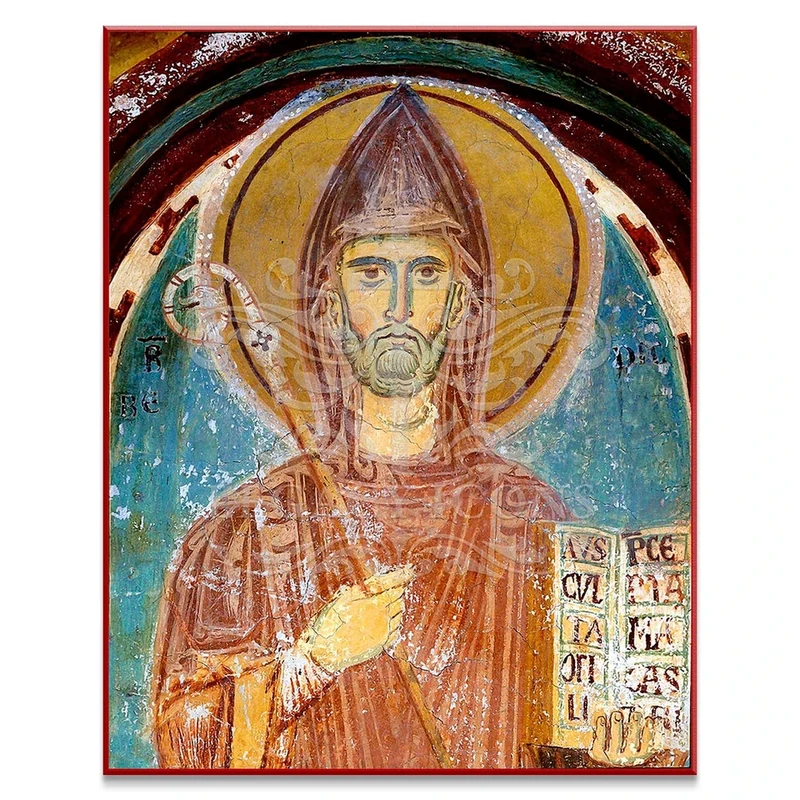
Benedict left his studies in Rome to seek a life centered on God. He first lived in solitude with the help of an experienced monk, and later received disciples who wanted guidance. The Church remembers his founding of communities and his Rule, which shaped prayer, work, learning, and responsibility in Western monastic life. That Rule drew on the experience of earlier teachers, including John Cassian. Benedict’s example gives ordinary order a spiritual purpose. A shared life needs patient instruction, dependable work, and practices that help people grow together rather than follow every passing preference.
Bessarion sought instruction in monastic life through visits to Jerusalem, the Jordan wilderness, and other communities before returning to Egypt. The Church's account remembers a life centered on prayer and material simplicity. His humility appears in a particular encounter: when another monk was ordered to leave church because of sin, Bessarion went out with him, acknowledging his own need for mercy. The source also describes his reluctance to receive public praise. Although many extraordinary ascetic and miracle stories surround his memory, that act of solidarity gives a clear glimpse of his teaching through conduct. Orthodox Christians honor his prayer and refusal to stand above another person's weakness.
The directory indexes the OCA full-year calendar, including leap-day commemorations, alongside additional researched profiles. Calendar entries include individual saints, groups, icons and feasts. An entry count is not a count of unique saints. Categories are provisional; follow the linked source.
Dates show commemorations in the referenced calendar year. Movable feasts change annually, and local calendars may differ. Additional jurisdictions, original biographies and icon research remain in progress. This collection does not yet claim complete Eastern Orthodox coverage.
Calendar metadata was retrieved through Orthocal’s source repository and the Orthodox Church in America. Source-only calendar records link to their original accounts; researched profiles include individually sourced artwork.
 Patron SaintTake the quiz