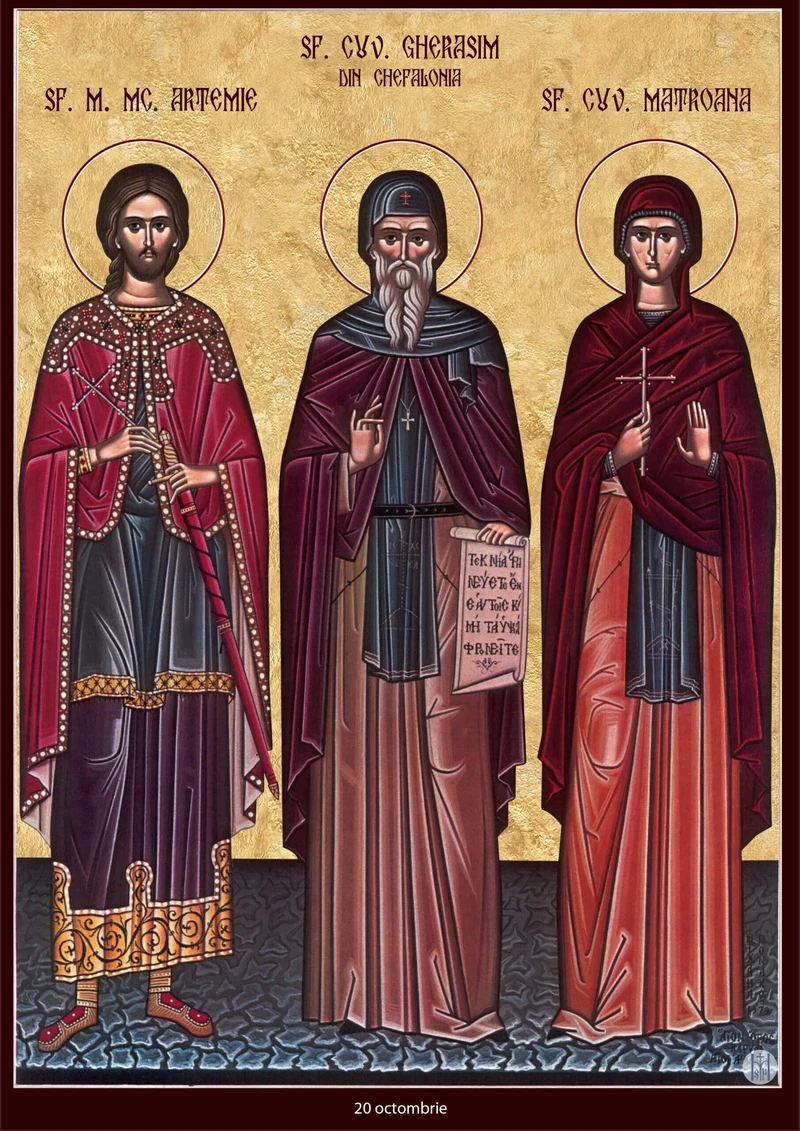
Gerasimus received monastic formation on Zakynthos and Mount Athos before visiting the Holy Land. In Jerusalem, he served at the Holy Sepulchre and was ordained to the priesthood. Further periods of solitude eventually brought him to Cephalonia. At Omala, he restored a church and founded a women's monastery, where the OCA remembers years of labor, vigil, and prayer. Before his death in 1579, he blessed the nuns. His commemoration joins pilgrimage and solitary practice with the continuing work of sustaining a community. The October observance concerns his relics; the source separately explains the August commemoration connected with his death.
Gregory’s monastic journey began after captivity and release, taking him through Cyprus, Sinai, Jerusalem, Crete, and Mount Athos. At Sinai he served as cook, baker, and copyist while studying Scripture and the fathers. He later became known for teaching stillness and inward prayer. His writings insisted that understanding the commandments requires living them, not simply reading about them. He also helped establish monastic communities in Thrace. The Church remembers him as a guide whose teaching grew from ordinary work, sustained study, and experience of different communities before a life devoted more fully to contemplative prayer.
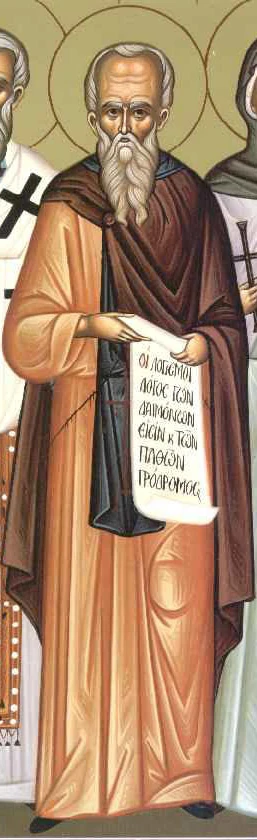
Gregory came from the Isaurian region of Decapolis and developed an early love for Scripture and church worship. His later life included travel through several Mediterranean cities and periods of monastic prayer. During the controversy over holy images, he taught in defense of icon veneration and encouraged Christians who faced persecution. He spent a substantial period near Thessaloniki before returning to Constantinople to oppose iconoclasm, where illness ended his work. The Church remembers a traveling teacher whose concern was to strengthen other people's faith rather than establish a public career. His relics later became a center of devotion at Bistrița Monastery in the Romanian lands.
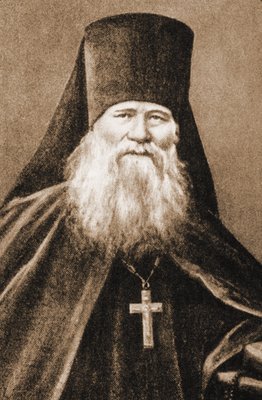
Hilarion, born Rodion Ponamarov, learned tailoring before entering Optina Monastery as an adult. Alongside serving Elder Macarius, he worked in the gardens, bakery, and apiary. He later became the skete's superior and a confessor for monks, nuns, and lay visitors. His counsel drew on Scripture, the Fathers, and experience, while his guidance took account of each person's age, health, and circumstances. During a prolonged final illness, he prayed for patience and continued his prayer rule. He died in 1873. His commemoration remembers spiritual guidance grounded in ordinary work, attentive listening, and care adjusted to the person seeking help.
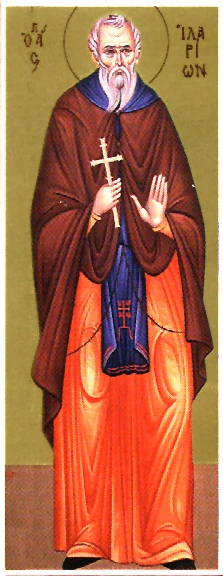
Hilarion was born near Gaza and encountered Christianity while studying in Alexandria. After baptism he sought instruction from Anthony the Great, then returned to Palestine. He distributed his inheritance to people in need and entered the desert near Maiuma. The received life describes persistent prayer amid fear and spiritual struggle. People later sought his counsel, and monastic communities grew with his encouragement. He refused payment for the help associated with his ministry, treating divine gifts as something freely received. His later years included solitude on Cyprus. Orthodox remembrance honors him as an important father of Palestinian monastic life.
Hilarion spent years in solitude before becoming a priest and abbot of the Pelekete Monastery near the Dardanelles. The OCA remembers spiritual writings that offered moral guidance for monastic life and influenced later readers, including Joseph of Volokolamsk. His community suffered a violent military attack during the conflict over the veneration of icons, and the received life places his death within that persecution. His commemoration therefore joins monastic instruction with the Church's remembrance of confessors and martyrs. The page's numerous miracle accounts are part of its devotional tradition; they do not establish a separate personal characteristic for the quiz.
The directory indexes the OCA full-year calendar, including leap-day commemorations, alongside additional researched profiles. Calendar entries include individual saints, groups, icons and feasts. An entry count is not a count of unique saints. Categories are provisional; follow the linked source.
Dates show commemorations in the referenced calendar year. Movable feasts change annually, and local calendars may differ. Additional jurisdictions, original biographies and icon research remain in progress. This collection does not yet claim complete Eastern Orthodox coverage.
Calendar metadata was retrieved through Orthocal’s source repository and the Orthodox Church in America. Source-only calendar records link to their original accounts; researched profiles include individually sourced artwork.
 Patron SaintTake the quiz