Hilarion entered monastic life near Constantinople and later joined the Dalmatian Monastery, where he became a priest. Although initially reluctant to become abbot, he accepted responsibility for the community after the patriarch's intervention. His defense of icon veneration brought imprisonment, deprivation, and repeated exile under iconoclast rulers. Returning to the monastery did not persuade him or the brethren to abandon their worship. After the persecution ended, he again accepted the abbacy and spent his final years guiding the community. His commemoration remembers the endurance of a pastoral responsibility interrupted by coercion, rather than a search for authority or public prestige.
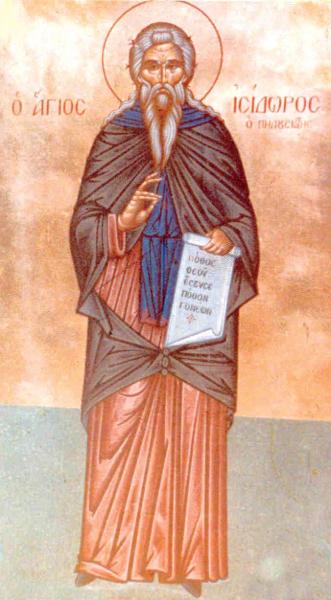
Isidore left Alexandria for monastic life near Pelusium and became known for learning joined to practical spiritual counsel. His letters addressed Scripture, theology, and conduct, reaching ordinary Christians as well as bishops and rulers. He valued teaching that helped people live the faith rather than treating reasoning as an end in itself. The OCA also remembers his support for John Chrysostom during conflict and his effort to restore John's honored place in the Church's liturgical memory. A substantial collection of letters preserves his influence. His life connects scholarship with accessible guidance and a willingness to speak on behalf of someone treated unjustly.
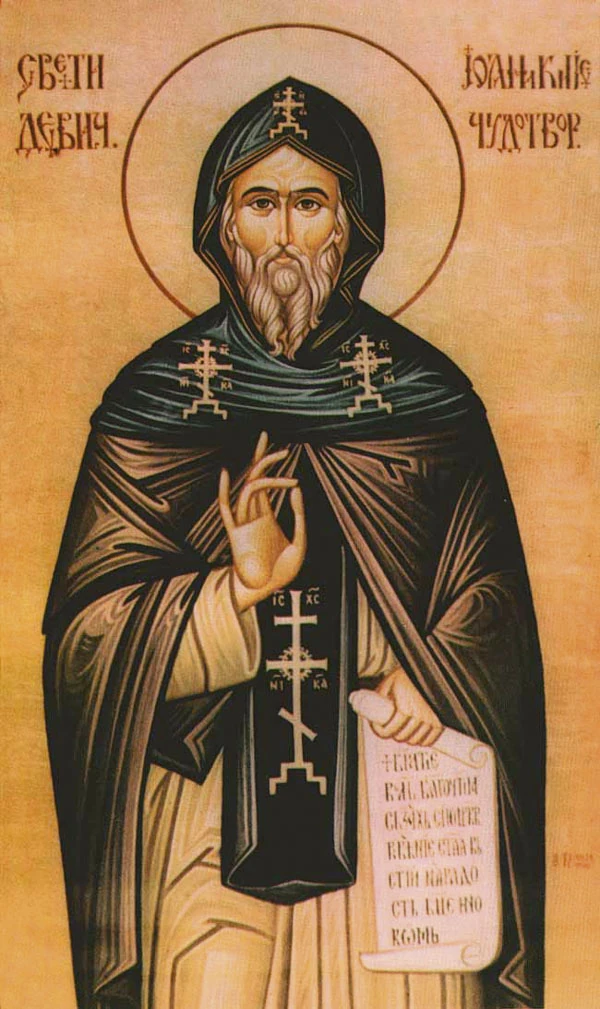
Joannicius came from Zeta and sought a solitary life in eastern Serbia. He established a cell near Crna Reka, where visitors eventually sought his teaching and others asked for guidance in monastic life. A community formed around him before he moved to the forest of Devič. The OCA's received life remembers sustained prayer in both places and connects the foundation at Devič with the patronage of Prince George Branković. Joannicius died in the fifteenth century. His commemoration recalls a hermit's relationship with people seeking direction, while the narrative's miracles and exact lifespan remain matters of received tradition rather than independently established biography.
Joannicius grew up in a poor family in Bithynia and served in the imperial army before seeking monastic life. Rather than immediately entering the wilderness, he followed an elder's advice to learn within a community. There he acquired literacy, learned the monastic rule, and memorized psalms. His later years included periods of solitude and instruction alongside other ascetics. The OCA remembers his sustained prayer and his eventual memorization of the entire Psalter. His commemoration recalls learning undertaken in adulthood and a vocation developed through preparation. Accounts of extraordinary powers belong to the received life and are not needed to explain those practices.
John Koukouzelis was trained as a singer in Constantinople before entering monastic life at the Great Lavra on Mount Athos. The received life describes him tending the monastery’s goats before his musical skill became known to the abbot. He later lived near the Lavra and returned to the monastery church to sing on Sundays and feast days. The Bulgarian Church also remembers his work composing church music.
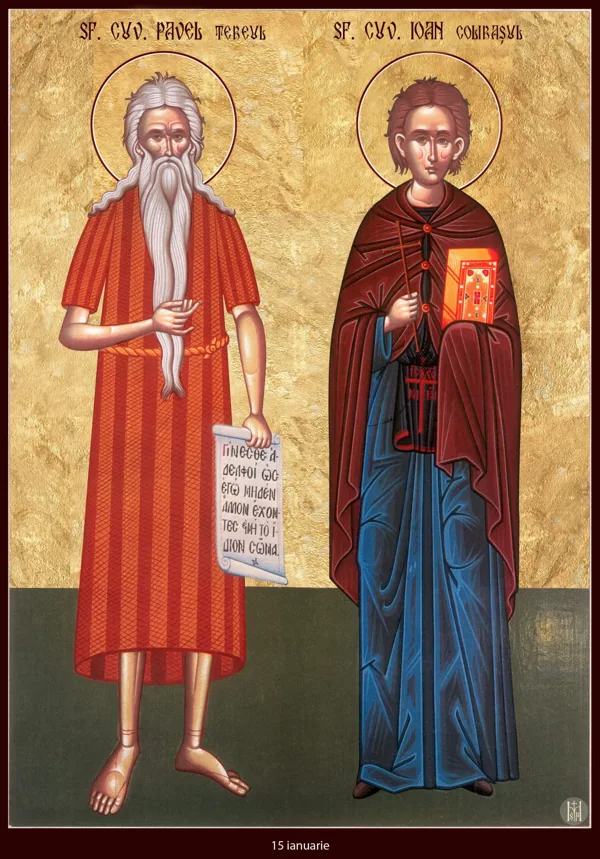
John was the son of Eutropius, an official in Constantinople. Drawn to monastic life, he joined the monastery of the Unsleeping Ones in Bithynia. With his abbot’s blessing he later returned toward his family. Exchanging his clothes with a poor man, he lived unrecognized near his parents’ gate. The account remembers his chosen poverty and prayer.
The directory indexes the OCA full-year calendar, including leap-day commemorations, alongside additional researched profiles. Calendar entries include individual saints, groups, icons and feasts. An entry count is not a count of unique saints. Categories are provisional; follow the linked source.
Dates show commemorations in the referenced calendar year. Movable feasts change annually, and local calendars may differ. Additional jurisdictions, original biographies and icon research remain in progress. This collection does not yet claim complete Eastern Orthodox coverage.
Calendar metadata was retrieved through Orthocal’s source repository and the Orthodox Church in America. Source-only calendar records link to their original accounts; researched profiles include individually sourced artwork.
 Patron SaintTake the quiz