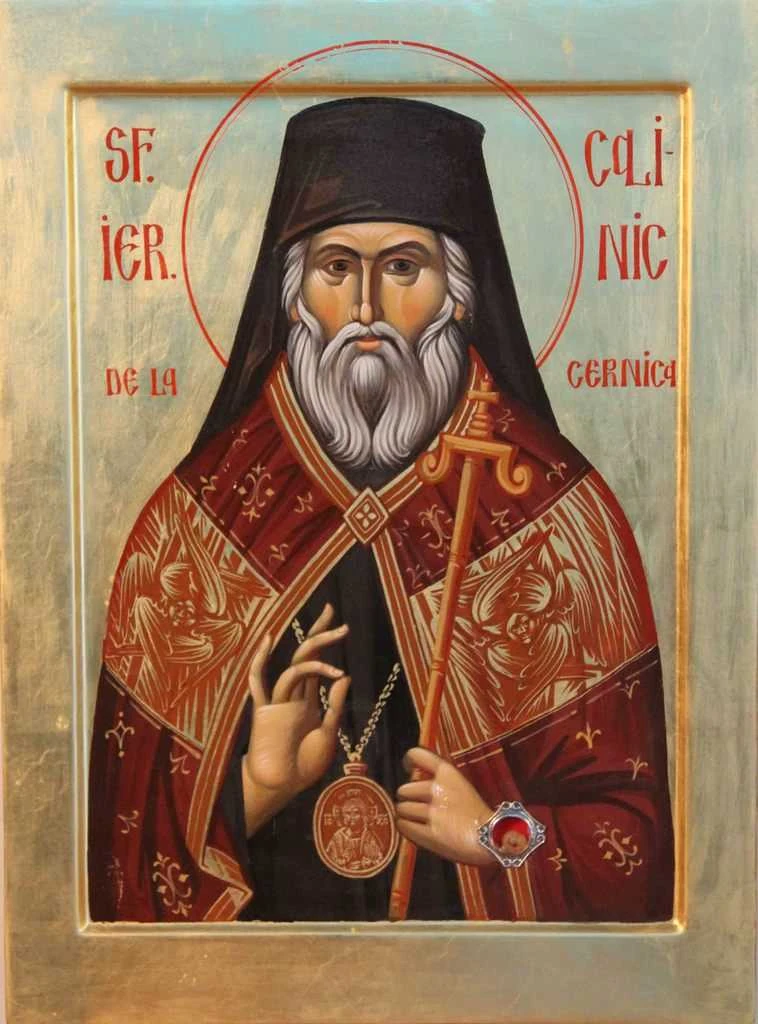
Calinic was born Constantin in Bucharest and entered Cernica Monastery as a young adult. He learned the Jesus Prayer from his monastic guide and eventually became abbot, leading the community for more than three decades. His building work included churches and a monastic infirmary. At Câmpina, he established a school alongside a church. Elected Bishop of Râmnic in 1850, he later returned to Cernica as his health declined. He died there in 1868 and was buried at the church he had founded. The official account links his monastic discipline with care for communal needs.
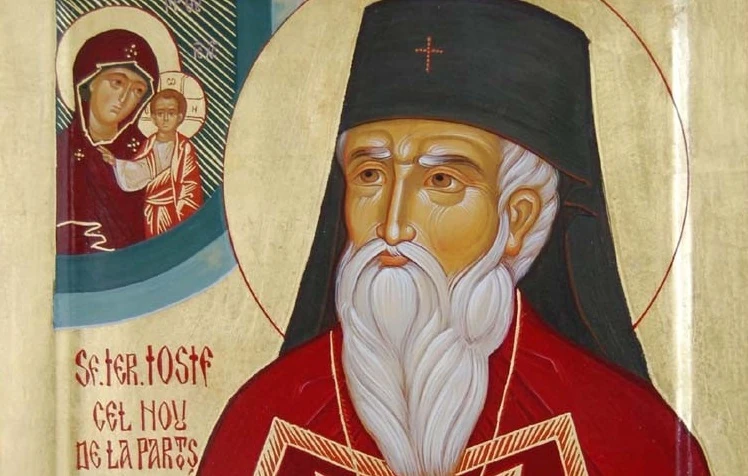
Joseph of Partoș was known as Iacob before becoming a monk. His early monastic life took him from Ohrid to Pantocrator Monastery on Mount Athos. In 1650 he became Metropolitan of Timișoara. The official Romanian account describes visits to parishes and monasteries, restoration of churches, and schools intended to prepare clergy and educate the faithful. After a brief episcopal ministry, he retired to Partoș Monastery. He died in 1656. His relics were later transferred to Timișoara, where he is honored as a protector of the city and the Banat region.
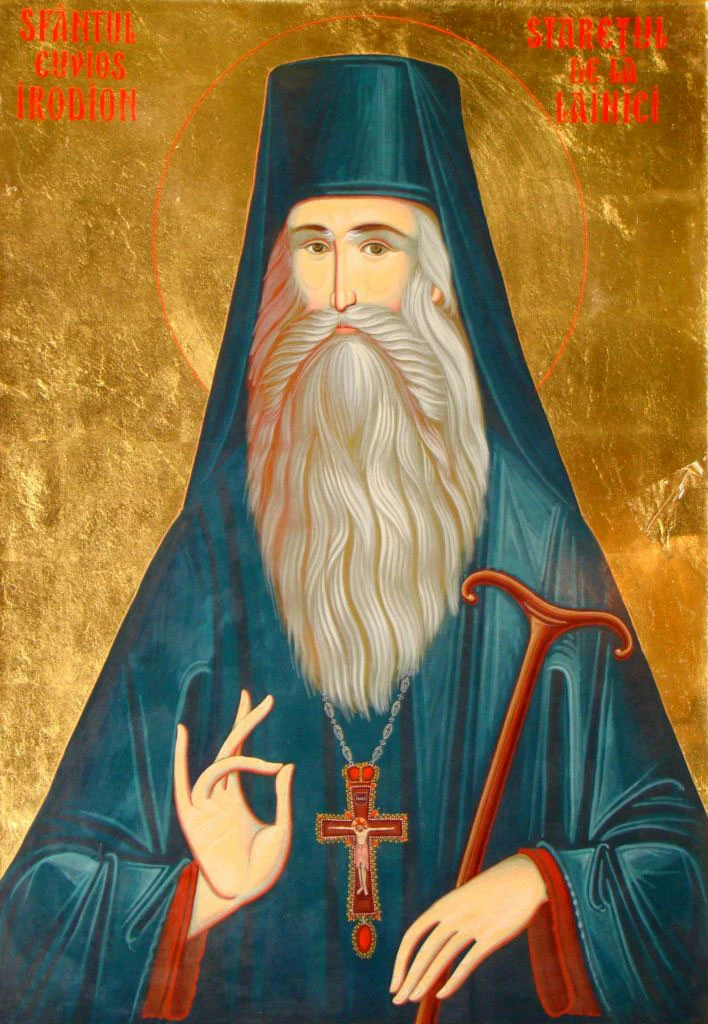
Irodion was born Ioan in Bucharest and entered Cernica as a young man. The official account remembers his participation in demanding communal work alongside a disciplined prayer life. He later moved to Lainici and became its abbot in 1854. Although he repeatedly asked to step down, he returned in response to the community's needs. He also served as a spiritual guide, including to Calinic of Cernica. Irodion died in 1900. His formal canonization ceremony took place at Lainici in 2011.
Nicodemus, called Nicodim in Romanian, became a monk at Hilandar on Mount Athos before moving into Wallachia in the fourteenth century. With support from local rulers, he established monasteries including Vodița and Tismana. At Tismana he gathered monks skilled in writing and developed a center for copying church books. He also maintained correspondence with monastic leaders and Patriarch Euthymius of Tarnovo. A Slavonic Gospel book is associated with his later years at Prislop. Before his death in 1406, he entrusted leadership of Vodița and Tismana to his disciple Agathon.
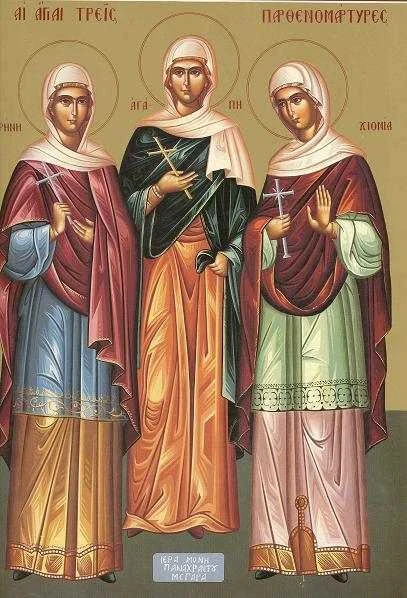
Agape is remembered with her sisters Chionia and Irene. Their shared Orthodox life places the sisters near Aquileia and records that they were orphaned while young. During the persecution under Diocletian, they refused orders to renounce Christ. The Church commemorates the three sisters as martyrs on April 16. The surviving account tells their story together; it does not provide a separate account of each sister’s daily work or personal character.
Chionia is remembered with her sisters Agape and Irene. Their shared Orthodox life places the sisters near Aquileia and records that they were orphaned while young. During the persecution under Diocletian, they refused orders to renounce Christ. The Church commemorates the three sisters as martyrs on April 16. The surviving account tells their story together; it does not provide a separate account of each sister’s daily work or personal character.
The directory indexes the OCA full-year calendar, including leap-day commemorations, alongside additional researched profiles. Calendar entries include individual saints, groups, icons and feasts. An entry count is not a count of unique saints. Categories are provisional; follow the linked source.
Dates show commemorations in the referenced calendar year. Movable feasts change annually, and local calendars may differ. Additional jurisdictions, original biographies and icon research remain in progress. This collection does not yet claim complete Eastern Orthodox coverage.
Calendar metadata was retrieved through Orthocal’s source repository and the Orthodox Church in America. Source-only calendar records link to their original accounts; researched profiles include individually sourced artwork.
 Patron SaintTake the quiz