Abo was a young perfumer from Baghdad who came to Georgia with Duke Nerse. He learned Georgian, attended Christian worship, and spoke with priests as his interest in the faith grew. He later received baptism in Khazaria. Returning to Tbilisi, he lived openly as a Christian despite the danger attached to his conversion. Arrest and imprisonment did not change his commitment. The traditional life remembers his care for local churches and his reception of Communion before execution. His commemoration joins careful learning and conversion with steadfast faith in the setting of ordinary urban work.
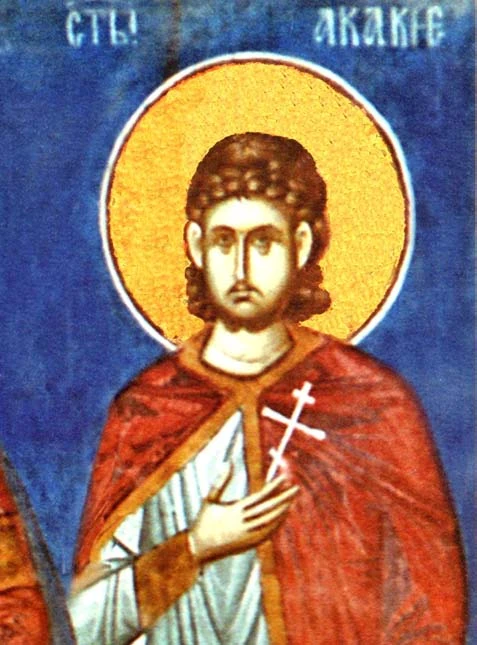
Acacius was a Cappadocian centurion in the Martesian cohort during the reign of Maximian. Brought before the tribune Firmus, he confessed his Christian faith and suffered torture. Another judge sent him in chains to Byzantium, where he was beaten and imprisoned. The received account remembers an angelic healing during his captivity. A later judge ordered his execution by beheading.
Agatha came from a Christian family in Palermo, Sicily. During the persecution under Emperor Decius, the prefect at Catania summoned her because of her Christian faith. The traditional account describes attempts to turn her from Christ through luxury, persuasion, threats, and imprisonment. Agatha remained steadfast through each change of tactics. The life also tells of consolation and healing associated with the Apostle Peter during her captivity. She eventually died in prison while offering thanks to God. Her commemoration honors a young Christian whose convictions survived the misuse of political power.
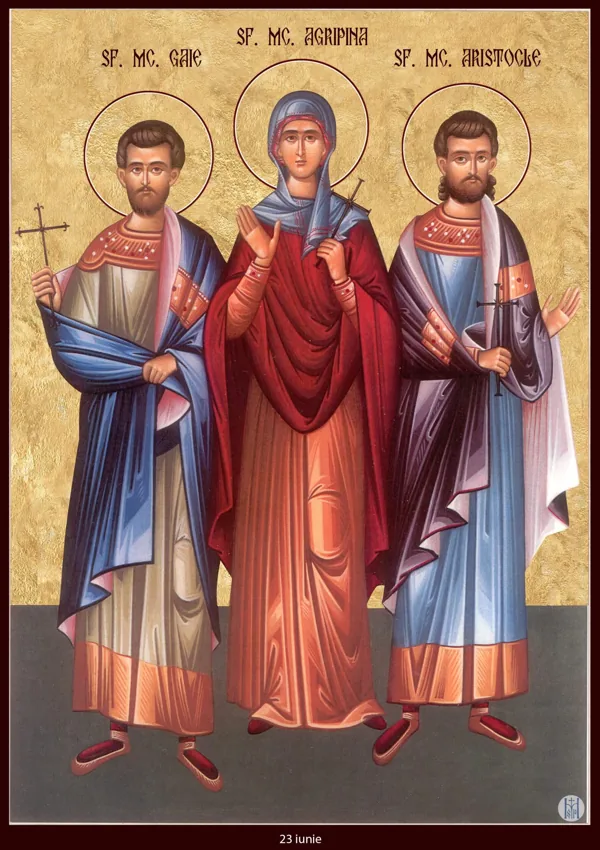
Agrippina was born and raised in Rome. She suffered martyrdom during the reign of Valerian. Three Christian women, Bassa, Paula and Agathonica, carried her body to Sicily for burial. Her tomb became a place of Christian veneration.
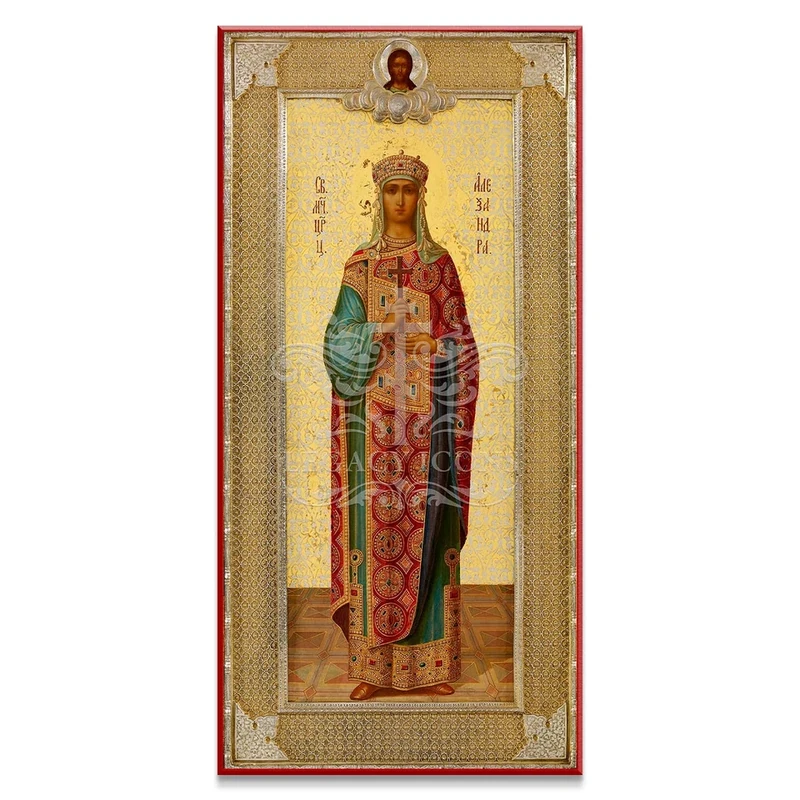
The Church’s traditional life remembers Alexandra as an empress who confessed Christ despite the danger of imperial opposition. Her commemoration is connected with the martyr George, whose witness encouraged her faith. The OCA account also recounts her later exile with her daughter Valeria and their death under Licinius. These traditions portray a woman who chose fidelity to Christ over the protection of status. Alexandra’s example invites reflection on the cost of conscience: privilege does not remove the need to make difficult choices, and courage can mean refusing to let fear determine whom we serve.
Aquilina was raised in a Christian family in the Phoenician city of Byblos. The OCA life remembers her sharing Christian faith with a friend while still very young. A report of her teaching reached the governor, who demanded that she abandon Christ. Neither flattering promises nor threats changed her confession. The traditional account describes suffering, divine help, and prayer before her death during Diocletian’s persecution. Christians buried her, and her relics were later honored in Constantinople. Her story joins the willingness to learn and teach with steadfast trust under severe pressure.
The directory indexes the OCA full-year calendar, including leap-day commemorations, alongside additional researched profiles. Calendar entries include individual saints, groups, icons and feasts. An entry count is not a count of unique saints. Categories are provisional; follow the linked source.
Dates show commemorations in the referenced calendar year. Movable feasts change annually, and local calendars may differ. Additional jurisdictions, original biographies and icon research remain in progress. This collection does not yet claim complete Eastern Orthodox coverage.
Calendar metadata was retrieved through Orthocal’s source repository and the Orthodox Church in America. Source-only calendar records link to their original accounts; researched profiles include individually sourced artwork.
 Patron SaintTake the quiz