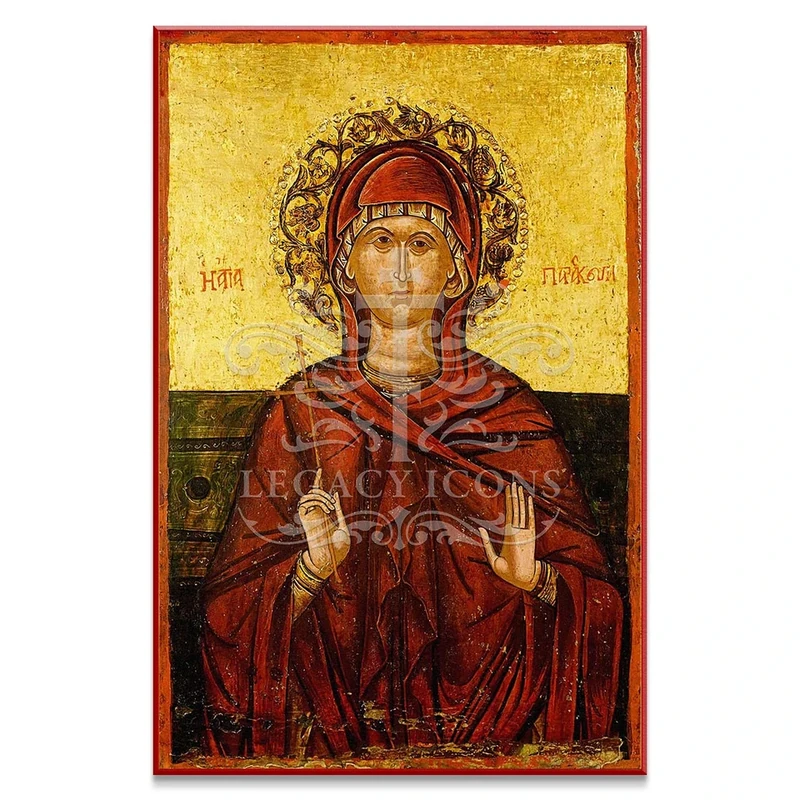
Paraskevi’s traditional life presents a woman formed by prayer and the study of Scripture. After her parents died, she gave away her inheritance and devoted herself to proclaiming Christ. She continued that witness despite arrest and threats under Roman authorities. Accounts of healing and deliverance form part of her veneration, and Orthodox Christians especially seek her prayers in illness. Her life unites freedom from wealth with a refusal to surrender faith for safety or honors. Paraskevi offers an example of learning that moves outward into generosity, public witness, and mercy toward people who oppose her.
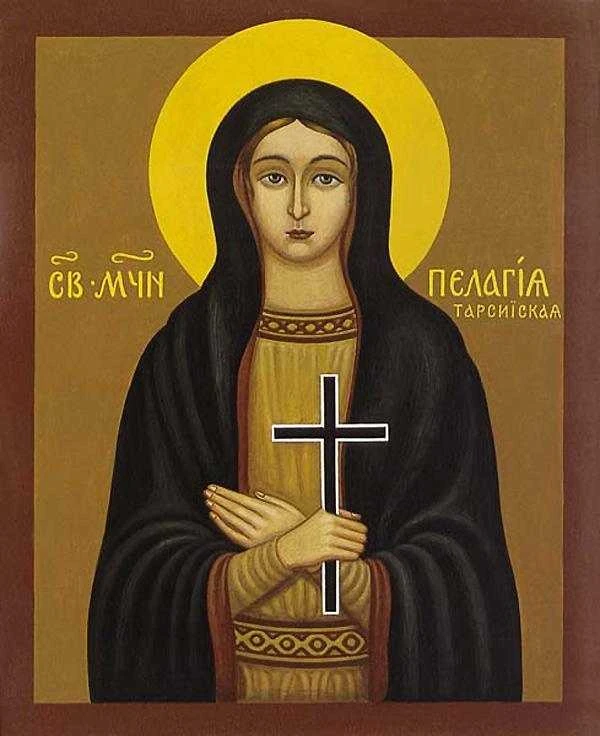
Pelagia of Tarsus is remembered in a martyr narrative as a young woman who learned about Christ from Christian friends. She sought baptism from Bishop Linus and then shared her possessions with poor people. Her decision to follow Christ brought conflict with expectations of marriage and with her mother's wishes. The received life describes her refusing demands to abandon that commitment and eventually suffering execution. Christians later honored her burial place with a church. Her commemoration preserves a witness to conversion and steadfast faith, while the detailed account of imperial courtship and extraordinary martyrdom belongs to hagiographic tradition rather than independently established political history.
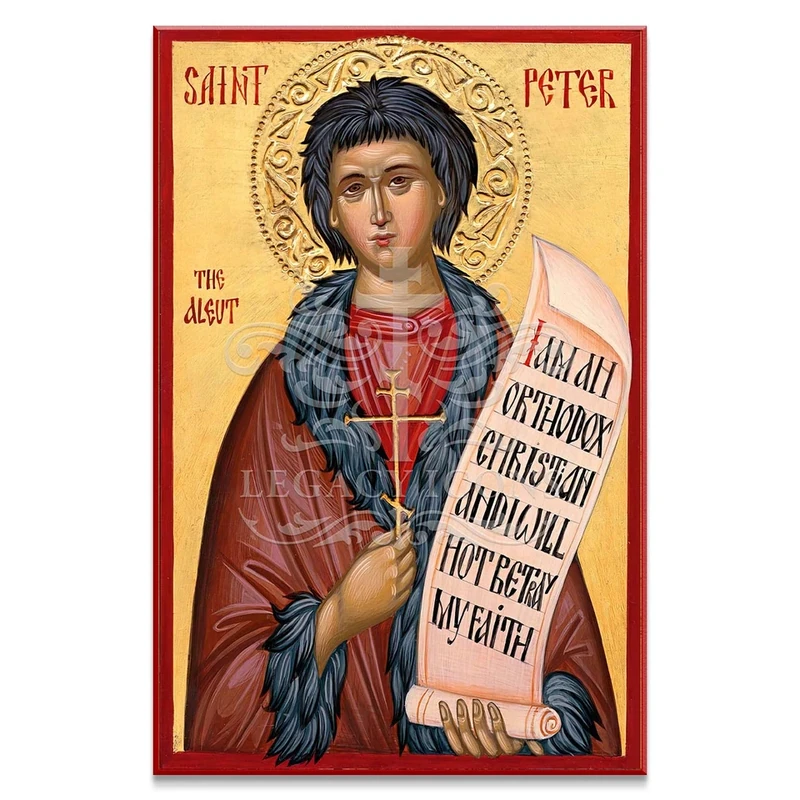
The Church remembers Peter as an Indigenous Alaskan Christian who died in captivity in California after refusing to abandon his Orthodox faith. The traditional account comes through testimony preserved by Simeon Yanovsky and related in the life of Herman of Alaska. Peter’s confession is simple and persistent: his identity in Christ could not be surrendered under coercion. Details of the episode depend on that transmitted witness rather than extensive surviving documentation. His commemoration gives particular attention to a person whose vulnerability would otherwise make him easy to lose from historical memory, honoring steadfast faith without encouraging hostility toward present-day neighbors.
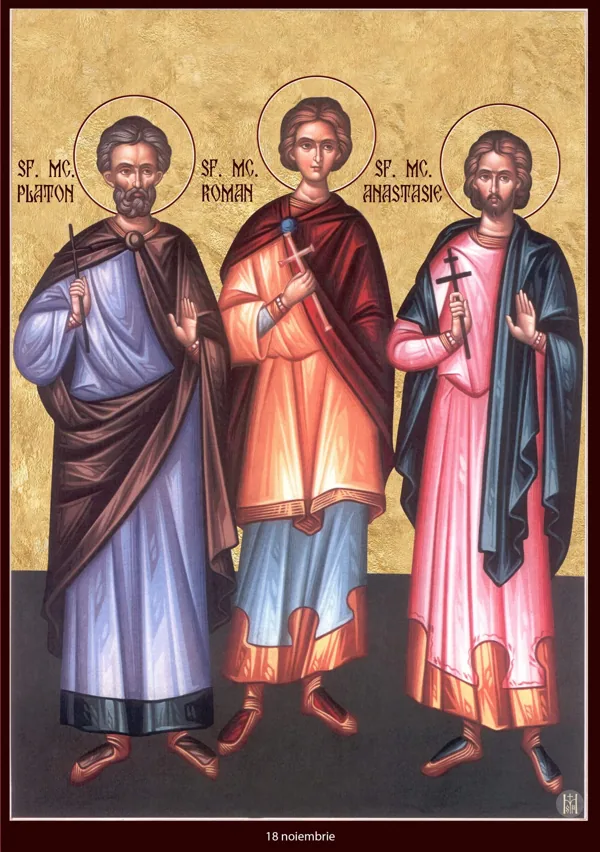
Plato was raised by Christian parents in Ancyra and learned the Scriptures. His public preaching led to his arrest and appearance before the governor Agrippinus. Plato refused to sacrifice to the pagan gods. The account remembers his continued Christian confession through torture and his execution at the beginning of the fourth century.
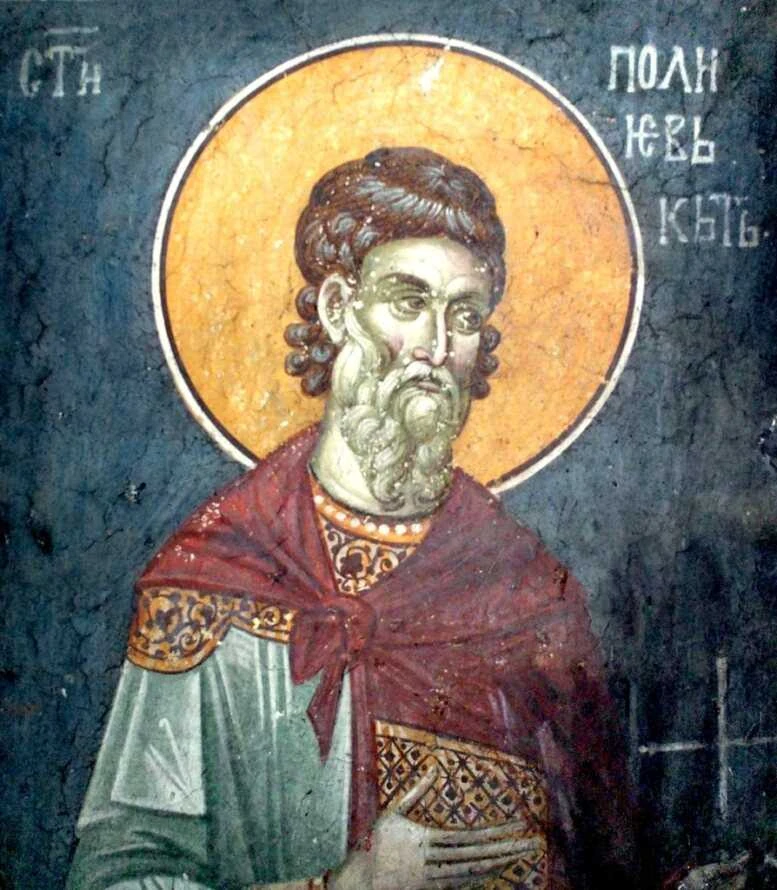
Polyeuktos was a soldier in Melitene and a close friend of the Christian soldier Nearkhos. The traditional account describes their conversation during persecution as the turning point in Polyeuktos’s commitment to Christ. His public rejection of pagan worship brought him into conflict with the authorities and with members of his own family. He remained steadfast and suffered martyrdom before receiving ordinary baptism. Later a church in Melitene honored his memory, and devotion to him spread widely. His commemoration remembers the influence of faithful friendship and a decision that changed the direction of a previously respected life.
The directory indexes the OCA full-year calendar, including leap-day commemorations, alongside additional researched profiles. Calendar entries include individual saints, groups, icons and feasts. An entry count is not a count of unique saints. Categories are provisional; follow the linked source.
Dates show commemorations in the referenced calendar year. Movable feasts change annually, and local calendars may differ. Additional jurisdictions, original biographies and icon research remain in progress. This collection does not yet claim complete Eastern Orthodox coverage.
Calendar metadata was retrieved through Orthocal’s source repository and the Orthodox Church in America. Source-only calendar records link to their original accounts; researched profiles include individually sourced artwork.
 Patron SaintTake the quiz