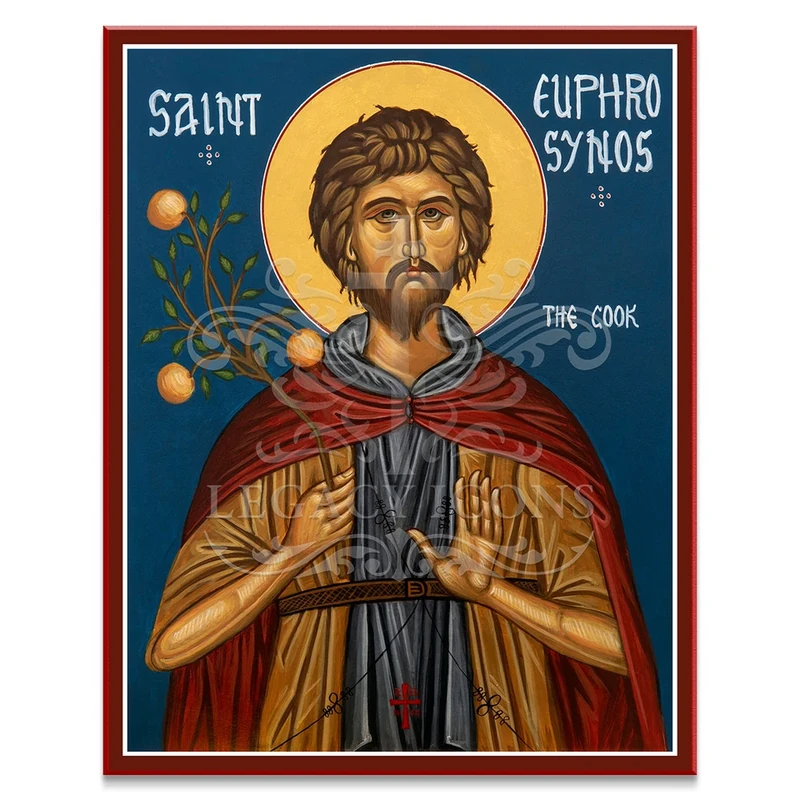
Euphrosynos came from a poor rural family and worked as a cook before entering a monastery. He saved from his own expenses to give alms and continued serving in the monastery kitchen. Some monks mocked his background, but the received life remembers his patience rather than retaliation. Its best-known episode concerns a priest’s vision of paradise, where Euphrosynos offered apples that remained with the priest after waking. When the story became known, the cook withdrew to avoid praise. Orthodox Christians remember him as a witness that ordinary work, hidden generosity, and humility belong fully within the life of holiness.
Eupraxia, known earlier as Euphrosyne, belonged to the princely family of Polotsk and married Yaroslav of Pskov. After her husband left Pskov and formed another household, she devoted herself to religious works. She founded a monastery beside the Velikaya River in honor of John the Forerunner. The Orthodox account considers her leadership of that community probable rather than certain. She was later invited to meet her former husband in Livonia, where a member of his household murdered her. Her burial took place in the monastery she had founded. Her memory centers on religious service amid political instability and personal betrayal.
Eustathius served as Bishop of Beroea before becoming Archbishop of Antioch. A learned theologian, he defended the confession that the Son shares the Father's divine nature during the fourth-century controversy surrounding Arius. He participated in the Council of Nicaea and continued to support its teaching afterward. Political and ecclesiastical opposition eventually brought deposition and exile. The Church's account remembers him continuing his theological work despite removal from his city. His remains were later brought back to Antioch, where his memory endured. Orthodox Christians honor him as a bishop whose teaching and perseverance helped sustain the Nicene faith through a prolonged period of conflict.
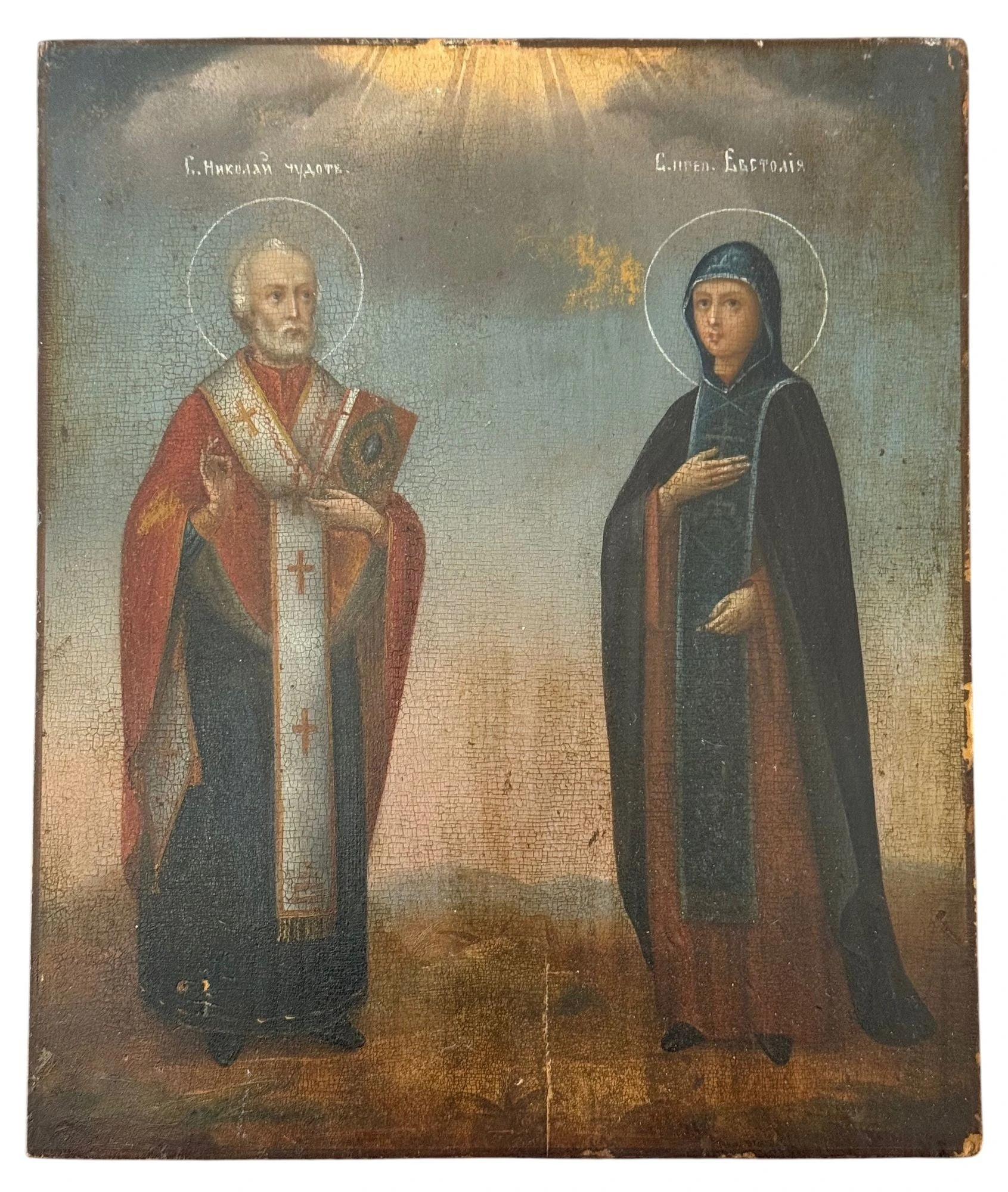
Eustolia traveled from Rome to Constantinople, where she met Sopatra, a daughter of Emperor Maurice. She taught Sopatra the Scriptures and became her spiritual guide. Sopatra provided a house and later entrusted her property to Eustolia. The received life says Eustolia used these resources to enlarge their monastery and gave what remained to poor people. She also counseled women and pilgrims who came to the community. Before her death, she appointed Sopatra to succeed her as abbess.
Euthymius became a monk under Theodosius of Tarnovo and later lived in Constantinople and on Mount Athos. Returning to Bulgaria, he gathered disciples near Tarnovo and worked to correct church books against Greek sources. He translated liturgical texts and wrote saints’ lives and other works. He later became Patriarch of Tarnovo. The received life remembers him remaining with his community during the Ottoman conquest and appealing for protection of civilians. He was subsequently exiled.
Euthymius, also known as Ekvtime Takaishvili, devoted his scholarly life to preserving Georgia's history and sacred heritage. He established a museum for manuscripts and church objects, organized research, and helped found Tbilisi University. After the Georgian government went into exile, he accompanied the national treasures to France and guarded them through poverty and war. He resisted attempts to disperse the collection and returned with it to Georgia in 1945. Later repression restricted his teaching and isolated him before his death in 1953. His commemoration remembers faithful stewardship of a community's inheritance, maintained when safeguarding that trust brought deprivation rather than personal reward.
The directory indexes the OCA full-year calendar, including leap-day commemorations, alongside additional researched profiles. Calendar entries include individual saints, groups, icons and feasts. An entry count is not a count of unique saints. Categories are provisional; follow the linked source.
Dates show commemorations in the referenced calendar year. Movable feasts change annually, and local calendars may differ. Additional jurisdictions, original biographies and icon research remain in progress. This collection does not yet claim complete Eastern Orthodox coverage.
Calendar metadata was retrieved through Orthocal’s source repository and the Orthodox Church in America. Source-only calendar records link to their original accounts; researched profiles include individually sourced artwork.
 Patron SaintTake the quiz