Stephen Branković was the son of George and Irene and the husband of Angelina. He is remembered as Stephen the Blind after being unjustly blinded. The OCA account describes his endurance and the family's search for safety. Stephen and Angelina raised their sons George and John and fled to Italy. His short primary life does not support a detailed quiz assessment. He is a different person from Stephen of Dečani, another Serbian ruler remembered in connection with blinding.
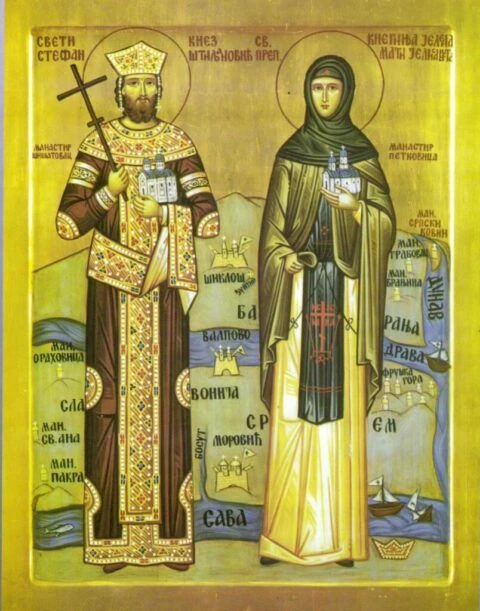
Stephen Štiljanović came from Paštrovići on the Adriatic coast and became a leader of Serbs in Srem and Slavonia. His received life places his rule amid warfare and displacement in the early sixteenth century. During a severe famine, he opened his granaries and distributed grain according to need. Although the grain was first described as a loan, he later forgave the recipients’ debts. His wife Helen buried him after his death, and his memory became associated with Šišatovac Monastery.
Stephen came from Cappadocia and received education in Constantinople before entering monastic life. After a period of solitude, Patriarch Germanus appointed him bishop of Sourozh, the Crimean city now called Sudak. His ministry later brought him into conflict with the imperial campaign against icons. Stephen refused orders to remove the holy images from churches and was taken to Constantinople, where he endured imprisonment and torture. After his release, he returned to his congregation rather than remaining away from the place he had served. His commemoration remembers a bishop whose confession of faith and responsibility for his community continued through political persecution.
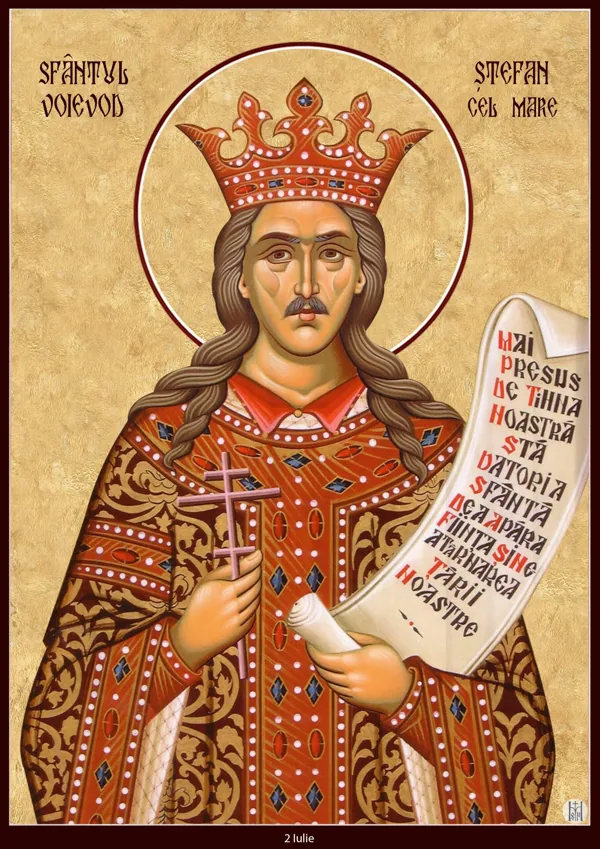
Stephen ruled Moldavia through a long period of conflict and political uncertainty. The official calendar remembers the churches and monasteries he founded or endowed, as well as his assistance to poor and suffering people. His remembrance includes both the responsibilities of government and the personal losses and illness he endured. His support for places of worship remains a visible part of his legacy.
Stephen Urosh V succeeded his father, Dušan, as ruler in 1355. The OCA life remembers his care for widows and orphans, gifts to poor people, defense of the downtrodden, and efforts to settle quarrels. He is commemorated on December 2. He is distinct from earlier Serbian rulers also called Stephen Urosh, including Stephen Milutin and Stephen of Dečani.
Stephen learned from the Komi people he encountered while young and later prepared for missionary work through monastic study. He developed an alphabet and translated worship books so that instruction and services could take place in their language. As bishop of Perm, he opened schools and trained local clergy. The OCA life also remembers practical help during famine and his defense of people against corrupt officials. In a confrontation with an opposing religious leader, he refused a demand for the man’s death. His mission combines language work and pastoral care, although the received account also contains difficult episodes of religious conflict.
The directory indexes the OCA full-year calendar, including leap-day commemorations, alongside additional researched profiles. Calendar entries include individual saints, groups, icons and feasts. An entry count is not a count of unique saints. Categories are provisional; follow the linked source.
Dates show commemorations in the referenced calendar year. Movable feasts change annually, and local calendars may differ. Additional jurisdictions, original biographies and icon research remain in progress. This collection does not yet claim complete Eastern Orthodox coverage.
Calendar metadata was retrieved through Orthocal’s source repository and the Orthodox Church in America. Source-only calendar records link to their original accounts; researched profiles include individually sourced artwork.
 Patron SaintTake the quiz