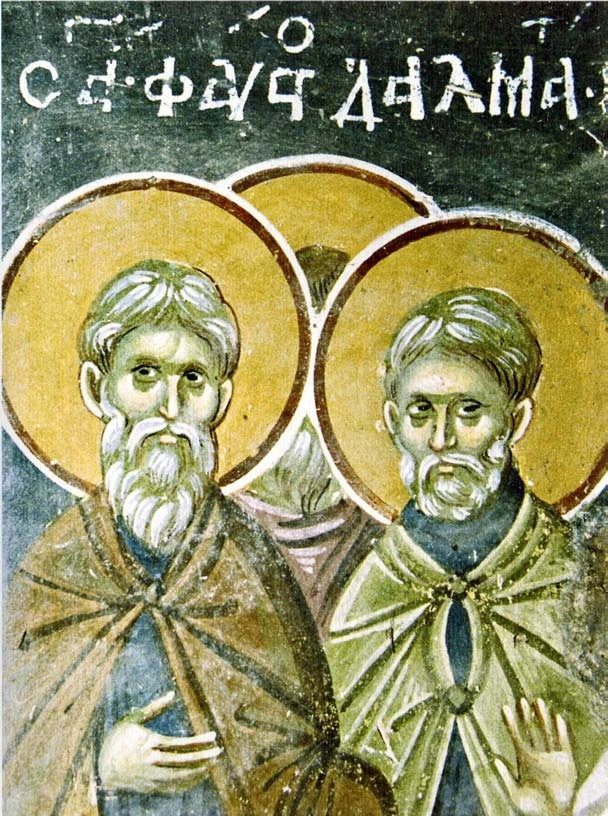
Dalmat had served as a soldier under Theodosius the Great. With his son Faustus, he entered the monastery of Isaac near Constantinople. Dalmat later became its abbot, and the monastery came to bear his name. The calendar remembers his support for the fathers at the Council of Ephesus in 431.
Damian was a priest and monk of the Kiev Caves, remembered in the tradition associated with Nestor the Chronicler. He followed the example of Theodosius and became known among the brothers for gentleness, diligent work, and obedience. His devotional life included long prayer and reading Scripture. The monastic account also remembers a gift of healing. He died in 1071 and is commemorated with Jeremiah and Matthew. His individual remembrance connects the care of sick people with the quiet habits of work, learning, and humility within a shared monastic life.
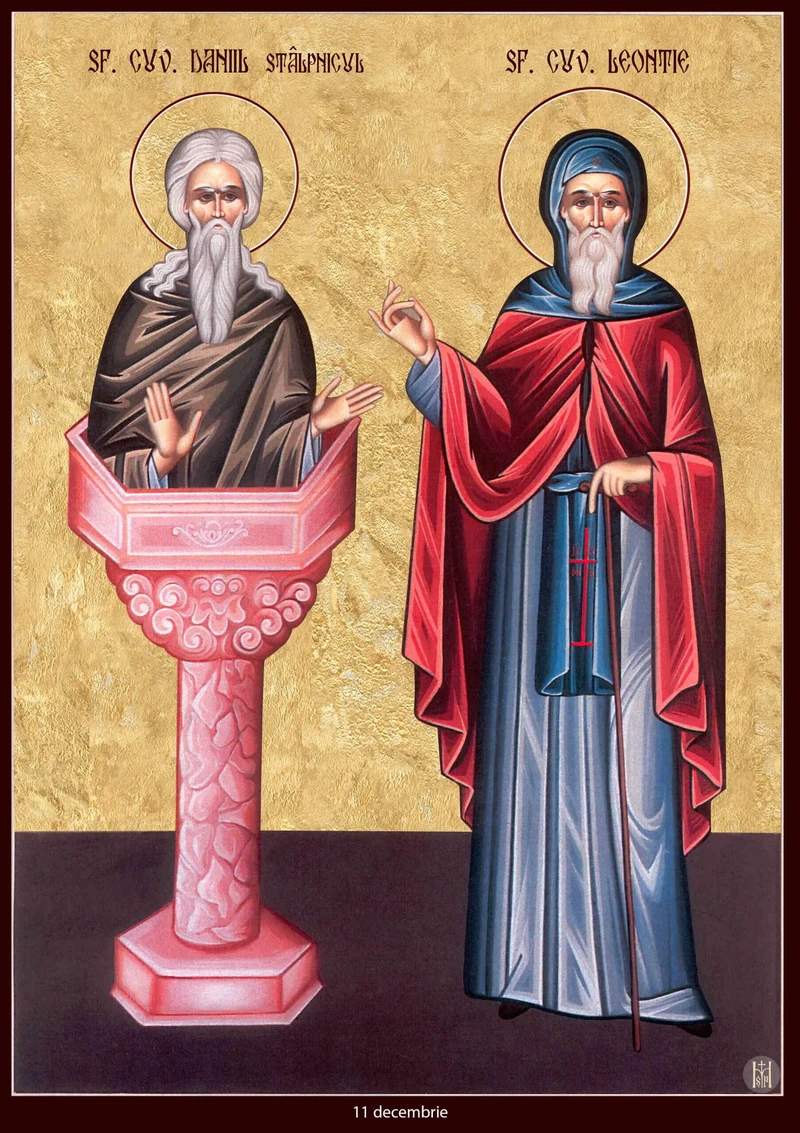
Daniel entered monastic life near his Mesopotamian home before adopting the unusual vocation of a stylite near Constantinople. The OCA's received life describes a long period on a pillar, where visitors sought prayers, help, and counsel. His guidance encouraged people to change their conduct, and even emperors approached him. His commemoration remembers a form of ascetic life that attracted a wider pastoral responsibility. The pillar, predictions, and extraordinary healings belong to the received narrative; visitors can consider his attention to those seeking counsel without treating exposure or extreme austerity as a practice to copy.
Daniel, whose earlier name was Demetrius, sought monastic formation under experienced teachers associated with Borovsk and Volokolamsk. After returning to Pereslavl, he gave particular attention to people neglected after death: poor people, those without relatives, and others whose bodies lacked anyone to arrange a burial. He buried them and established a monastery at the cemetery site. The OCA remembers this care as a concrete expression of love for his neighbors. His commemoration preserves the dignity of people easily forgotten by a community and the responsibility of providing care when no family can perform that work.
Dionysius came from a poor family and pursued monastic life after his parents’ deaths. He spent time at Meteora and Mount Athos, receiving guidance from an elder before ordination. Other monks sought his teaching, but disagreement over leadership at Philotheou led him to withdraw rather than prolong conflict. He later settled near Mount Olympus, where a community gathered and churches were built. He prepared a rule and a final instruction for the monks. The OCA life also remembers a robber moved to repentance by his kind counsel, placing gentleness beside the discipline of his monastic vocation.
Dionysius trained at the Savior-Stone monastery before seeking a quieter place in the northern forests. A community eventually gathered near the Glushitsa River, and he founded houses for men and women. He was also an iconographer, painting images for the churches and preserving the memory of other monastic teachers. During famine he continued giving help to people who came to the monastery, even when its steward worried about dwindling supplies. His disciples carried the community’s life into other foundations. Orthodox remembrance presents his inner prayer, artistic work, and generosity as connected responsibilities rather than separate achievements.
The directory indexes the OCA full-year calendar, including leap-day commemorations, alongside additional researched profiles. Calendar entries include individual saints, groups, icons and feasts. An entry count is not a count of unique saints. Categories are provisional; follow the linked source.
Dates show commemorations in the referenced calendar year. Movable feasts change annually, and local calendars may differ. Additional jurisdictions, original biographies and icon research remain in progress. This collection does not yet claim complete Eastern Orthodox coverage.
Calendar metadata was retrieved through Orthocal’s source repository and the Orthodox Church in America. Source-only calendar records link to their original accounts; researched profiles include individually sourced artwork.
 Patron SaintTake the quiz