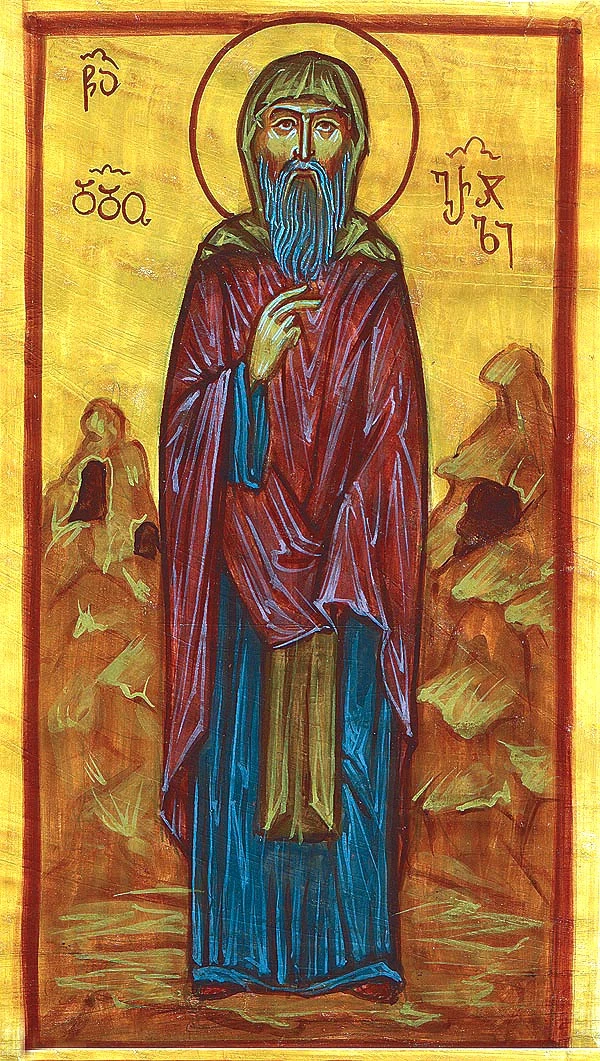
Dodo entered monastic life while young and first lived as a hermit near Ninotsminda. Hearing about David of Gareji, he traveled to join him in the wilderness. David later asked Dodo to lead some of the monks in establishing cells on a nearby mountain. Their community grew, while Dodo continued a life centered on prayer for his brothers and the Church. The OCA life also remembers his baptism of a local nobleman and household. He died in old age at his foundation. His commemoration joins the desire for solitude with responsibility for a community.
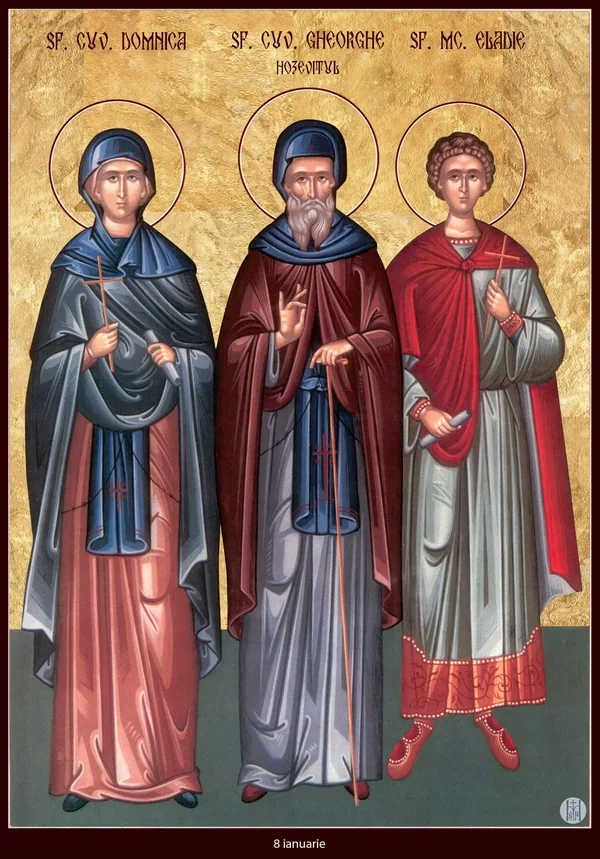
Domnica came from Carthage to Constantinople with four other women and received baptism from Patriarch Nectarius. She entered monastic life and served as a deaconess at the patriarchal church. She later founded a monastery near Constantinople. The calendar records these events without supplying a detailed account of her daily ministry.
Dositheus came from a prosperous family and entered monastic life after a visit to Jerusalem. Under the guidance of Dorotheus, he worked in the infirmary and cared for sick people. His training involved learning to restrain anger and to recognize the dignity of every patient. After several years, he became seriously ill himself and continued in prayer with the support of his elders. The Church remembers a short monastic life whose value was not measured by public achievement. Dositheus’s example gives holiness a practical setting in caregiving, patient correction, and the daily struggle to speak kindly.
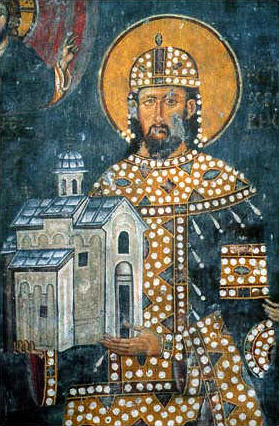
Dragutin was the son of Stephen Urosh I and the brother of Milutin. The OCA account describes his abdication in favor of his brother and his withdrawal to Srem. There he pursued a secluded ascetic life and later received the monastic name Theoctistus. The same brief account remembers his efforts to bring Bogomils to Orthodox Christianity. It does not explain the methods or circumstances of those efforts. The limited source supports a reference entry, rather than a detailed personality assessment.
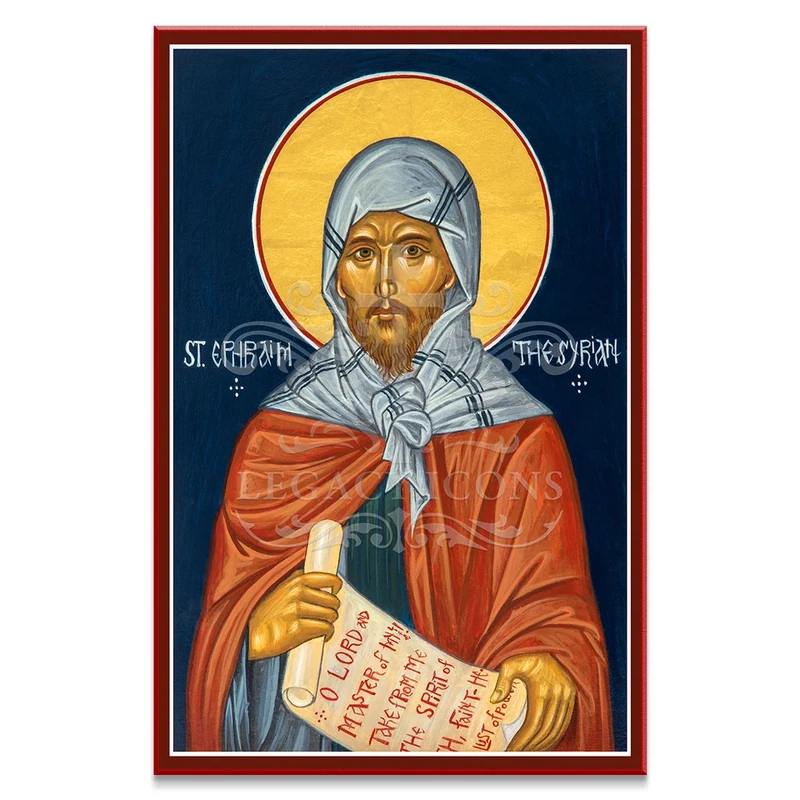
Ephraim taught the Christian faith through preaching, biblical interpretation, prayers, and hymns in Syriac. Associated with Nisibis and later Edessa, he joined a disciplined spiritual life to an unusual gift for language. The prayer bearing his name remains especially familiar in Orthodox Great Lent, calling believers toward humility and renewal. His traditional life also remembers practical help during famine, when he encouraged people with resources to support those in need. Ephraim’s example brings beauty, repentance, and responsibility together: words can move a heart toward God, but their fruit includes care for a hungry neighbor.
Ephraim came from Hungary and entered the service of Prince Boris with his brothers Moses and George. After Boris and George were killed, Ephraim left courtly service and withdrew beside the Tvertsa River. Other monks eventually settled near him, and he founded a monastery honoring the Passion-bearers Boris and Gleb. The brothers chose him as their leader. Near a road used by merchants traveling toward Novgorod, the community also provided free lodging for poor people and travelers. His life connects the memory of personal loss with a new place of worship and hospitality. He was buried in the monastery he had founded.
The directory indexes the OCA full-year calendar, including leap-day commemorations, alongside additional researched profiles. Calendar entries include individual saints, groups, icons and feasts. An entry count is not a count of unique saints. Categories are provisional; follow the linked source.
Dates show commemorations in the referenced calendar year. Movable feasts change annually, and local calendars may differ. Additional jurisdictions, original biographies and icon research remain in progress. This collection does not yet claim complete Eastern Orthodox coverage.
Calendar metadata was retrieved through Orthocal’s source repository and the Orthodox Church in America. Source-only calendar records link to their original accounts; researched profiles include individually sourced artwork.
 Patron SaintTake the quiz