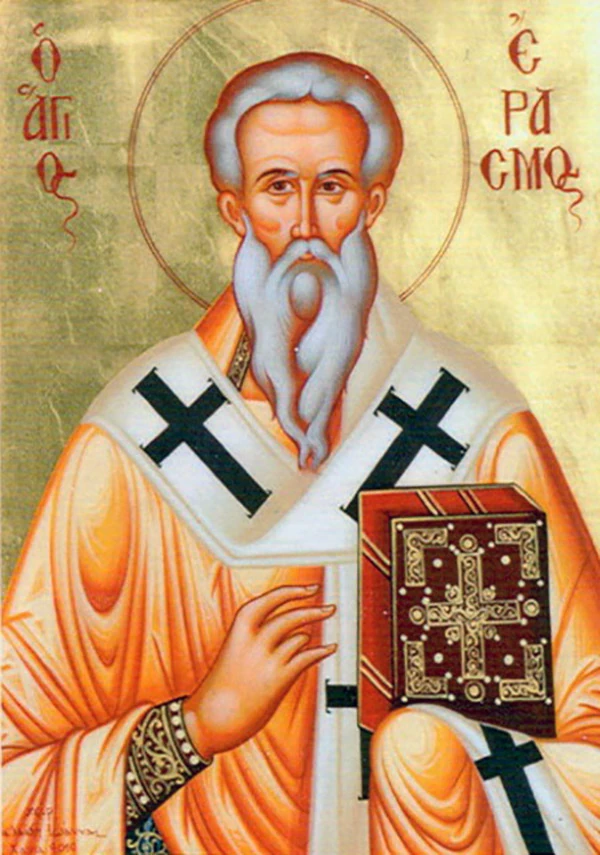
Erasmus came from Antioch and lived during the persecutions associated with Diocletian and Maximian. His received life describes him preaching as a bishop at Ohrid, then called Lychnidos, and destroying pagan altars. He refused an order to sacrifice to Zeus and was tortured and imprisoned. The account follows his later preaching in Campania and his withdrawal to a cave, where he died in the early fourth century.
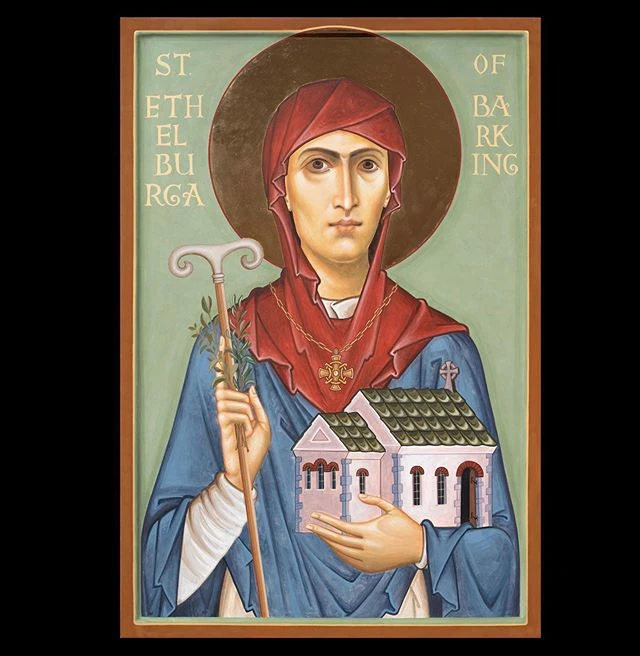
Ethelburga was the sister of Erkenwald, later bishop of London. When he established a double monastery at Barking in Essex, she became its first abbess. The received account describes her care for the community and preserves a later tradition of her learning monastic practices with Hildelith’s help. Bede’s history remembers her life and the community’s experiences during an outbreak of plague. Hildelith succeeded her. The exact year of Ethelburga’s death is uncertain.
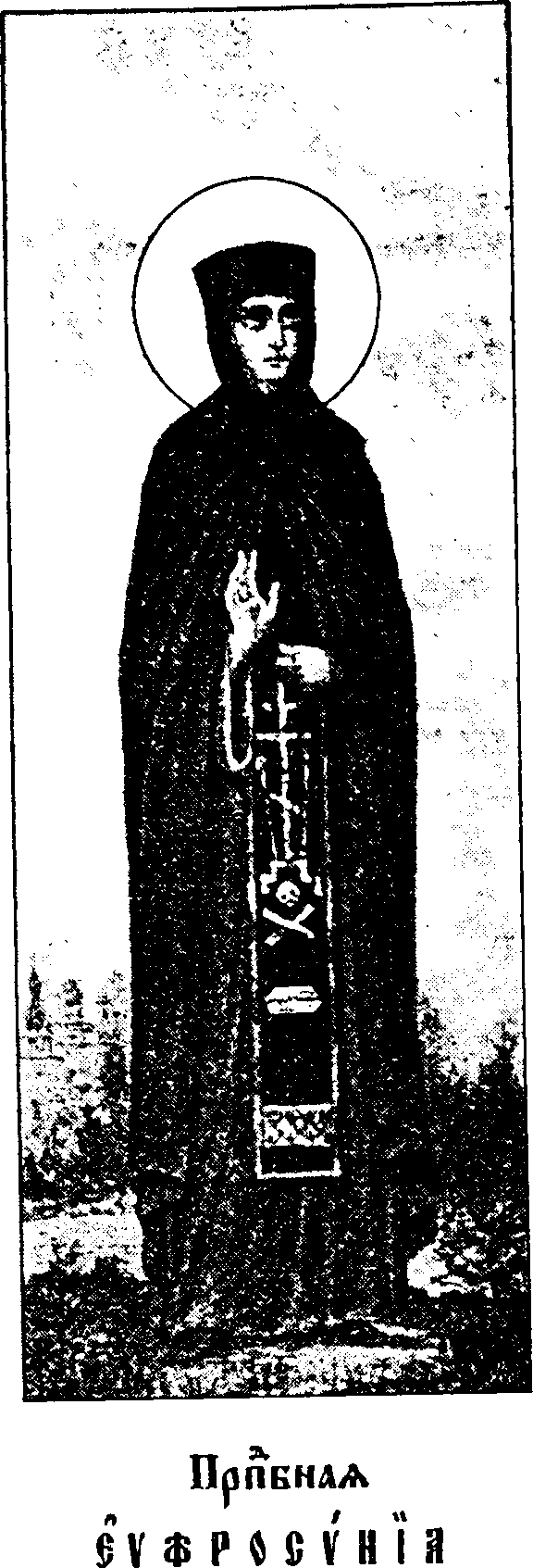
Euphrosyne was known as Eudokia before becoming a nun. She married Prince Demetrius of the Don and raised a family while supporting the life of the Church. The OCA account remembers the influence of Alexis of Moscow and Sergius of Radonezh on her spiritual life. She founded the Ascension women’s monastery in the Moscow Kremlin and supported church building and sacred art. After years of family responsibility, she received monastic tonsure under the name Euphrosyne. She died in 1407 and was buried at her monastery. Her life connects stewardship, family devotion, and a later monastic vocation.
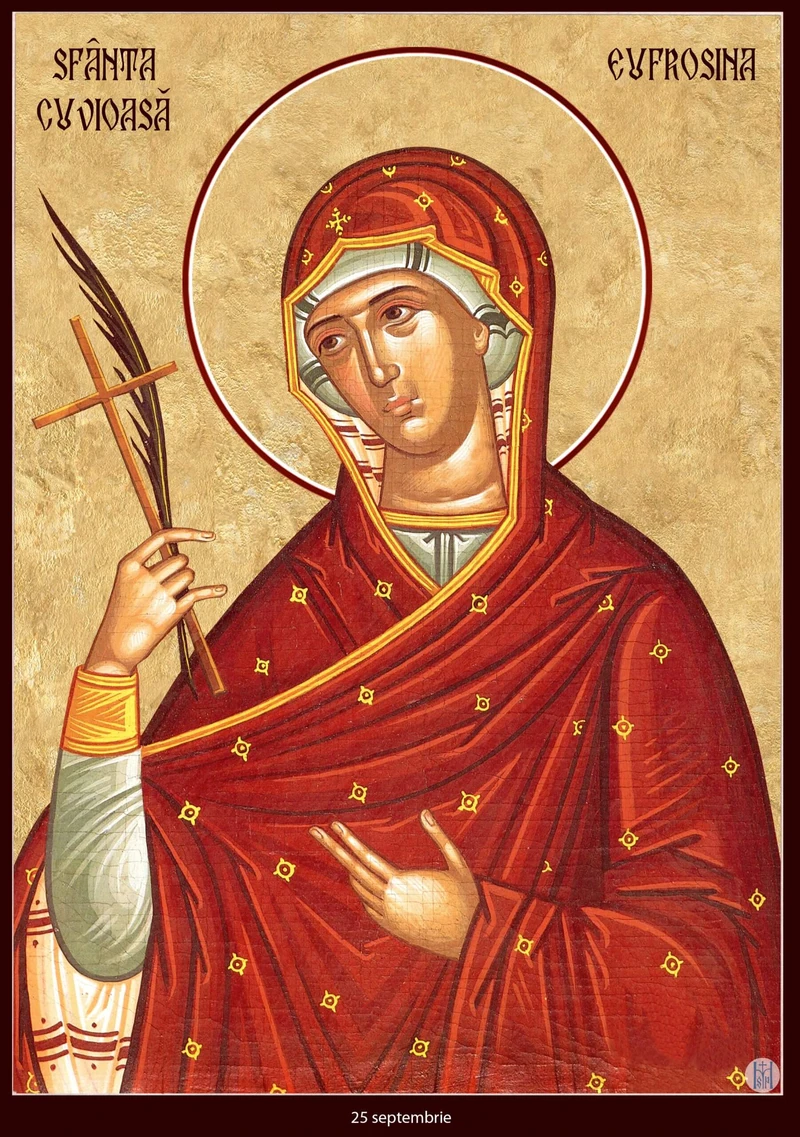
Euphrosyne was the only child of a devout family in Alexandria. Desiring monastic life rather than the marriage her father planned, she gave her possessions to poor people and entered a monastery under the name Smaragdos. The traditional account remembers her willingness to serve everyone and her long years of prayer in a solitary cell. Her grieving father later sought counsel from Smaragdos without recognizing his daughter. Near her death she revealed her identity to him. He subsequently became a monk himself. Her commemoration centers on devotion, service, and consolation offered within an unusual monastic story.
Euphrosyne was born Predslava into a princely family of Polotsk. Her love of books and prayer led her toward monastic life. With episcopal blessing she lived near the cathedral and copied books. She later organized a women’s monastery, where she taught girls book copying, church singing, sewing, and other crafts. Her work also supported church construction and another monastic foundation. Near the end of her life she traveled on pilgrimage to Constantinople and Jerusalem, where she died. The Church remembers a teacher who joined spiritual learning with practical skills and the patient work of building a community.
Euphrosyne was born into the princely family of Chernihiv and received the baptismal name Theodoulia. The OCA's received life says that the death of her intended husband preceded her entrance into a women's monastery at Suzdal. There she became known for her disciplined monastic life and for teaching visitors about love, prayer, obedience, and humility. Even the abbess sought her counsel, and Euphrosyne eventually became the community's superior. She died in the thirteenth century. Her commemoration remembers spiritual instruction offered from within a monastery, while the visions and accounts of the community's miraculous protection remain part of the received hagiographic narrative.
The directory indexes the OCA full-year calendar, including leap-day commemorations, alongside additional researched profiles. Calendar entries include individual saints, groups, icons and feasts. An entry count is not a count of unique saints. Categories are provisional; follow the linked source.
Dates show commemorations in the referenced calendar year. Movable feasts change annually, and local calendars may differ. Additional jurisdictions, original biographies and icon research remain in progress. This collection does not yet claim complete Eastern Orthodox coverage.
Calendar metadata was retrieved through Orthocal’s source repository and the Orthodox Church in America. Source-only calendar records link to their original accounts; researched profiles include individually sourced artwork.
 Patron SaintTake the quiz