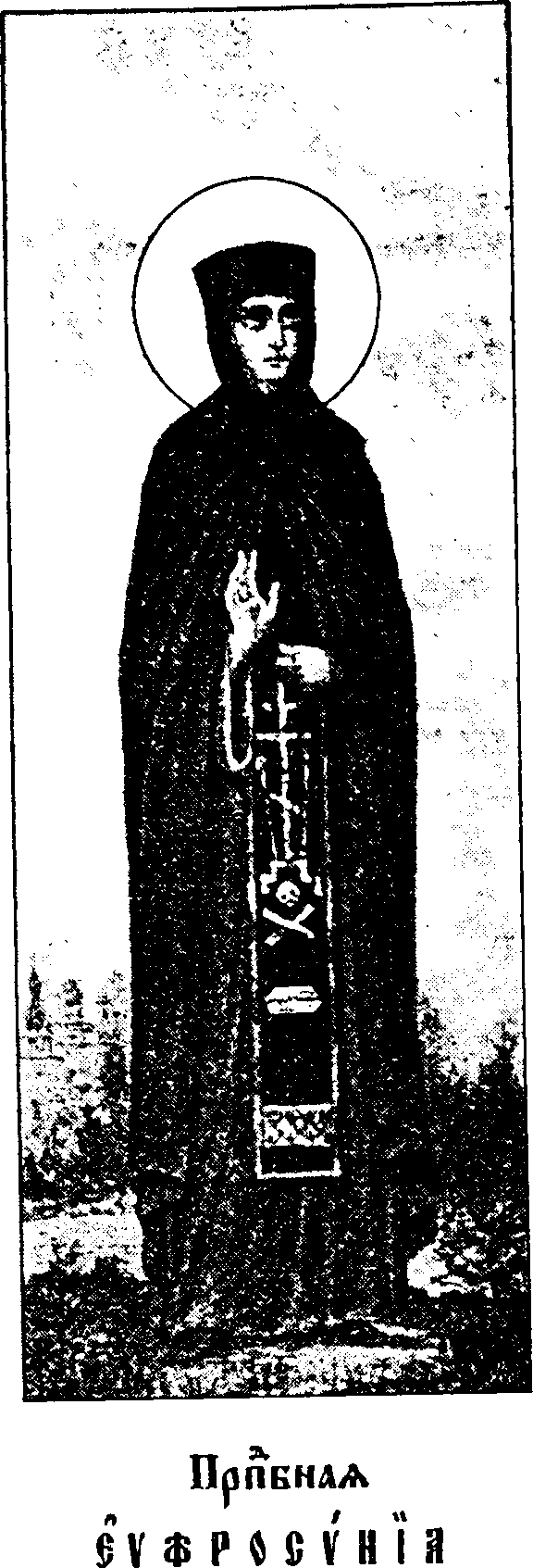
Euphrosyne was born into the princely family of Chernihiv and received the baptismal name Theodoulia. The OCA's received life says that the death of her intended husband preceded her entrance into a women's monastery at Suzdal. There she became known for her disciplined monastic life and for teaching visitors about love, prayer, obedience, and humility. Even the abbess sought her counsel, and Euphrosyne eventually became the community's superior. She died in the thirteenth century. Her commemoration remembers spiritual instruction offered from within a monastery, while the visions and accounts of the community's miraculous protection remain part of the received hagiographic narrative.
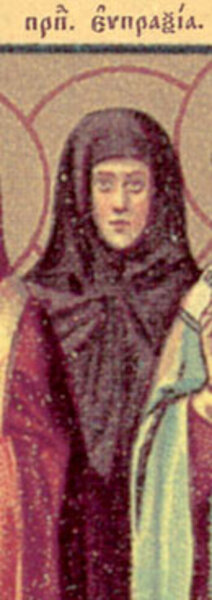
Eupraxia the Elder was married to the senator Antigonus and became the mother of a daughter also named Eupraxia. The couple practiced generosity, and after widowhood she visited monastic communities while continuing to give alms. At Tabennisi in Egypt, she found a community whose way of life deeply impressed her. Her daughter eventually remained there under the abbess Theodula. The elder Eupraxia continued in charity and prayer. Before her death she urged her daughter to love Christ and respect the sisters rather than expecting them to serve her. Her remembrance joins generosity with the rejection of inherited privilege.
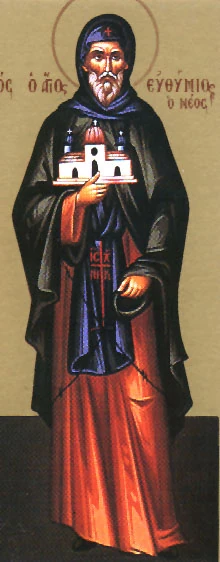
Euthymius received his monastic formation at the Caves Monastery near Nizhny Novgorod under Dionysius, who advised him to moderate excessive ascetic practices. He later went to Suzdal to establish a new monastery at the request of the local prince. The community adopted a common rule of life and grew substantially under his direction. Euthymius expected the monks to share assigned responsibilities and worked continually for their benefit. He also maintained contact with Sergius of Radonezh. He died in 1404. His commemoration recalls the patient establishment of communal life, with spiritual effort directed toward a lasting responsibility for other people.
Euthymius came from Melitene and became a monk and priest before moving to the Holy Land in search of stillness. He formed a lasting friendship with Theoctistus, and communities grew around their life of prayer. Though he valued solitude, he received people seeking guidance and cared for pilgrims. His instruction emphasized useful labor, humility, and moderation rather than displays of unusual fasting. The Church remembers his influence on Palestinian monasticism and his defense of the Orthodox faith. Euthymius’s example connects inner attention with practical responsibility, showing how a quiet life can still make room for a community.
Euthymius, originally named Nicetas, came from Ancyra and served in the military before entering monastic life. He received years of formation on Mount Olympus and later lived on Athos. Near Thessalonica, he became known for counseling visitors and eventually established two monasteries on Mount Peristeros. The OCA remembers his continuing direction of these communities before a final period on an island near Athos. He died in the ninth century. His commemoration recalls monastic instruction and community foundations, while the received account of leaving his wife and daughter requires pastoral context rather than presentation as a model for abandoning family responsibilities.
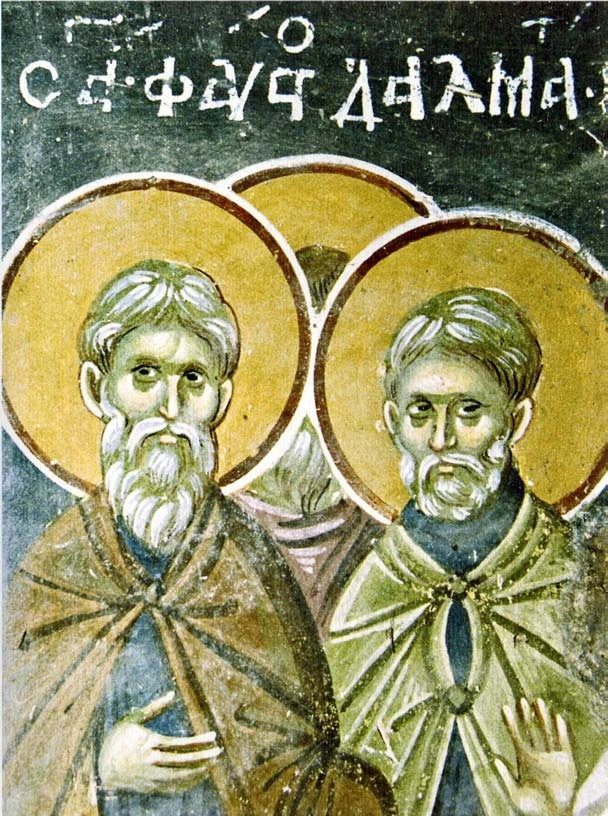
Faustus was the son of Dalmat. Father and son became monks in the monastery of Isaac near Constantinople, where the calendar remembers their life of fasting and prayer. Faustus continued in monastic life while his father became the community’s abbot.
The directory indexes the OCA full-year calendar, including leap-day commemorations, alongside additional researched profiles. Calendar entries include individual saints, groups, icons and feasts. An entry count is not a count of unique saints. Categories are provisional; follow the linked source.
Dates show commemorations in the referenced calendar year. Movable feasts change annually, and local calendars may differ. Additional jurisdictions, original biographies and icon research remain in progress. This collection does not yet claim complete Eastern Orthodox coverage.
Calendar metadata was retrieved through Orthocal’s source repository and the Orthodox Church in America. Source-only calendar records link to their original accounts; researched profiles include individually sourced artwork.
 Patron SaintTake the quiz