Joseph entered monastic life at Thessaloniki after his family left Sicily. Gregory the Decapolite became his guide, and together they encouraged Christians who defended the veneration of icons. The received life describes imprisonment and exile, during which Joseph continued to encourage others. He later composed canons and hymns honoring Christ, the Theotokos, and the saints, helping shape the Church's daily worship. He also served in the care of sacred vessels and as a confessor. His work joined a gift for words to practical responsibility. Orthodox Christians remember both the hymns that sustained common prayer and the courage of their composer.
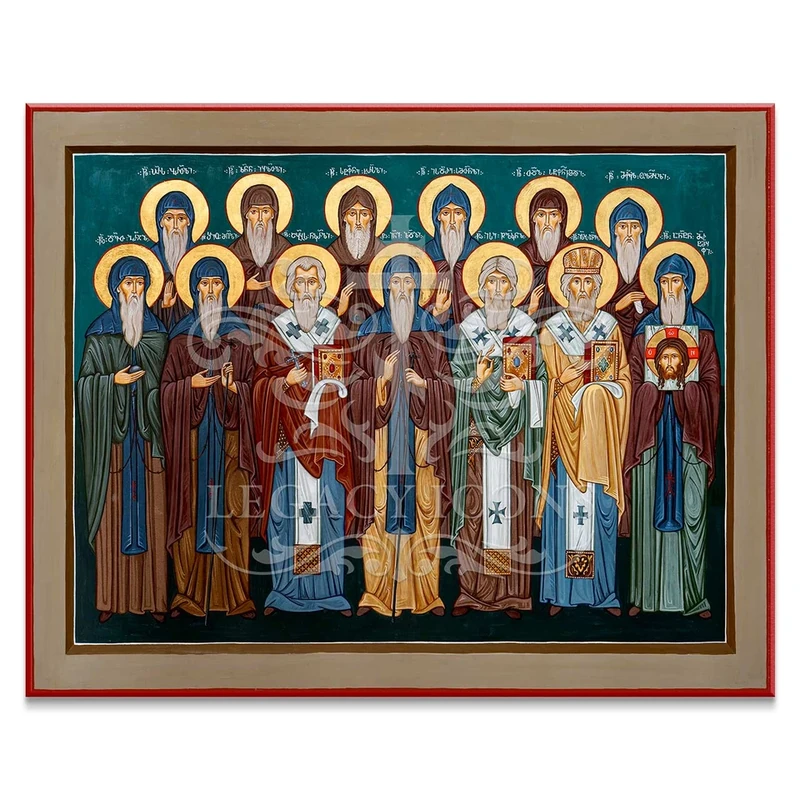
Joseph came to Georgia as a disciple and companion of John of Zedazeni. With his teacher’s blessing he settled near Alaverdi, beginning in solitude. The traditional life describes a meeting with a local nobleman whose support helped establish a church and monastery. People gradually gathered to hear Joseph’s preaching and share his life of prayer. As the community grew, he became its first abbot. Before death he blessed and instructed the brothers and appointed a successor. His commemoration remembers a quiet beginning that developed into stable worship, teaching, and shared responsibility for a monastic community.
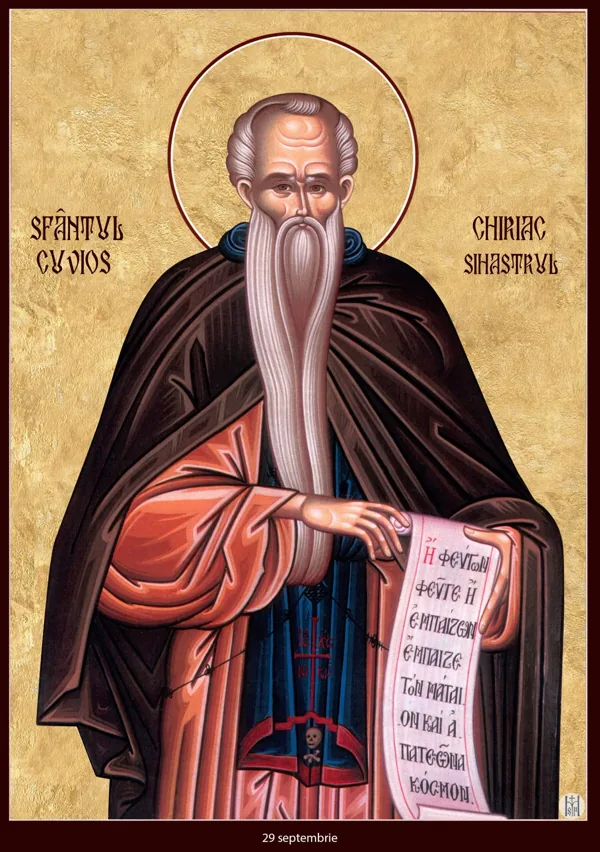
Cyriacus came from Corinth and entered monastic life in the Holy Land. Euthymius sent him to learn under Gerasimus near the Jordan. He later lived in other communities, including the monastery founded by Chariton, before withdrawing further into the wilderness. People sought him for spiritual help. In old age, he accepted a move to a cave nearer the monastery so the brothers could remain close to him.
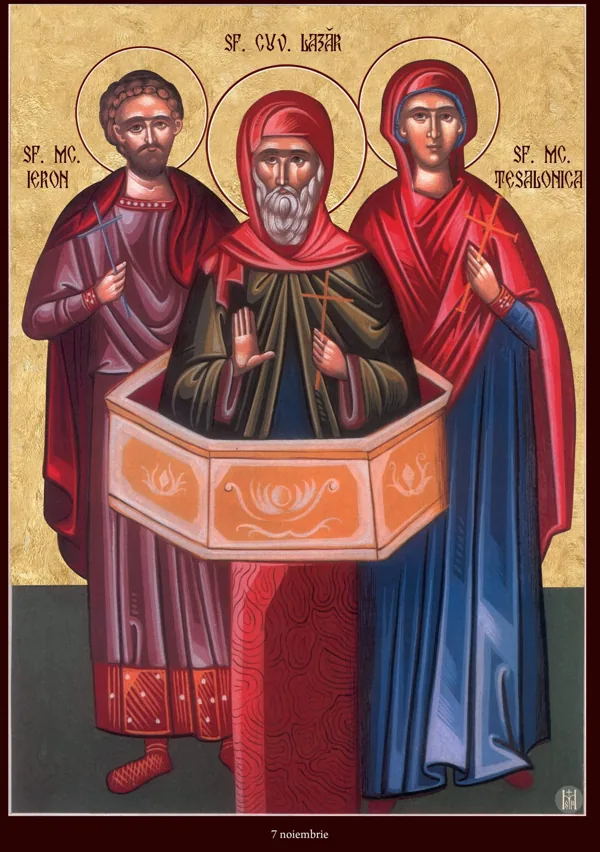
Lazarus was born near Magnesia in Asia Minor and sought a monastic life connected with Jerusalem. He spent six years at the monastery of Saint Sabbas in Palestine and was ordained a priest. After an invasion forced his departure, he settled on Mount Galesion near Ephesus and established a monastery dedicated to the Resurrection.
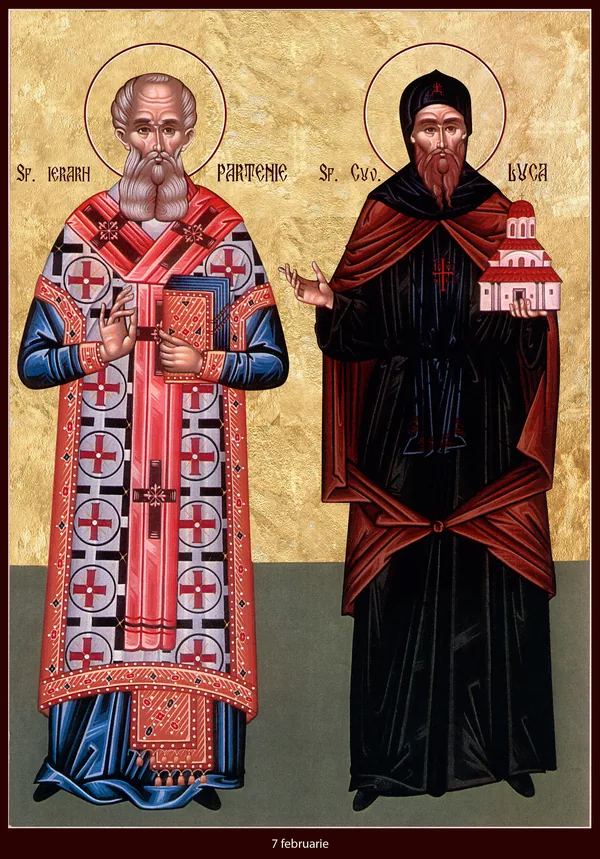
Luke came from Phocis in Greece and entered monastic life. He withdrew to a hermitage on Mount Ioanniptra near a church dedicated to Cosmas and Damian. Conflict led him to move, first to an island and later to the place called Sotirion. There he joined other monks in establishing a monastery. The calendar remembers his spiritual life and the community that grew around him.
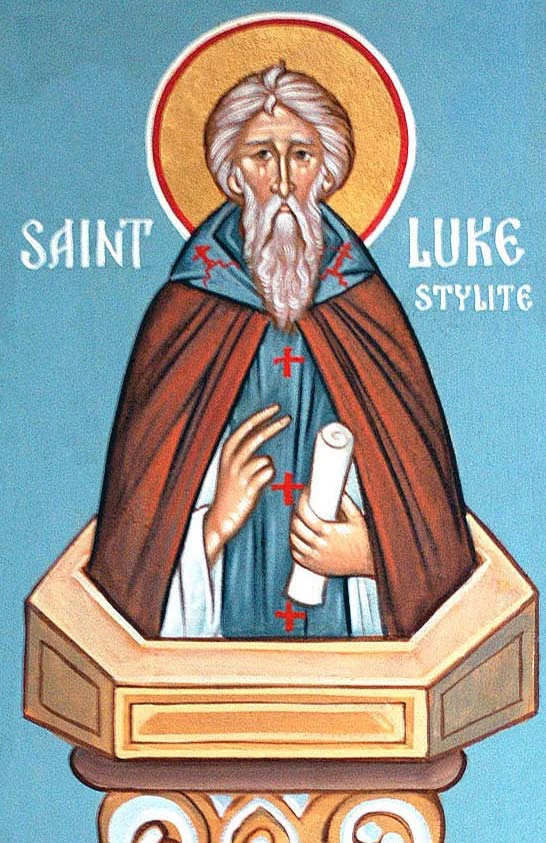
Luke was born in Anatolia to Christopher and Kalia. He served as a soldier in a war against the Bulgarians and became a monk after surviving the conflict. His received life describes years of ascetic life on a pillar, followed by journeys to Olympus, Constantinople and Chalcedon. At Chalcedon he continued his life as a stylite.
The directory indexes the OCA full-year calendar, including leap-day commemorations, alongside additional researched profiles. Calendar entries include individual saints, groups, icons and feasts. An entry count is not a count of unique saints. Categories are provisional; follow the linked source.
Dates show commemorations in the referenced calendar year. Movable feasts change annually, and local calendars may differ. Additional jurisdictions, original biographies and icon research remain in progress. This collection does not yet claim complete Eastern Orthodox coverage.
Calendar metadata was retrieved through Orthocal’s source repository and the Orthodox Church in America. Source-only calendar records link to their original accounts; researched profiles include individually sourced artwork.
 Patron SaintTake the quiz