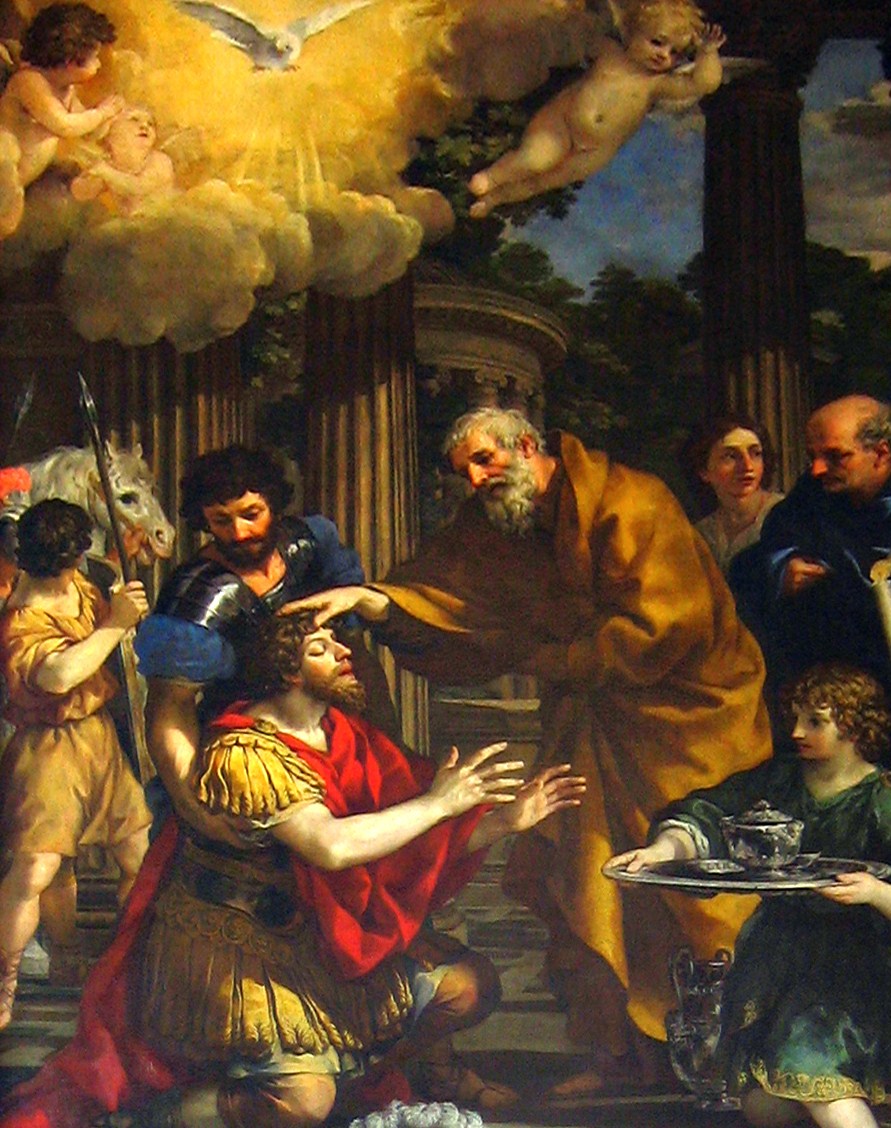
Ananias is remembered as the disciple who received a difficult call: to approach Saul, a man known for persecuting Christians. The account in Acts describes his obedience, the restoration of Saul’s sight, and Saul’s baptism before he became the Apostle Paul. Orthodox tradition honors Ananias as the first Bishop of Damascus and remembers his preaching at Eleutheropolis. There he refused to abandon Christ and died as a martyr, praying for those who killed him. His witness brings courage and mercy together, showing how faith can make room for a person whose past inspires fear.
Luke is honored as a physician, companion of Paul, and author of the Gospel bearing his name and the Acts of the Apostles. His Gospel opens with a commitment to a careful account of what Christians had received about Jesus. Acts continues the story through the preaching of the apostles and the work of the Holy Spirit in the Church. The OCA life emphasizes Luke’s loyalty when other companions had left Paul. Church tradition also remembers him as an iconographer. His witness connects attentive learning, faithful friendship, and the patient work of handing on the Gospel.
Mark, also called John Mark, belonged to the early Christian community in Jerusalem, where his mother’s home welcomed believers. He traveled with Paul and Barnabas and became closely associated with Peter. The Church remembers his Gospel as a concise witness to Christ’s words and deeds, shaped by apostolic preaching. Tradition also honors him as a founder of the Church in Alexandria, where he taught and provided leaders for the growing community before his martyrdom. Mark’s life shows the value of becoming a dependable coworker and preserving a message that belongs to the whole Church.
Matthew, also known as Levi, worked as a tax collector in Capernaum before Christ called him to follow. His response placed him among the Twelve and brought Jesus to a table shared with people who were regarded as sinners. The Church remembers Matthew as a witness to the Lord’s ministry and as the evangelist whose Gospel opens the New Testament. His traditional life also recounts preaching beyond Palestine and martyrdom. Matthew’s calling offers a strong image of renewal: a person’s former occupation or reputation does not have the final word on a life given to Christ.
Andrew was a fisherman from Bethsaida and a disciple of John the Baptist before following Jesus. John’s Gospel remembers him bringing his brother Peter to the Lord. Orthodox tradition honors him as the First-Called and describes journeys through the eastern Mediterranean before his martyrdom at Patras. His life combines a personal response to Christ with a desire to bring others into the same encounter. Andrew’s example is especially meaningful for those whose service happens through introductions, encouragement, and steady witness. A small invitation can become important even when the person offering it never occupies the center of attention.
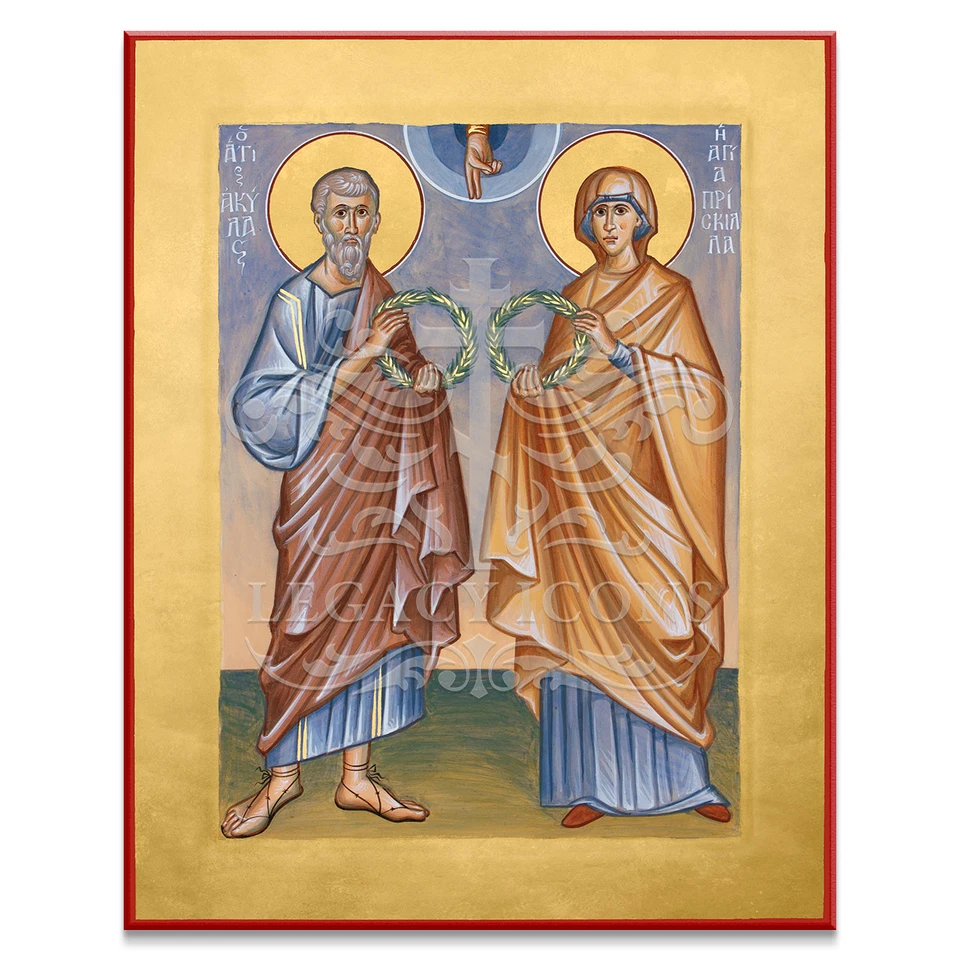
Aquila and his wife Priscilla left Rome after the expulsion of Jews under Claudius and settled in Corinth. Paul stayed with them and shared their work of making tents. They became close coworkers in the Gospel and accompanied him to Ephesus. There they helped Apollos understand the Christian message more fully. Paul remembered their courage and the community gathered in their household. Aquila’s life shows how work, marriage, hospitality, and teaching can serve one calling. Faithful service can grow from a shared home and from the willingness to help another teacher learn.
The directory indexes the OCA full-year calendar, including leap-day commemorations, alongside additional researched profiles. Calendar entries include individual saints, groups, icons and feasts. An entry count is not a count of unique saints. Categories are provisional; follow the linked Orthodox source.
Dates show commemorations in the referenced calendar year. Movable feasts change annually, and local calendars may differ. Additional jurisdictions, original biographies and icon research remain in progress. This collection does not yet claim complete Eastern Orthodox coverage.
Calendar metadata was retrieved through Orthocal’s source repository and the Orthodox Church in America. Source-only calendar records link to their original accounts; researched profiles include individually sourced artwork.
 Patron SaintTake the quiz