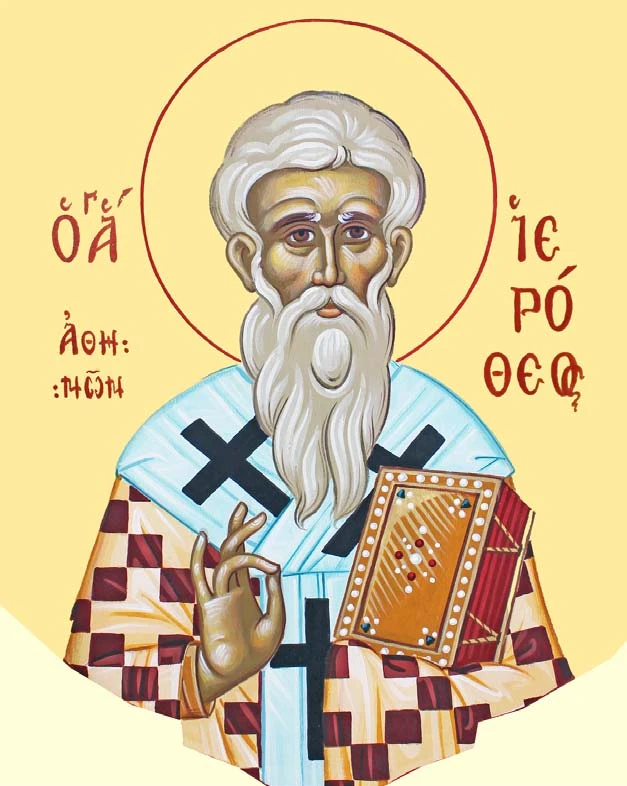
The received life remembers Hierotheus among the learned men of the Areopagus. It says the Apostle Paul baptized him and appointed him bishop of Athens. The same tradition remembers him singing at the funeral of the Mother of God. He is commemorated as a bishop and martyr.
Hilarion Troitsky was a theologian and preacher who wrote about the Church and supported the restoration of the Moscow Patriarchate. After becoming a bishop, he had little time in freedom before arrest and exile. Years in the Solovki labor camp brought exhausting work, yet fellow prisoners remembered his generosity and cheerful patience. He gave possessions to people who asked and did not readily take offense. During another transfer he contracted typhus and died in a prison hospital in 1929. His commemoration places serious theological learning beside the ordinary kindness that remained visible under coercion and deprivation.
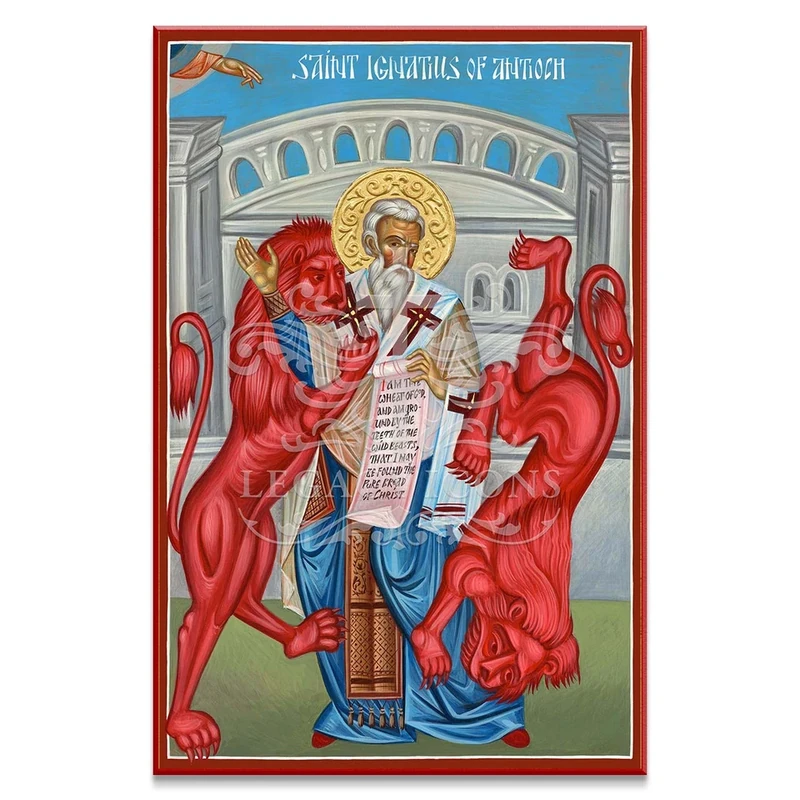
Ignatius served as Bishop of Antioch and encouraged his community during persecution. After his condemnation, he was taken under guard toward Rome. Along the journey he met Christians from other cities and wrote letters that have remained an important witness to the early Church. Those letters connect faith in Christ with the shared life of worship, responsible leadership, and unity among believers. He died as a martyr in Rome. The Church calls him the God-Bearer, remembering a life centered on Christ. His example shows pastoral care continuing even when the pastor’s own circumstances become severe.
Methodius is commemorated by the OCA as Bishop of Patara in Lycia. The received account remembers a teacher who guided his congregation calmly while addressing serious disputes about Christian belief. His literary work included defenses of Christianity, discussion of doctrines associated with Origen, moral instruction, and interpretation of Scripture. These writings give his commemoration a distinct intellectual character alongside the martyr tradition. The source describes his arrest and steadfast confession of Christ before execution. His life is remembered through both teaching and witness, presenting a bishop whose responsibility included explaining the faith rather than merely holding an ecclesiastical title.
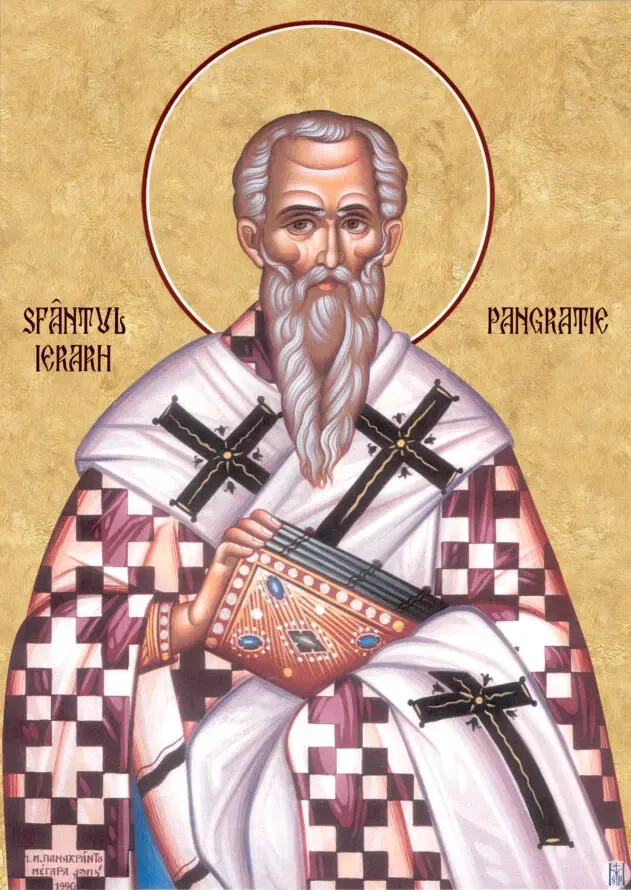
The received life says Pancratius came from Antioch and met the apostles in Jerusalem. Peter baptized him and appointed him bishop of Taormina in Sicily. Pancratius preached there, and the official Boniface supported the building of a church after becoming Christian. Opposition continued, and Pancratius was killed while Boniface was away.
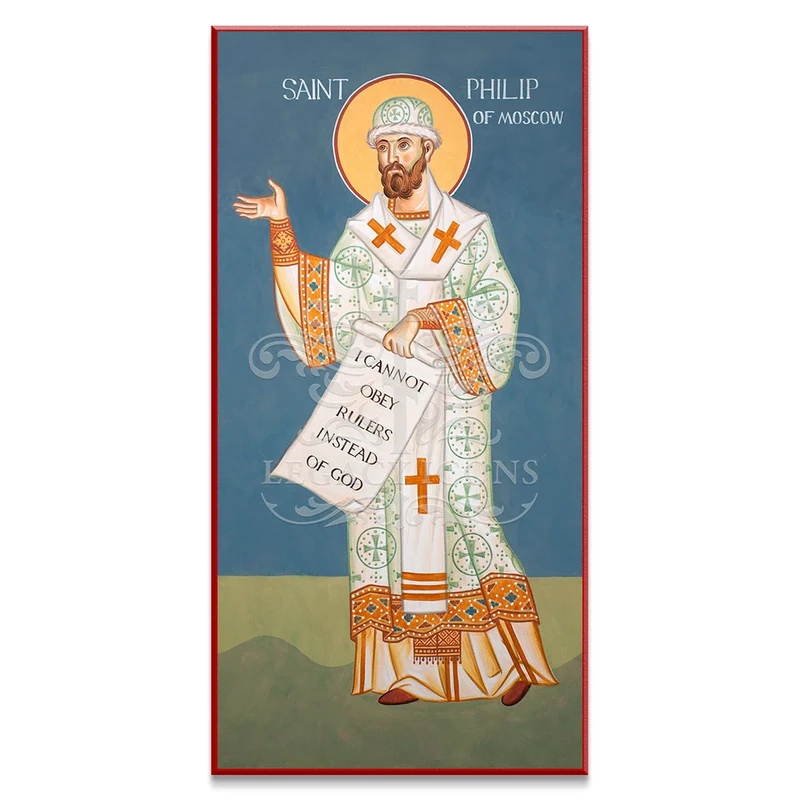
Philip left a noble household for monastic life at Solovki, where he chopped wood, worked in the mill and forge, and joined the monastery's worship. Even after becoming abbot, he helped with construction as an ordinary worker. His appointment as Metropolitan of Moscow brought him into conflict with Ivan IV's violent policies. Philip spoke against executions and publicly refused to give the ruler a blessing while abuses continued. He was deposed, imprisoned, and killed in 1569. The Church remembers both the practical humility of his monastic years and the courage of a pastor who confronted wrongdoing despite the danger to himself.
The directory indexes the OCA full-year calendar, including leap-day commemorations, alongside additional researched profiles. Calendar entries include individual saints, groups, icons and feasts. An entry count is not a count of unique saints. Categories are provisional; follow the linked Orthodox source.
Dates show commemorations in the referenced calendar year. Movable feasts change annually, and local calendars may differ. Additional jurisdictions, original biographies and icon research remain in progress. This collection does not yet claim complete Eastern Orthodox coverage.
Calendar metadata was retrieved through Orthocal’s source repository and the Orthodox Church in America. Source-only calendar records link to their original accounts; researched profiles include individually sourced artwork.
 Patron SaintTake the quiz