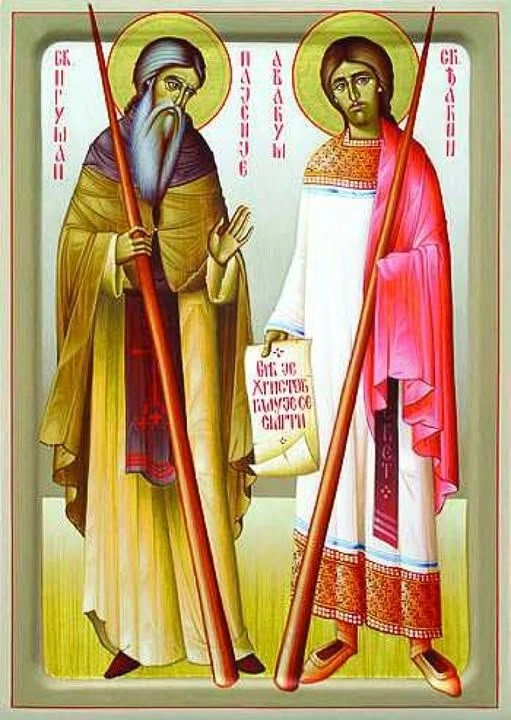
Habakkuk was born as Lepoje in Knežpolje near Kozara. After his father died, his mother brought him to Moštanica Monastery, where he learned church reading and singing and became a monk and deacon. Displacement brought him to the monastery at Trnava near Čačak. Following the failed uprising of 1814, he was imprisoned in Belgrade with Abbot Paisius. His received life describes him singing and praying in prison and refusing demands to renounce Christianity. He was killed in Belgrade.
Boyan was a Bulgarian prince who encountered Christianity through Kinamon, a learned Christian held in captivity. He listened to Kinamon’s explanation of faith and asked for baptism. The traditional life remembers a change marked by prayer, fasting, and contemplation. His brother, the ruler Malomir, demanded that he abandon Christianity. Boyan refused and was sentenced to death. The account also preserves his hope that Christian worship would eventually flourish in Bulgaria. His commemoration remembers the power of attentive listening and a conviction that became stronger than the advantages and pressures of royal family life.
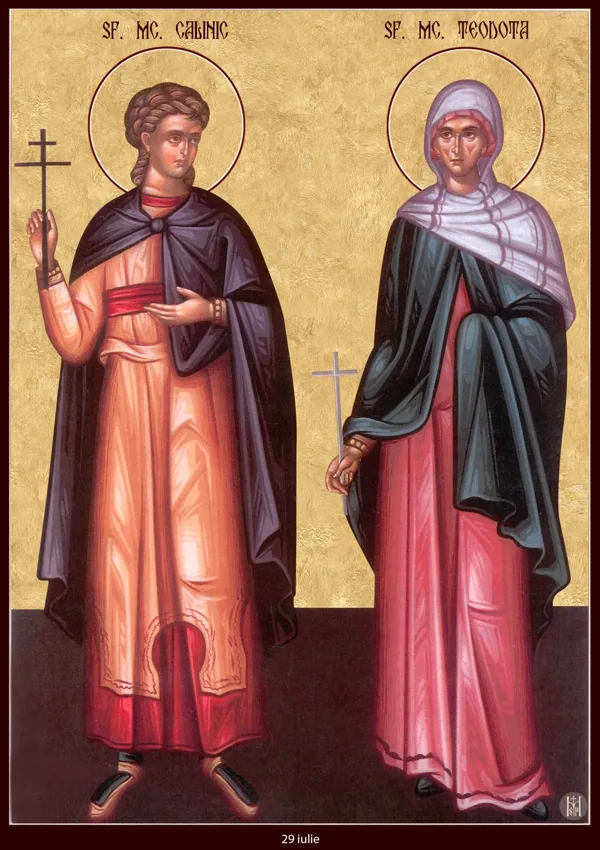
Callinicus came from Cilicia and taught Christian faith during a time of persecution. Arrested while preaching at Ancyra, he endured torture and was forced to travel toward Gangra. The calendar preserves an account of his prayer when the soldiers accompanying him were thirsty. He was later killed at Gangra, remaining faithful through the punishment imposed on him.
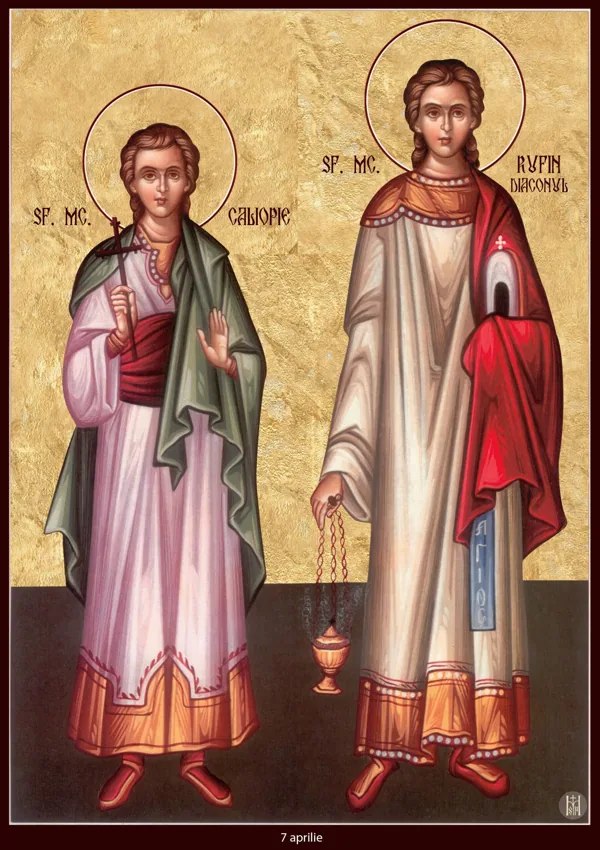
Calliopius was raised by his mother Theoclia after his father died. During persecution he left Perga for a city in Cilicia. He refused the governor’s demand to sacrifice to the gods, endured imprisonment and maintained his Christian confession before his execution.
Charitina was an orphan from Amisos in Pontus who entered the household of the Christian Claudianus. He cared for her as a daughter. Her traditional life emphasizes kindness, humility, and diligent study of the teaching of God. She shared her love for Christ with others, which brought her to the attention of the authorities. Before her interrogation she comforted Claudianus, who feared losing her. She then confessed her Christian faith before the judge and endured persecution. The Church remembers both the gentleness of her daily life and the firmness of her public witness.
The directory indexes the OCA full-year calendar, including leap-day commemorations, alongside additional researched profiles. Calendar entries include individual saints, groups, icons and feasts. An entry count is not a count of unique saints. Categories are provisional; follow the linked source.
Dates show commemorations in the referenced calendar year. Movable feasts change annually, and local calendars may differ. Additional jurisdictions, original biographies and icon research remain in progress. This collection does not yet claim complete Eastern Orthodox coverage.
Calendar metadata was retrieved through Orthocal’s source repository and the Orthodox Church in America. Source-only calendar records link to their original accounts; researched profiles include individually sourced artwork.
 Patron SaintTake the quiz