Eudokia’s traditional life describes a decisive change after she heard a Christian monk reading about judgment and the life to come. She sought his counsel, spent time in prayer, and received baptism from the bishop of Heliopolis. She distributed her wealth and entered a monastery, eventually becoming its leader. The account remembers her prayers for people in distress and her help to newly baptized Christians. She later suffered martyrdom during persecution. Her story centers on repentance as a beginning that grows into sustained prayer, responsibility for others, and a different use of material resources.
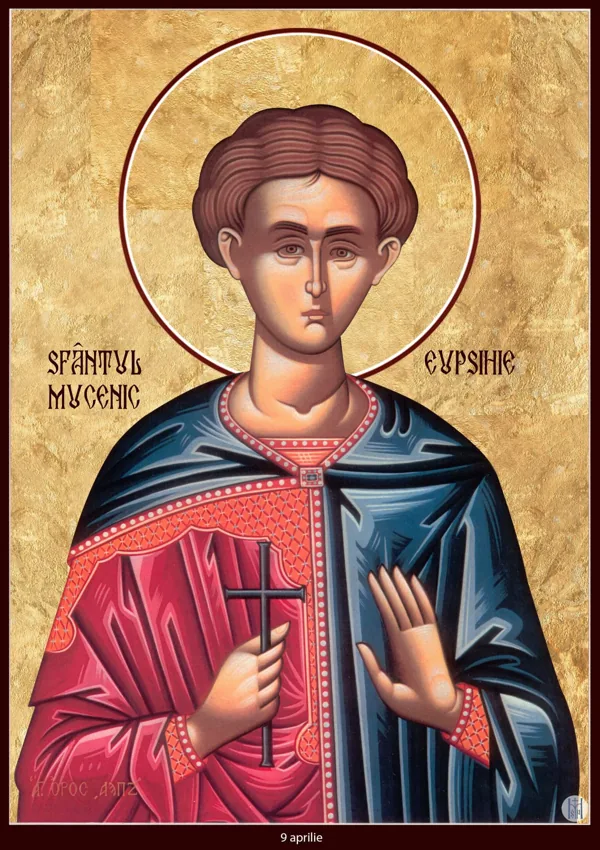
Eupsychius came from a Christian family in Caesarea. During his wedding celebration he destroyed a pagan temple and urged other Christians to join him. Julian imposed punishments on the city. Eupsychius was tortured, refused idol worship and was executed.
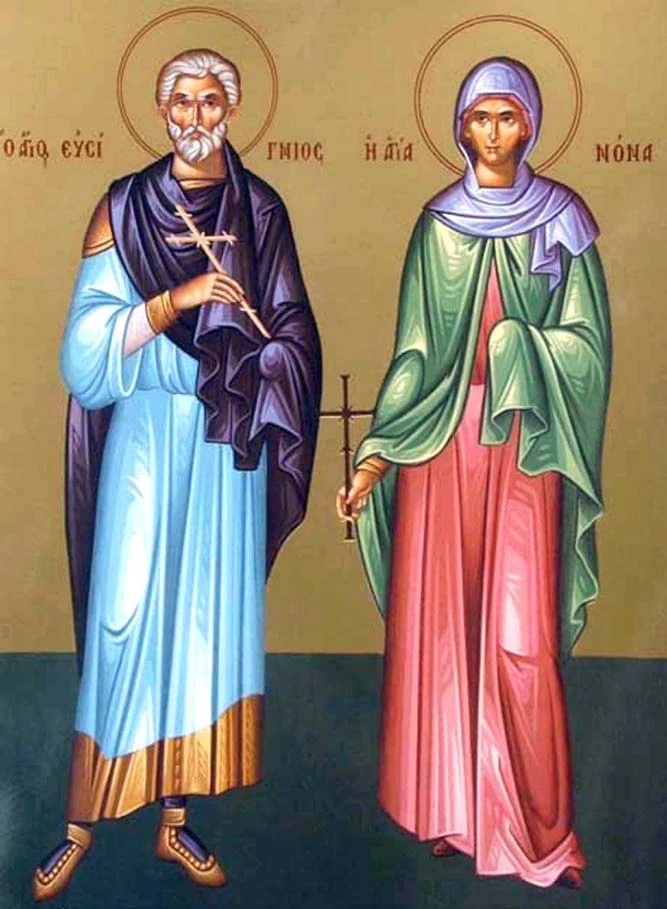
Eusignius was a soldier from Antioch whose received life remembers his association with the martyr Basiliscus and his account of Basiliscus’s suffering. After retiring from military service, he returned to Antioch and devoted himself to prayer and church attendance. A dispute that he was asked to judge led to his being reported as a Christian. Before Julian, he defended Christianity and criticized the emperor’s abandonment of it. Julian ordered his beheading.
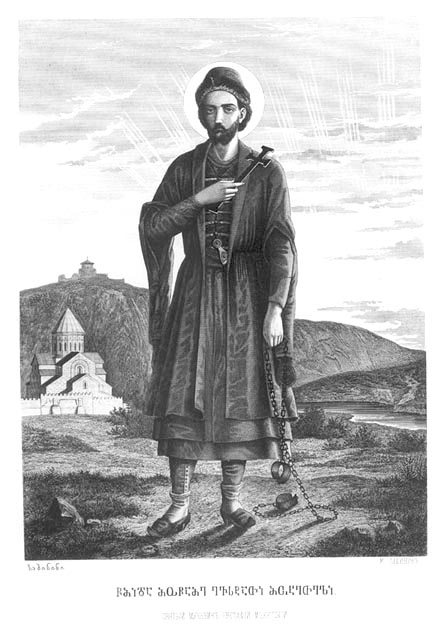
Eustathius was a Persian who settled in Mtskheta and became drawn to Christian life in Georgia. Baptized by the catholicos, he married and joined the life of the local Church. Reports of his conversion brought imprisonment with other Christians. After several months, intercession by Georgian leaders secured their release. A later change of governor brought renewed accusations and another demand to abandon Christ. Eustathius remained firm and was killed. Christians returned his body to Mtskheta for burial. His commemoration remembers a convert whose faith developed within a household and community before the final trial of persecution.
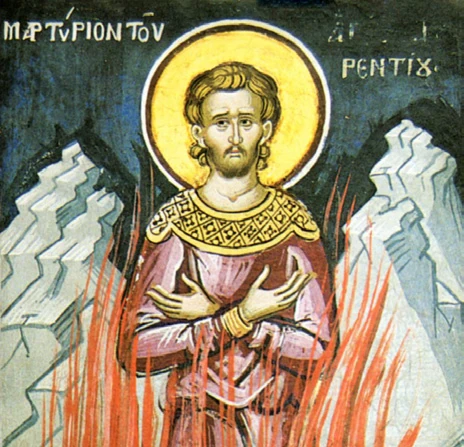
Florentius openly criticized pagan worship in Thessalonica and encouraged Christians to follow their faith. When brought before the governor, he confessed Christ without fear. He was tortured and condemned to death by fire. The received account remembers him praying and giving thanks to God at his death.
Gorazd Pavlik entered Orthodoxy after earlier service as a Roman Catholic priest. Consecrated bishop in 1921, he helped establish Orthodox communities in the Czech lands, built churches, and translated service books into Czech. During the Nazi occupation, resistance fighters took refuge in the Prague cathedral crypt. When the hiding place was discovered and reprisals began, Gorazd wrote to the authorities accepting responsibility in an effort to protect his people. He was arrested and executed in 1942. The Church remembers his pastoral labor and his willingness to face danger for the community entrusted to him.
The directory indexes the OCA full-year calendar, including leap-day commemorations, alongside additional researched profiles. Calendar entries include individual saints, groups, icons and feasts. An entry count is not a count of unique saints. Categories are provisional; follow the linked source.
Dates show commemorations in the referenced calendar year. Movable feasts change annually, and local calendars may differ. Additional jurisdictions, original biographies and icon research remain in progress. This collection does not yet claim complete Eastern Orthodox coverage.
Calendar metadata was retrieved through Orthocal’s source repository and the Orthodox Church in America. Source-only calendar records link to their original accounts; researched profiles include individually sourced artwork.
 Patron SaintTake the quiz