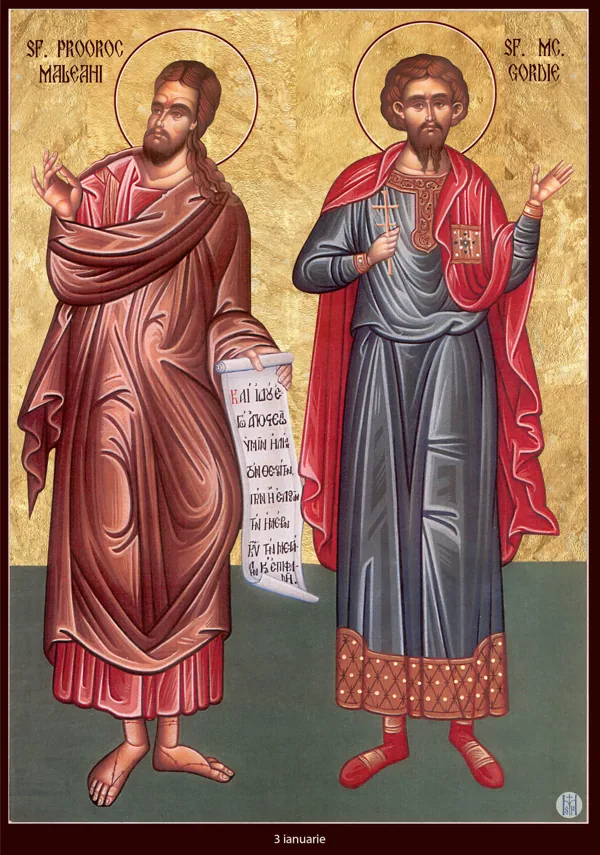
Gordius served as a centurion in Caesarea of Cappadocia. When persecution intensified under Licinius, he left military service and withdrew into the wilderness. He later returned during public games in the city and openly confessed Christ. Brought before the governor, he maintained his Christian faith and was killed.
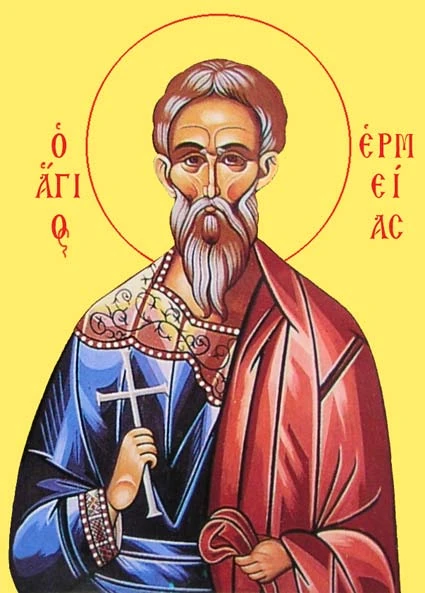
Hermias was an elderly soldier from Comana during the reign of Antoninus Pius. He refused the governor Sebastian’s order to sacrifice to the gods. The governor subjected him to torture and arranged for him to drink poison. The received life remembers Hermias surviving the poison, after which the man who administered it confessed the Christian faith and was killed. Hermias later suffered martyrdom by beheading.
Hermione is remembered as a daughter of Philip the Deacon. Her traditional life describes a journey with her sister to Ephesus, where she became a disciple of Petronius. She learned the healing arts and helped sick people, joining medical care with Christian faith. After surviving persecution, she established a hospice to care for physical and spiritual needs. Renewed coercion did not make her abandon Christ, and the Church honors her as a martyr. Her commemoration gives particular attention to learning that becomes practical service and to a woman’s contribution to early Christian care for the sick.
Ilia Chavchavadze was a writer, historian, and public figure who devoted himself to Georgian language, education, and Christian heritage. After study in Saint Petersburg, he returned to Georgia and worked to make literacy more widely available. He supported the preservation of manuscripts and the recording of oral traditions, while advocating for the life of the Georgian Church. He was killed in 1907. The OCA life also remembers his wife’s appeal for mercy toward his killers and his own writing about forgiveness. His commemoration connects cultural responsibility and learning with an aspiration toward compassion rather than revenge.
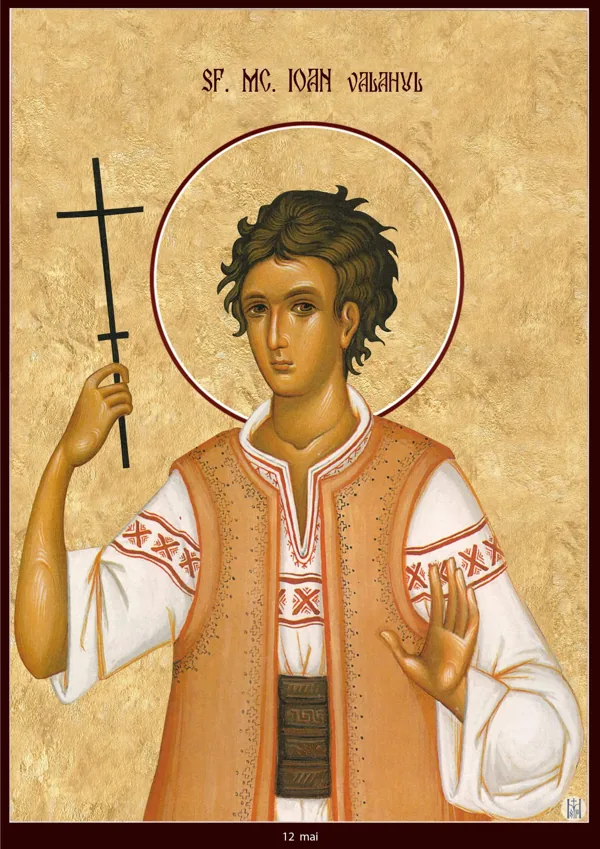
John was taken captive from Wallachia as a young teenager and brought to Constantinople. The calendar describes his resistance to sexual coercion and demands that he abandon Christian faith. Imprisoned and tortured, he maintained his confession until his execution. His story remembers the dignity and faith of a young person subjected to captivity and abuse.
The directory indexes the OCA full-year calendar, including leap-day commemorations, alongside additional researched profiles. Calendar entries include individual saints, groups, icons and feasts. An entry count is not a count of unique saints. Categories are provisional; follow the linked source.
Dates show commemorations in the referenced calendar year. Movable feasts change annually, and local calendars may differ. Additional jurisdictions, original biographies and icon research remain in progress. This collection does not yet claim complete Eastern Orthodox coverage.
Calendar metadata was retrieved through Orthocal’s source repository and the Orthodox Church in America. Source-only calendar records link to their original accounts; researched profiles include individually sourced artwork.
 Patron SaintTake the quiz