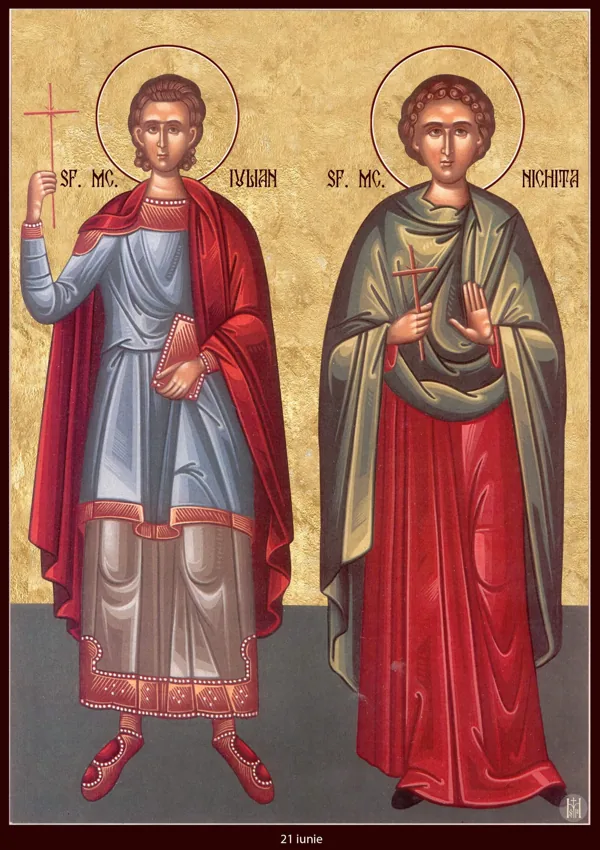
Julian was born at Anazarbus and raised as a Christian by his mother Basilissa. After his father’s death, the family moved to Tarsus. During the persecution under Diocletian, the governor Marcian had him taken through prisons in Cilicia. He was eventually killed at sea, and Christians recovered his body.
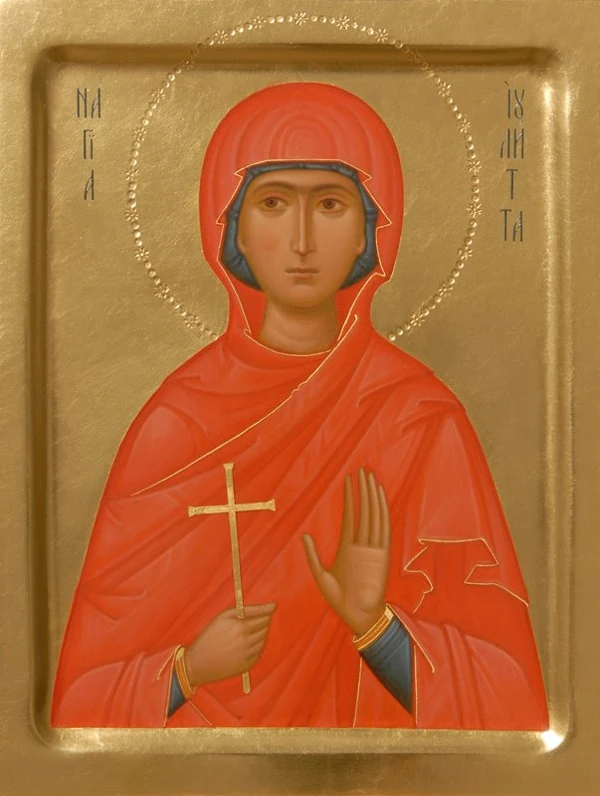
Julitta lived at Caesarea in Cappadocia during the persecution associated with Diocletian. After another person took her property, she sought a remedy in court. Her opponent answered the claim by exposing her Christian identity, and the judge made restoration of her property conditional on renouncing Christ. She refused that demand and was executed. The OCA places her death near the beginning of the fourth century and notes Basil the Great's later praise of her. Her commemoration remembers a woman denied legal protection because of her faith, whose effort to obtain justice became an occasion for coercion rather than an impartial hearing.
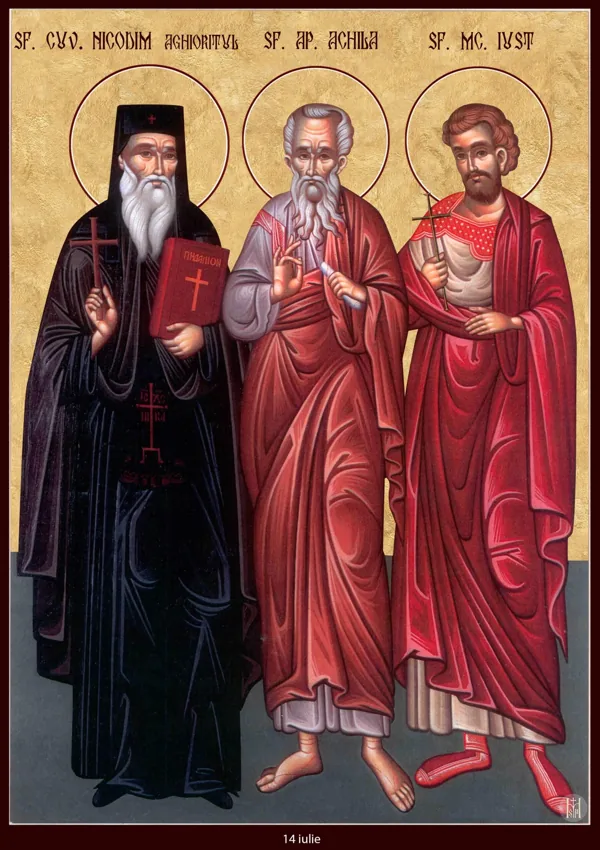
Justus was a soldier serving under the tribune Claudius. After coming to Christian faith, he returned to Rome and distributed his possessions to people who were poor. Claudius tried to persuade him to abandon Christianity, but failed. Justus was sent to the official Magnentius, under whom he suffered martyrdom.
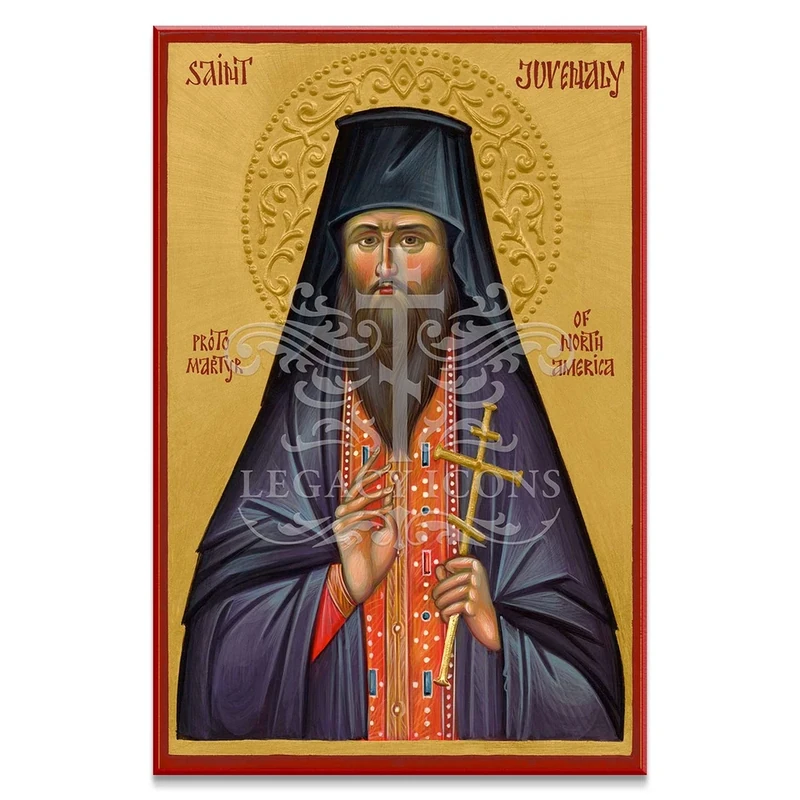
Juvenal entered monastic life after the death of his wife and later joined the Orthodox mission to Alaska. He traveled by small boats with fellow missionaries, teaching and baptizing people in coastal settlements. The OCA life draws on letters of Herman of Alaska and Indigenous oral tradition to remember that work. It places his death near the mouth of the Kuskokwim in 1796. The precise reason for his killing remains unknown. The Church honors his missionary commitment and the tradition that, when attacked, he pleaded for the safety of the people he had baptized.
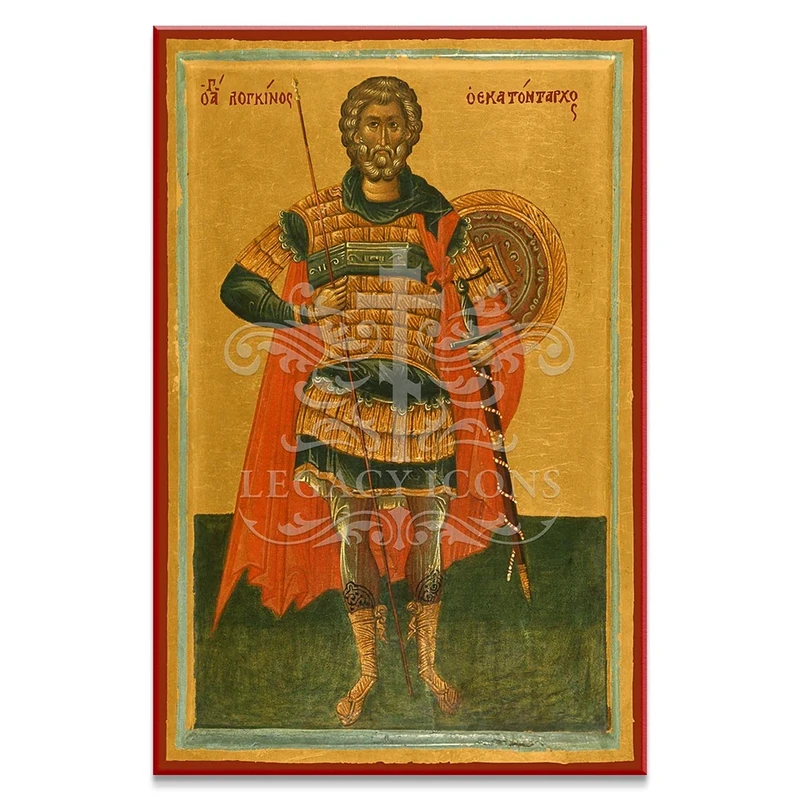
Orthodox tradition identifies Longinus with the centurion who witnessed Christ's death and confessed that Jesus was the Son of God. The Gospel describes the confession but does not name the soldier. The Church's later account follows Longinus into Christian baptism, departure from military service, and preaching in Cappadocia with two companions. It remembers him receiving the men sent to arrest him with hospitality before acknowledging his identity. He and his companions were then killed. His commemoration centers on a change of allegiance: a man stationed at the Crucifixion became a witness to Christ and shared that faith with others.
Luarsab II became ruler of Kartli while still young. His reign unfolded amid invasions, political pressure, and difficult choices concerning the safety of his people. The OCA life remembers his prayer and devotion to the Church throughout those responsibilities. Seeking to prevent further devastation, he went to the Persian shah under a promise of peace. Instead he faced demands to abandon Christianity and was imprisoned near Shiraz. After years of confinement, he suffered martyrdom in 1622 with two retainers. His commemoration remembers fidelity under coercion and the burden of leadership when political promises prove unreliable.
The directory indexes the OCA full-year calendar, including leap-day commemorations, alongside additional researched profiles. Calendar entries include individual saints, groups, icons and feasts. An entry count is not a count of unique saints. Categories are provisional; follow the linked source.
Dates show commemorations in the referenced calendar year. Movable feasts change annually, and local calendars may differ. Additional jurisdictions, original biographies and icon research remain in progress. This collection does not yet claim complete Eastern Orthodox coverage.
Calendar metadata was retrieved through Orthocal’s source repository and the Orthodox Church in America. Source-only calendar records link to their original accounts; researched profiles include individually sourced artwork.
 Patron SaintTake the quiz