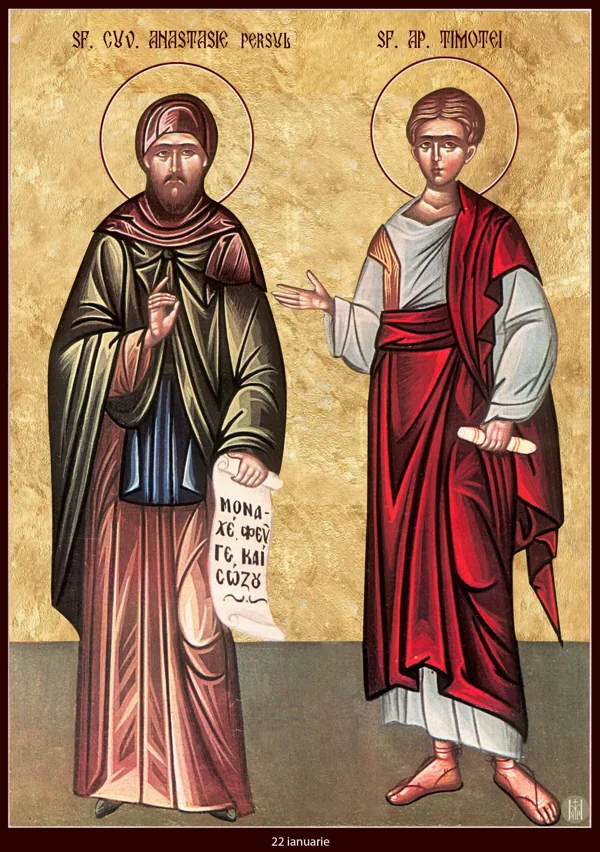
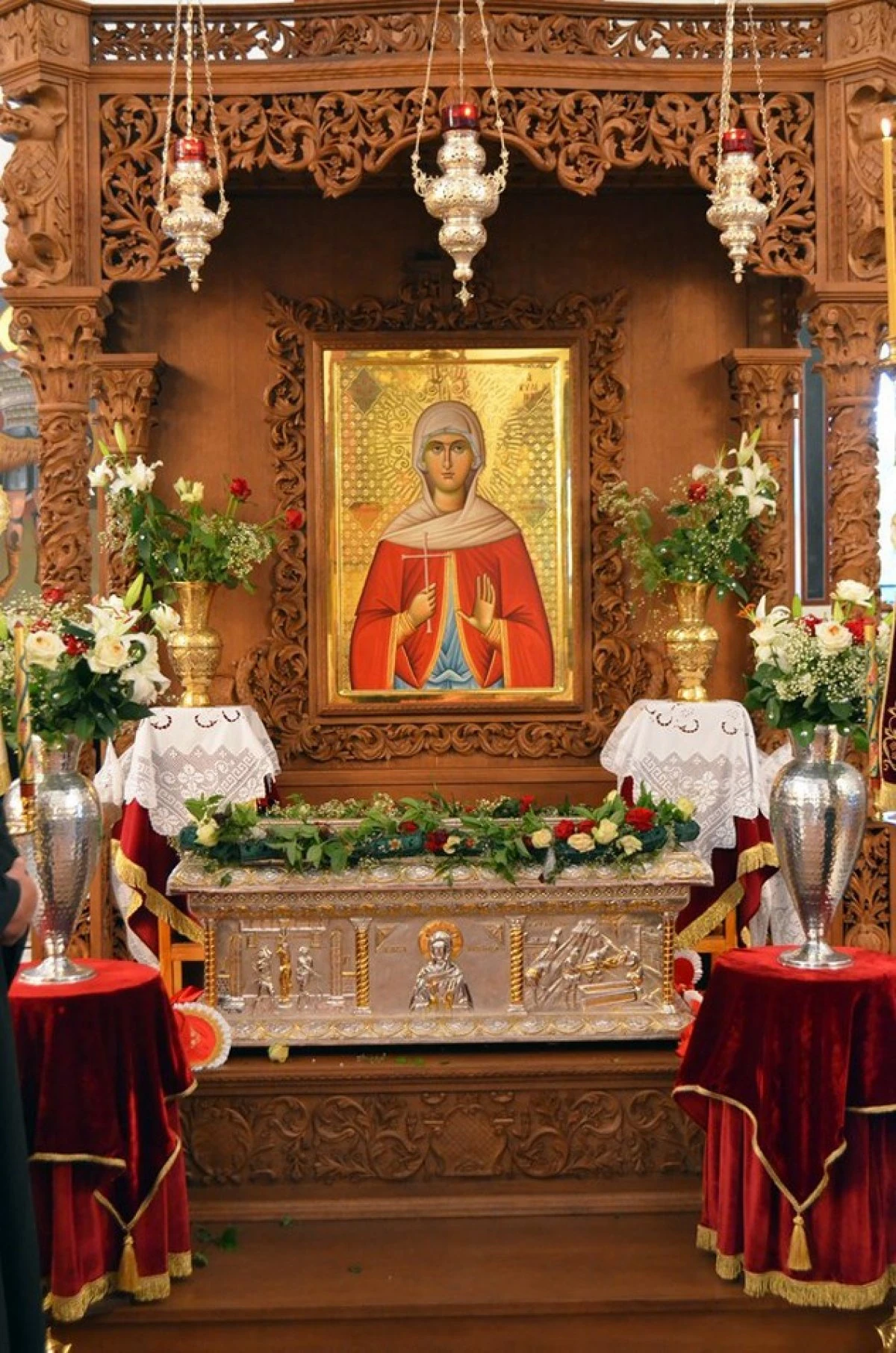
Anastasius was born Magundat and served in the Persian army. Questions about the Christian veneration of the Cross led him to study Scripture and Christian teaching. He left military service, received baptism in Jerusalem and became a monk. Later he spoke about his faith among Persian soldiers at Caesarea. Arrest and persecution followed, and he was killed.
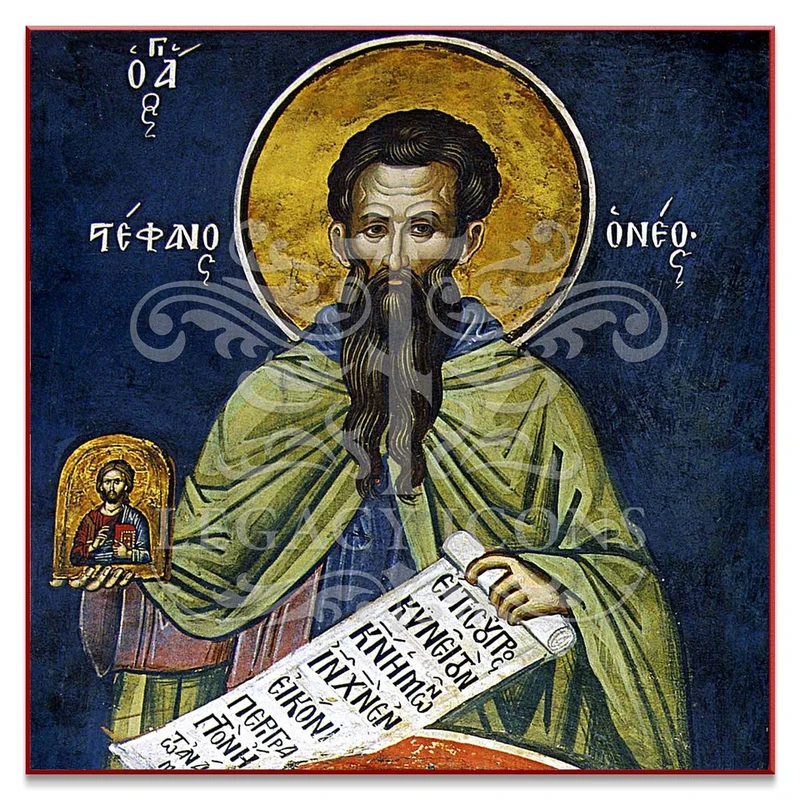
Stephen received monastic formation on Mount Auxentius and later guided a community there. His defense of icon veneration brought opposition under Constantine V, followed by imprisonment, exile, and the destruction of his monastery. The received life remembers him answering arguments against icons and explaining why honor shown to an image concerns the person represented. In prison he comforted other detained monks and helped organize shared prayers and hymns. He was eventually killed after renewed accusations against him. His commemoration joins theological conviction with care for companions in suffering, remembering a teacher whose service continued even when the monastery's ordinary life had been taken away.
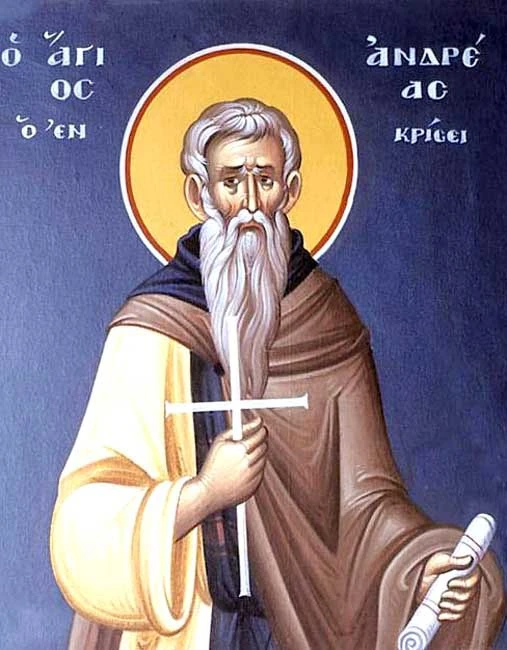
Andrew was a monk from Crete during the persecution of those who defended sacred icons. He left his monastery and traveled to Constantinople, where he confronted Emperor Constantine V over the suffering of Christians. Imprisonment and repeated questioning followed. Andrew refused to abandon his faith and died after being condemned and dragged through the city.
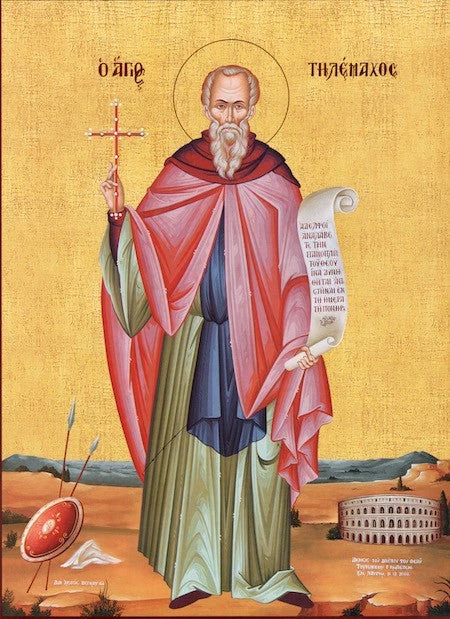
Telemachus was an ascetic from the East who traveled to Rome. Theodoret’s account describes him entering an arena to stop men fighting one another. Spectators killed him, and the account connects his death with Emperor Honorius ending gladiatorial combat. The Church remembers him as a martyr whose intervention sought to protect human life.
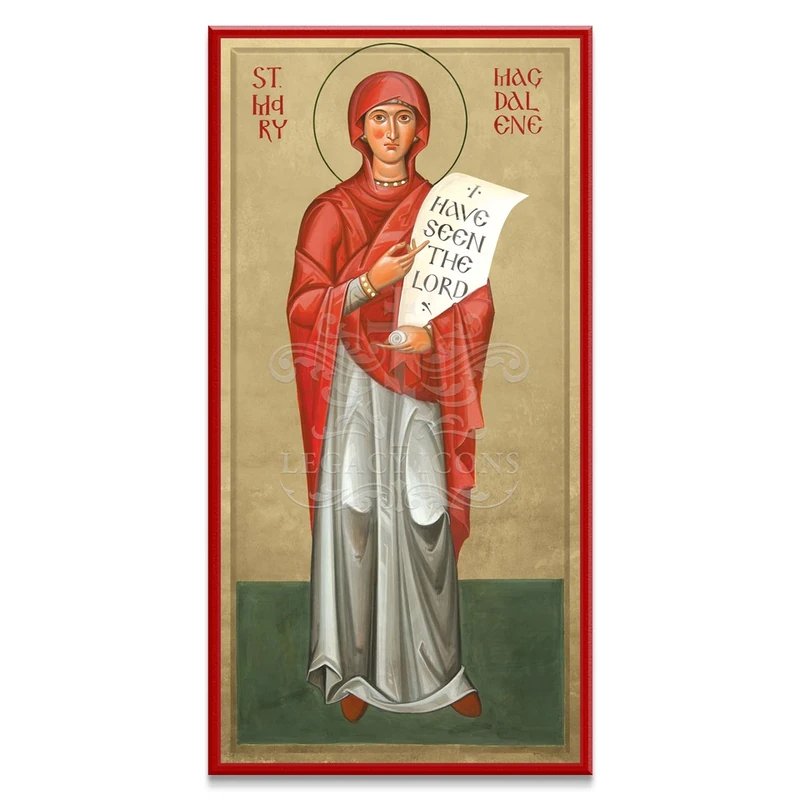
Mary Magdalene followed Christ after receiving healing from him and supported his ministry alongside other women. The Gospel accounts place her at the Crucifixion and among those who came to the tomb. In John’s Gospel she encounters the risen Lord and carries his message to the disciples. The Orthodox Church honors her as a myrrhbearer and equal to the apostles. Her faithfulness did not depend on public success or an easy ending. Mary’s witness brings together gratitude, courage in grief, and the readiness to share a hope that first transformed her own life.
Aquilina grew up near Thessalonica in a household divided over religion. Her mother encouraged her Christian faith, while her father eventually yielded to pressure to demand her conversion. At eighteen, she refused to abandon Christ. The OCA's received life describes repeated interrogation, promises of wealth and marriage, and severe punishment that failed to change her confession. A Christian finally carried her home, where she spoke with her mother before dying in 1764. Her commemoration remembers a young woman's resistance to religious coercion. The account's suffering is not a model for accepting abuse, and its historical conflict does not justify hostility toward entire communities.
The directory indexes the OCA full-year calendar, including leap-day commemorations, alongside additional researched profiles. Calendar entries include individual saints, groups, icons and feasts. An entry count is not a count of unique saints. Categories are provisional; follow the linked source.
Dates show commemorations in the referenced calendar year. Movable feasts change annually, and local calendars may differ. Additional jurisdictions, original biographies and icon research remain in progress. This collection does not yet claim complete Eastern Orthodox coverage.
Calendar metadata was retrieved through Orthocal’s source repository and the Orthodox Church in America. Source-only calendar records link to their original accounts; researched profiles include individually sourced artwork.
 Patron SaintTake the quiz