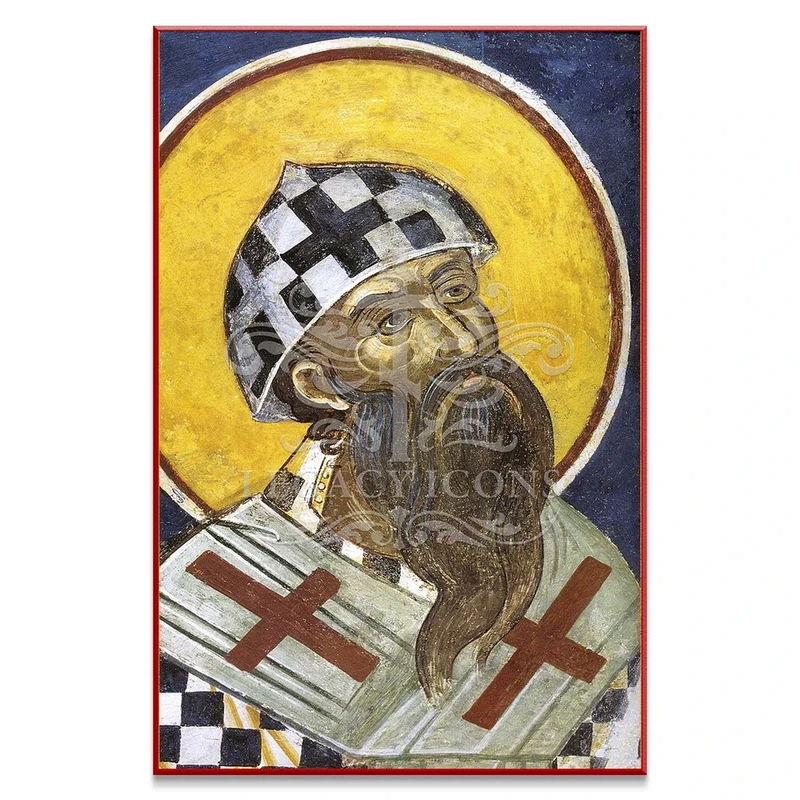
Cyril became patriarch of Alexandria after his uncle Theophilus in 412. His education and early monastic formation supported a long ministry of preaching and biblical interpretation. He played a leading role at the Council of Ephesus in 431, defending the unity of Christ’s person and the Church’s use of the title Theotokos for Mary. The disputes brought imprisonment as well as eventual restoration to his office. His surviving works include commentaries on Scripture and major theological writings. Orthodox Christians remember him among the great teachers of the Church, while his public career also belongs to a difficult and contested period of Alexandrian history.
Cyril served as Archbishop of Jerusalem during a period of theological conflict and repeated exile. He is especially remembered for instructions given to people preparing for baptism and to those newly baptized. These teachings explain the Creed and the life of the Church, helping faith take root in understanding. During famine, he used his resources and church valuables to buy food for hungry people. Cyril’s witness brings teaching and mercy together. Preparing someone for Christian life requires clear instruction, but also a community willing to respond when people lack the necessities of daily life.
Cyril studied Scripture and Greek before entering the monastery of Boris and Gleb at Turov. He gave up his inheritance and devoted himself to prayer, study, and spiritual writing. People sought his counsel, and he later became the city's bishop. His sermons explored the Church's feasts and the Gospel readings that shaped its year. He also wrote parables, letters, prayers, and guidance for monastic life. After leaving active episcopal leadership, he continued literary work. The OCA remembers an author who described himself modestly despite his learning. His commemoration connects careful reading with the responsibility to make Scripture understandable to a worshiping community.
Daniel became abbot of Hilandar on Mount Athos. The OCA life remembers his endurance with the monastery during siege and hunger. When called back to Serbia, he helped reconcile rival rulers. As an archbishop he worked for church needs and oversaw construction. He also collected and wrote historical lives of Serbian rulers and archpastors. These distinct actions support the editorial themes of courage, service, and wisdom. Sources differ over his precise year of death, so that year is omitted.
David lived as a monk in Thessaloniki at a monastery dedicated to Theodore and Mercurius. The OCA remembers an unusual period of solitary prayer in an almond tree, influenced by the example of stylite ascetics. He also offered spiritual counsel to those who approached him. His commemoration preserves the memory of prayer and guidance within an early Byzantine monastic setting. Extraordinary austerities and miracle stories belong to the received life; they are not instructions for modern practice.
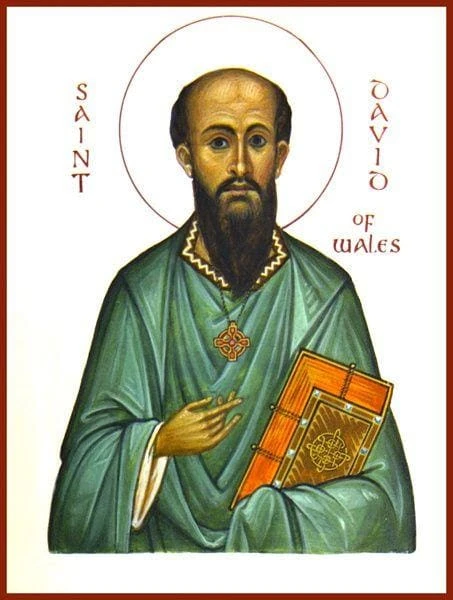
David was a sixth-century priest, missionary and monastic founder in Wales. The OCA life remembers his work establishing churches in several places before he settled at Menevia in southwest Wales. There he founded a monastery shaped by the tradition of the desert fathers. He later became bishop of Menevia, the place now known as Saint David’s. His commemoration on March 1 remembers a life of teaching, church building and monastic service.
The directory indexes the OCA full-year calendar, including leap-day commemorations, alongside additional researched profiles. Calendar entries include individual saints, groups, icons and feasts. An entry count is not a count of unique saints. Categories are provisional; follow the linked source.
Dates show commemorations in the referenced calendar year. Movable feasts change annually, and local calendars may differ. Additional jurisdictions, original biographies and icon research remain in progress. This collection does not yet claim complete Eastern Orthodox coverage.
Calendar metadata was retrieved through Orthocal’s source repository and the Orthodox Church in America. Source-only calendar records link to their original accounts; researched profiles include individually sourced artwork.
 Patron SaintTake the quiz