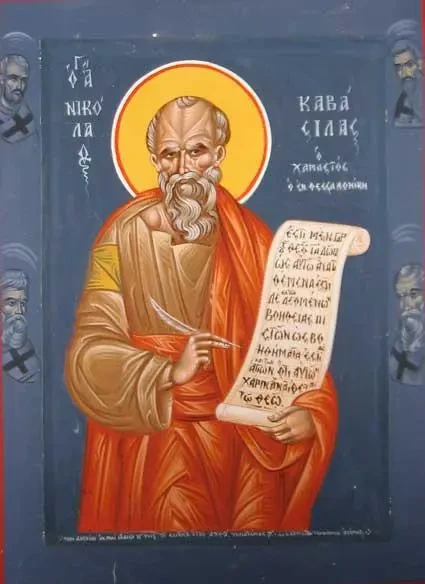
Nicholas Cabasilas was born around 1322 into the Chamaethos family and later adopted his mother’s surname. In Thessalonica he received spiritual instruction from Dorotheos Vlates, a disciple of Gregory Palamas. He joined circles of lay Christians who practiced the Jesus Prayer under Isidore Boucheiras. His uncle Nilus Cabasilas taught him literature and philosophy, and Nicholas continued his studies in Constantinople. Returning to Thessalonica, he took part in the city’s civic life and supported Orthodox teaching during the hesychast controversy. His spiritual teaching presented union with Christ as the calling of every Christian, including people with family and civic responsibilities.
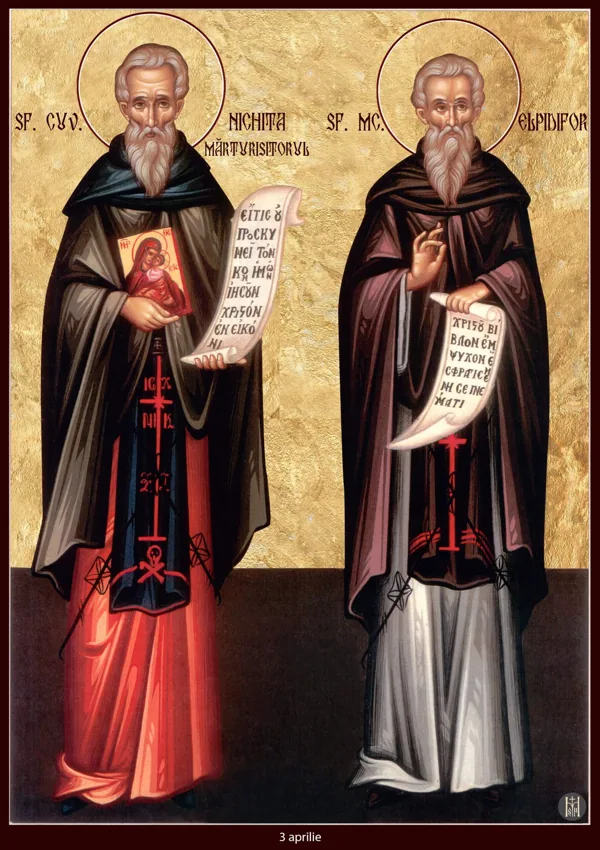
Nicetas entered the monastery at Medikion and later became its abbot. During the icon controversy under Leo the Armenian, he defended the veneration of icons and was imprisoned. He endured years of confinement on an island in the Sea of Marmara. After release, he joined a small community near Constantinople rather than returning to his former monastery.
Nikon entered Optina as a young man and served as secretary to the elder Barsanuphius. Following ordination, revolution and monastery closures disrupted his life. He continued receiving people for spiritual counsel and shared money and food with those unable to work because of age or illness. Arrest brought imprisonment and exile, but he wrote letters of encouragement to his spiritual children. When tuberculosis weakened him, another monk cared for him, and he continued dictating letters while receiving Communion frequently. He died in 1931. His witness joins perseverance under persecution with specific acts of generosity and sustained concern for people beyond his own suffering.
Nikon first received monastic formation at Serpukhov before becoming a disciple of Sergius of Radonezh. He shared the brothers' work, studied Scripture, and prayed at night. Sergius appointed him as successor, but Nikon also spent a period away from leadership before the community asked him to return. After an invasion destroyed the monastery, he helped the brothers rebuild and later oversaw the construction of a stone Trinity church. He invited Andrew Rublev and Daniel to decorate it. Nikon's life connects prayer and humility with the practical work of restoring a community, preserving its memory, and supporting the artistic life of worship.
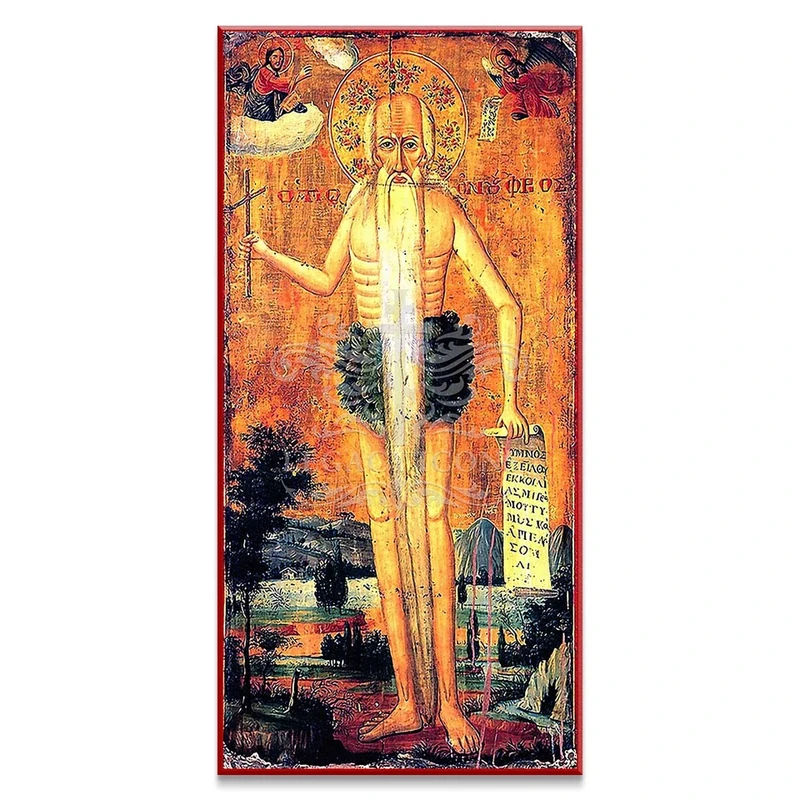
Onuphrius is remembered through the traditional account of Paphnutius, who traveled into the Egyptian wilderness to learn from hermits. Onuphrius had first lived in a monastery and received guidance from an elder before spending many years in solitude. He welcomed Paphnutius, spoke of prayer and God’s care, and asked to be remembered by other Christians. Before his death he directed the visitor to return to his own community rather than remain in the desert. His witness honors a life of prayer while recognizing that different people are called to different forms of faithful service.
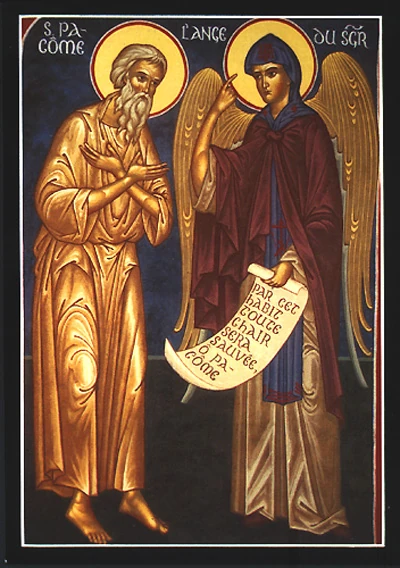
Pachomius first encountered Christian kindness when believers brought food and care to military conscripts held under guard. Their actions moved him toward baptism. After learning from the hermit Palamon, he established a monastic community at Tabennisi, where prayer and work served a shared life. He cared especially for sick monks and adjusted fasting when recovery required it. The Church remembers him as a major founder of communal monasticism. Pachomius’s example shows how practical kindness can begin a vocation, and how good leadership combines clear responsibility with mercy toward the weakness of others.
The directory indexes the OCA full-year calendar, including leap-day commemorations, alongside additional researched profiles. Calendar entries include individual saints, groups, icons and feasts. An entry count is not a count of unique saints. Categories are provisional; follow the linked source.
Dates show commemorations in the referenced calendar year. Movable feasts change annually, and local calendars may differ. Additional jurisdictions, original biographies and icon research remain in progress. This collection does not yet claim complete Eastern Orthodox coverage.
Calendar metadata was retrieved through Orthocal’s source repository and the Orthodox Church in America. Source-only calendar records link to their original accounts; researched profiles include individually sourced artwork.
 Patron SaintTake the quiz