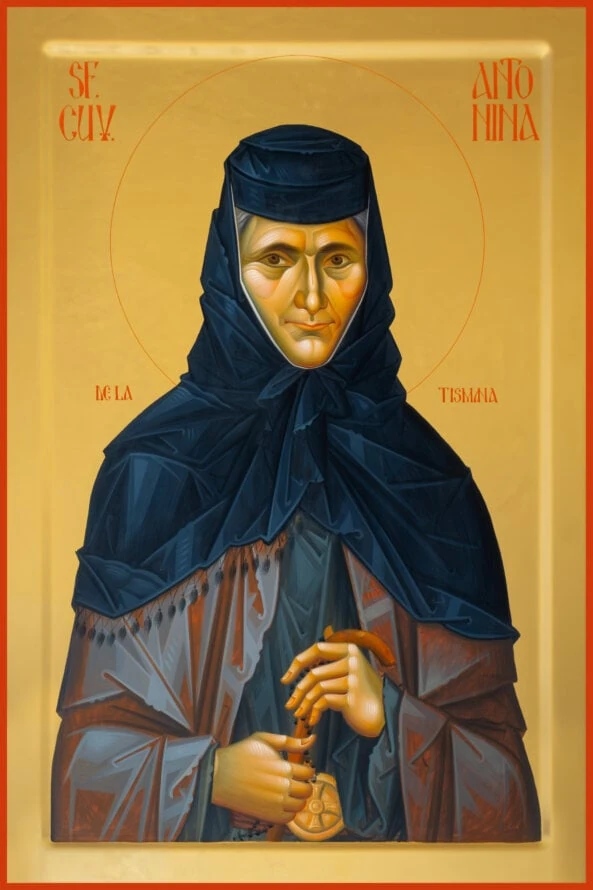
Antonina, born Ilinca, joined Tismana after seeking counsel about monastic life. Her responsibilities remained in the monastery's household and agricultural work, near its animals. Basilica remembers her memorization of the Psalter, continual prayer, and guidance for sisters assigned to work beside her. Her life offers a distinct example of spiritual responsibility carried through ordinary duties rather than prominent office. The Romanian Church's commemoration preserves both her practical service and the instruction she gave within a community that did not always recognize the depth of her prayer.
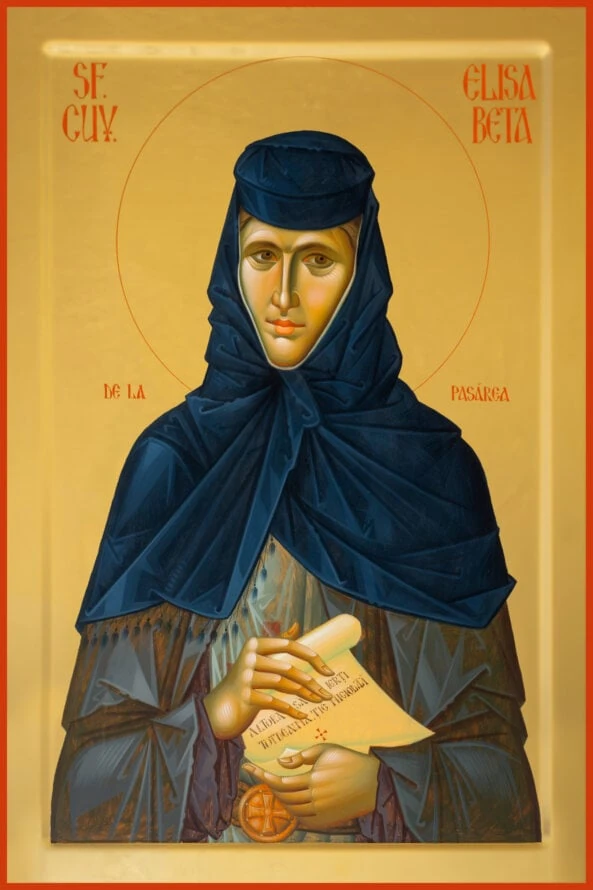
Elisabeta entered Pasărea as a teenager and helped other sisters after completing her own work. She later served as a sacristan and singer at the Romanian establishment in Jerusalem. Periods of solitary life in the Romanian mountains followed before illness brought her back to Pasărea. Basilica remembers her continuation of prayer during her final illness. Her commemoration belongs to the Romanian Church's recent recognition of women ascetics. The life also contains extensive visionary accounts; those accounts remain attributed devotional narratives rather than a verified description of the afterlife.
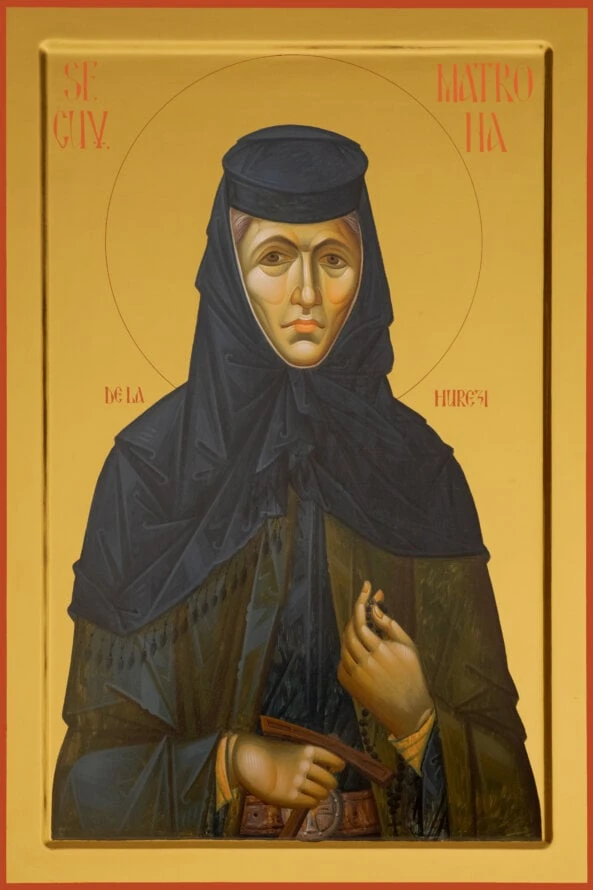
Matrona, born Maria Ciupelea, entered monastic life at Sărăcinești before moving to Hurezi. There she received guidance from Orest, a disciple of Calinic of Cernica. Her counsel became valued within the community, and she was elected abbess late in life. Basilica's official account remembers a sustained monastic vocation developed through learning, prayer, and responsibility for other sisters. Her commemoration belongs to the Romanian Church's recent recognition of women whose influence was carried within a particular community rather than through a widely publicized career.
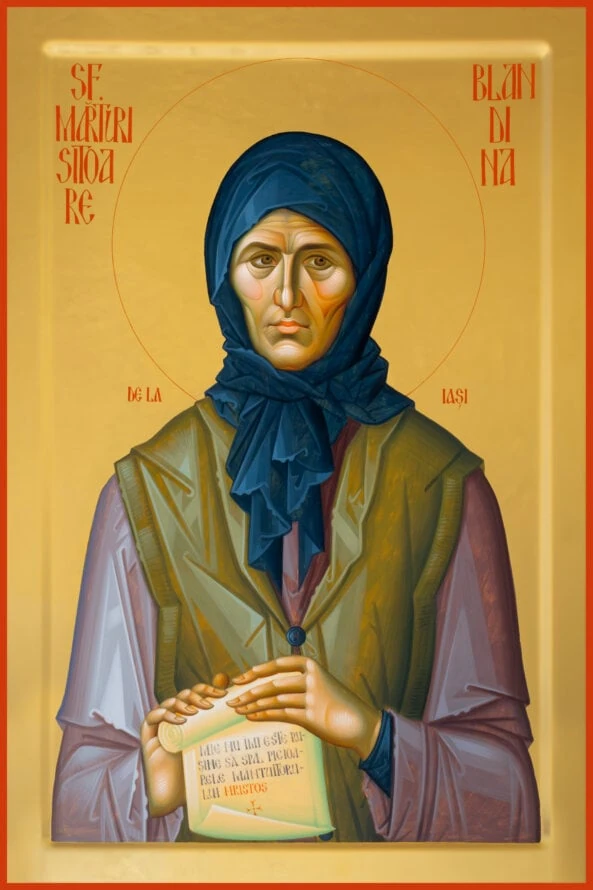
Blandina Gobjilă was a married laywoman whose later life included persecution, displacement, and service at Iași's Metropolitan Cathedral. Basilica remembers her cleaning the church and icons during the day and reading the Midnight Office, psalms, and akathists where believers gave her lodging. She also gave alms despite her own poverty. Her life resembled a monastic rule, but she was never tonsured as a nun. Her commemoration preserves a distinct lay vocation expressed through prayer and practical service. The official life also contains dreams and healing accounts, which remain devotional testimony rather than independently established outcomes.
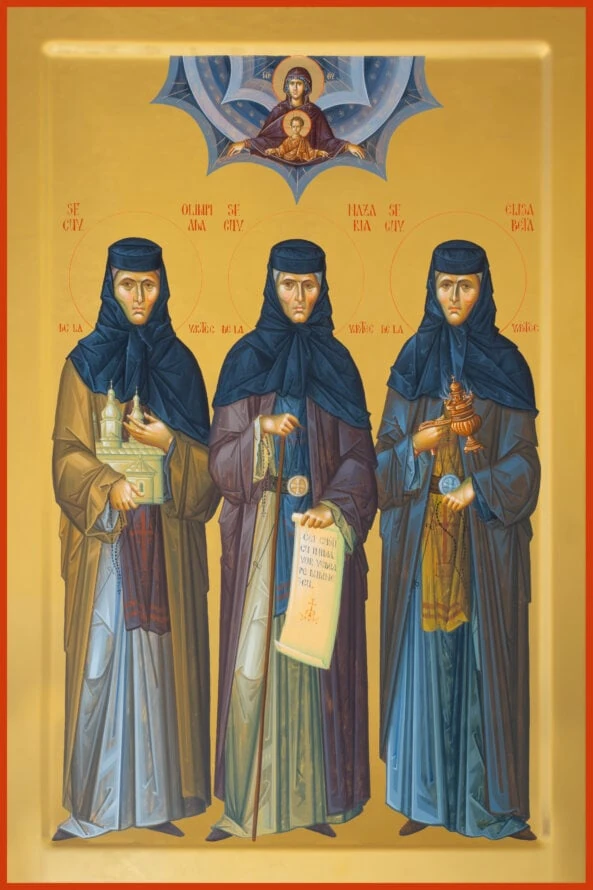
After losing her husband and children, Nazaria entered monastic life and received formation within communities connected with Basil of Poiana Mărului and Paisius of Neamț. She later guided sisters at Durău before accepting responsibility for the developing community at Văratec. Her commemoration remembers an experienced elder entrusted with a growing women's monastery.
Olimpiada, born Bălașa, entered monastic life after widowhood and helped establish Văratec. She first invited the more experienced Nazaria to lead. Her later responsibilities included rebuilding the monastery after destruction and teaching the sisters church singing. Her commemoration joins practical foundations, shared leadership, and the cultivation of worship.
The directory indexes the OCA full-year calendar, including leap-day commemorations, alongside additional researched profiles. Calendar entries include individual saints, groups, icons and feasts. An entry count is not a count of unique saints. Categories are provisional; follow the linked source.
Dates show commemorations in the referenced calendar year. Movable feasts change annually, and local calendars may differ. Additional jurisdictions, original biographies and icon research remain in progress. This collection does not yet claim complete Eastern Orthodox coverage.
Calendar metadata was retrieved through Orthocal’s source repository and the Orthodox Church in America. Source-only calendar records link to their original accounts; researched profiles include individually sourced artwork.
 Patron SaintTake the quiz